Hanoi Routes & Sightseeing
B52 Victory Museum by Motorbike: A Small Hanoi History Route

About 12 minutes to read
In December 1972, American B-52 bombers flew the largest bombing campaign of the Vietnam War over Hanoi, and Hanoi shot enough of them down that the campaign collapsed and the Paris Peace Accords followed within a month. That twelve-day fight — the Vietnamese call it “Dien Bien Phu in the Air” — has two physical monuments left in the city, and remarkably, both sit in the same Ba Dinh neighborhood, a short ride from the center: the B-52 Victory Museum on Doi Can Street, where a complete downed bomber lies in a museum yard, and a small lake in the Ngoc Ha flower village where the rear undercarriage of another B-52 still rests in the water exactly where it fell. This guide covers both, plus the ride and parking logistics to connect them — a small, quiet history route that most visitors to Hanoi never find. For a separate outing beyond this city history route, compare our day-trip options from Hanoi.
The History: Twelve Days That Ended the Air War
From December 18 to December 30, 1972, the US Air Force ran Operation Linebacker II — the “Christmas Bombing” — a strategic campaign of thousands of sorties targeting Hanoi and Haiphong, intended to force North Vietnam to sign a peace agreement. The B-52 Stratofortress, the eight-engine strategic bomber considered untouchable at the time, was the campaign’s centerpiece.
Hanoi’s air defense — missile regiments, anti-aircraft artillery, MiG interceptors, and the discipline of a city practicing blackouts — had twelve days and nights of it. By the Vietnamese account, the city’s forces shot down 81 aircraft, including 34 B-52s. The campaign’s human cost on the ground was severe — the museum displays photographs of the devastation at Kham Thien Street, Bach Mai Hospital, and Hanoi railway station, where over 10,000 tons of bombs killed and injured thousands. Whatever accounting one uses, the strategic result is not disputed: the bombing stopped, the Paris Agreement was signed in January 1973, and American forces withdrew. The “flying fortress” myth did not survive the month. Both monuments on this route exist to keep that December in the city’s memory.
Stop One: The B-52 Victory Museum
What It Is
The museum sits at 157 Doi Can Street in Ba Dinh district, about 3.4 kilometers from the city center, inaugurated on December 22, 1997 — the 25th anniversary of the victory — and renovated in December 2012 for the 40th. It belongs to Hanoi’s armed forces rather than the national museum system, which tells you its perspective: this is the capital’s own museum about the battle fought over the capital.
It is a small museum, and that is part of its charm. Plan on 45 minutes to an hour. The layout splits into an outdoor display and a two-storey indoor exhibition of roughly 1,200 square meters:
- The outdoor yard is the main event. Centered on the wreckage of a B-52 shot down over Hanoi in December 1972 — fuselage around 48 meters long with a wingspan of over 56 meters — surrounded by the hardware that brought these aircraft down: MiG-21 fighters, SAM missile launchers, 100mm, 57mm and 37mm anti-aircraft guns, and radar systems, displayed in the open.
- The indoor exhibition covers the building, fighting, and maturing of Hanoi’s armed forces across historical periods, with the December 1972 campaign as its climax: photographs of the bombed city, artifacts, documents, and a three-dimensional battlefield map recreating the terrain and the air-defense engagements on the right wing of the hall.
- Signage is in Vietnamese with English and French on the outdoor exhibits; the indoor sections are more Vietnamese-dominant, so the photos and models carry much of the story for foreign visitors.
Hours and Admission — Read This Before You Plan
| Item | Details |
|---|---|
| Address | 157 Doi Can Street, Ba Dinh district, Hanoi |
| Opening days | Tuesday, Wednesday, Thursday, Saturday, Sunday — closed Mondays and Fridays |
| Morning session | 8:00 – 11:00 |
| Afternoon session | 13:30 – 16:30 |
| Admission | Free for most of its history; some current listings quote around 30,000 VND — bring small notes and treat either as possible |
| Visit length | 45–60 minutes |
The two-day closure is the single most important planning fact on this route: many visitors arrive on a Monday or Friday and find the gate shut. The good news is covered below — the route’s second stop never closes.
Riding There and Parking
The Ride
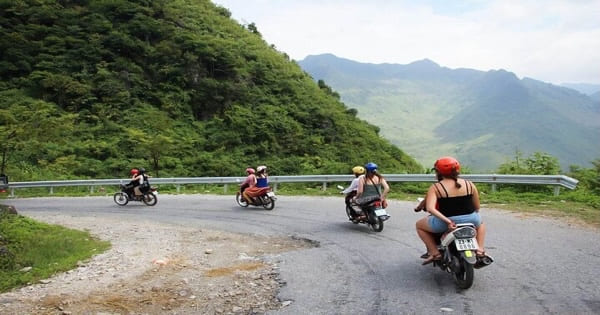
Doi Can Street is one of the wide, leafy boulevards of Ba Dinh, running uphill from the Hoang Hoa Tham area toward the President’s residence quarter — an easy and pleasant ride. From Hoan Kiem Lake, follow the one-way flow out of the center toward the Temple of Literature or Hang Khay, join Dien Bien Phu or Ly Nam De heading west, and turn onto Doi Can; the museum is on the right side within a few blocks, marked by the bomber wreck visible from the street. Ten to fifteen minutes from the center in normal traffic. Before setting off, review our guide to safe riding preparation in Hanoi.
The museum’s neighborhood is also the Mausoleum quarter, which matters for planning: within a short radius of 157 Doi Can sit the Ho Chi Minh Mausoleum, the Ho Chi Minh Museum, the Presidential Palace grounds, the One Pillar Pagoda, and the Botanical Garden. The route below strings them together, and no leg of it is more than a few minutes by motorbike.
Parking
- At the museum: motorbikes park in the front area and along Doi Can Street, where the wide sidewalks carry the regulated attended-parking stretches typical of Ba Dinh. A few thousand dong per stay, ticket in pocket as always.
- Security note for the quarter: this is the political heart of Hanoi. Around the Mausoleum complex, security posts are visible, photography is for buildings and monuments rather than gatehouses and guards, and some streets close or are checked on ceremonial days. Ride calmly, park where the attendants point, and you will have no issues.
- Plan one park when possible: the museum and the B-52 lake are walkably close; the Mausoleum complex has its own visitor flow. If you ride rather than walk between the museum and the lake, you will be re-parking twice in ten minutes — do the sensible thing and leave the bike once.
Stop Two: The B-52 Lake at Ngoc Ha
The Wreck in the Water
A few minutes from the museum, in the old flower-growing village of Ngoc Ha, sits Huu Tiep Lake — known to everyone as B-52 Lake. On the night of December 27, 1972, in the final days of the campaign, a B-52 was brought down over the city by Battalion 72 of Air Defense Missile Regiment 285, and its rear section — landing gear and undercarriage, bombs never released — plunged into this small neighborhood lake, where it remains to this day, largely intact, plants growing over the metal, reflected in the water between houses. The Ministry of Culture designated the lake and the wreck a national historical relic in 1992.
Where the museum is a curated memorial, the lake is something rarer: the wreck left exactly where the war put it, in the middle of an ordinary residential neighborhood. Kids ride bicycles past it, laundry dries on balconies above it, and a plaque beside the water describes the night it fell. Visitors consistently describe it as the more affecting of the two stops precisely because nothing about it is staged.
Finding It — and the One Confusion to Avoid
The lake sits at the end of narrow back alleys, and the approach is part of the experience. Ride to Ngoc Ha Street — the leafy old village street behind the Mausoleum — and look for the directional sign near the Hoang Hoa Tham end, then leave the bike parked on the street and walk the few minutes in through the lanes. Do not try to ride into the alleys; they are residential and narrow.
The honest warning: the neighborhood contains more than one small body of water, and a steady stream of visitors photographs the wrong one — a round ornamental lagoon nearby — believing it holds the wreck. The actual site has a memorial plaque and the unmistakable silhouette of aircraft wreckage breaking the surface. If your photos show a peaceful empty pond, walk on.
The lake is free, needs no ticket, and is viewable at any hour, which makes it the route’s reliable fallback: on the museum’s closed days, the lake still delivers the December 1972 story in its rawest form.
The Small History Route: Putting It Together
Here is the loop as it works best by motorbike, roughly a half-day including stops. All the stops sit inside Ba Dinh; the whole ride is under five kilometers.
| Stop | Distance / Time | Allow |
|---|---|---|
| 1. B-52 Victory Museum (157 Doi Can) | 10–15 min ride from the center | 45–60 minutes |
| 2. Huu Tiep Lake, Ngoc Ha | A few minutes from the museum; park on Ngoc Ha Street, walk in | 15–30 minutes |
| 3. Ngoc Ha village street and breakfast/coffee | Same street as your parking | 30 minutes |
| 4. Ho Chi Minh Mausoleum complex and Presidential Palace grounds | 5 min ride east | 1–2 hours |
| 5. One Pillar Pagoda and Ho Chi Minh Museum | Within the same complex | 30–60 minutes |
| 6. Botanical Garden (optional green-hour closer) | 5 min ride, behind the Mausoleum | As long as you like |
A Suggested Timeline
- 8:15 — Ride out of the center before the Ba Dinh traffic builds; park at the museum on Doi Can.
- 8:30 – 9:30 — Museum: the outdoor wreck first, then the indoor exhibition while your legs are fresh.
- 9:30 – 10:00 — Ride to Ngoc Ha Street, park, walk the alleys to the lake. Morning light on the water is the best version of the wreck.
- 10:00 – 10:30 — Coffee or breakfast on Ngoc Ha Street, one of the most atmospheric old streets in central Hanoi.
- 10:30 – 12:30 — Mausoleum complex, Presidential Palace grounds, One Pillar Pagoda. Note that the Mausoleum interior keeps its own limited schedule; viewing the exterior and grounds is possible through the day.
- 13:30 onward — Either the Ho Chi Minh Museum after its lunch window, or the Botanical Garden for a slow green finish before riding home.
On a Monday or Friday, invert the plan: skip the museum (closed), do the lake first thing, give the Mausoleum complex a fuller visit, and keep the museum for another day. The route survives its own schedule — that is why it is a route and not a single stop.
Practical Notes
- Morning is the right half of the day. The museum closes at 11:00, the Mausoleum complex is a morning institution, and the lake photographs best before noon. Start early and everything cooperates.
- Bring cash, small notes. Parking on two or three lots, a possible museum ticket, and Ngoc Ha coffee — none of it expensive, all of it cash-friendly.
- Photography is welcome at both stops, but the tone matters: this is war memory for the neighborhood around you. The lake especially is a place for quiet photos, not photoshoots.
- Talk to the lake’s neighbors. Around Huu Tiep Lake live people who remember 1972; a polite question through a translation app occasionally produces the best history lesson of the day, from someone who watched it happen.
- Weather hardly matters. Everything except the walk to the lake is either quick or indoor; in summer, the 8:00 museum opening is your friend, and the Botanical Garden’s shade makes the closer comfortable.
Frequently Asked Questions
What is the B-52 Victory Museum, and is it worth visiting?
It is Hanoi’s own museum about the December 1972 air-defense campaign, holding a complete downed B-52 in its yard plus MiG-21s, missile launchers, anti-aircraft guns, and indoor exhibits on the twelve-day battle. For anyone with an interest in the war, it is a compact, high-impact hour — and the full bomber wreck, visible from the street, is one of the most tangible war relics in Vietnam.
Where is the museum and how do I get there by motorbike?
157 Doi Can Street, Ba Dinh district, about 3.4 kilometers from the city center — ten to fifteen minutes by motorbike via Dien Bien Phu or Ly Nam De street. The wreck in the front yard makes the museum impossible to miss. Park in the front area or the attended stretches along Doi Can.
When is the museum open, and what does it cost?
Tuesday through Sunday, mornings 8:00–11:00 and afternoons 13:30–16:30 — closed on Mondays and Fridays, so check your calendar before riding out. Admission has been free for most of the museum’s history, though some current listings quote around 30,000 VND; carry small notes either way. Budget 45 to 60 minutes for the visit.
What is B-52 Lake and how far is it from the museum?
Huu Tiep Lake, in the Ngoc Ha flower village, holds the rear undercarriage of a B-52 shot down on the night of December 27, 1972 — left in the water where it fell and designated a national relic in 1992. It sits a short ride from the museum: park on Ngoc Ha Street and walk a few minutes through the residential alleys. It is free and viewable at any hour, making it the perfect backup stop when the museum is closed.
Can I do the museum and the lake in one morning?
Yes — comfortably. The museum takes about an hour, the lake fifteen to thirty minutes, and they are minutes apart by motorbike. Add Ngoc Ha Street coffee and the Ho Chi Minh Mausoleum complex, and you have a natural half-day history route across Ba Dinh, all inside a five-kilometer radius.
Is the route suitable for children or for visitors sensitive to war history?
The museum’s indoor section includes photographs of the December 1972 bombing’s casualties and destruction — sobering and not for every child. The outdoor yard, though, is essentially a collection of remarkable machines, and the lake is peaceful rather than graphic. Families usually split it: yard and lake with kids, indoor exhibition at parental discretion.
Why is this campaign called “Dien Bien Phu in the Air”?
It references the 1954 Dien Bien Phu victory that ended French colonial rule: Hanoi’s defenders and the national leadership framed the December 1972 defeat of the B-52 campaign as an equivalent turning point — a supposedly invincible force broken, forcing the adversary to the negotiating table. The Paris Agreement was signed within weeks, in January 1973, and American forces withdrew.
What else should I combine with this route?
The route already passes the essential Ba Dinh cluster — the Ho Chi Minh Mausoleum, Presidential Palace grounds, One Pillar Pagoda, and Ho Chi Minh Museum — and the Botanical Garden makes a green, quiet closer behind them. If you still have the afternoon, ride east afterward to the Imperial Citadel of Thang Long, keeping the day’s theme of Vietnamese history in one sweep.
The Bottom Line
This is the quietest war route in Hanoi, and one of its most moving. Two pieces of the same December night — a museum built to explain it, and a lake that simply holds it — sit minutes apart in Ba Dinh, wrapped in a neighborhood of flower villages, old streets, and the capital’s most significant monuments. Ride out in the morning, mind the museum’s Monday and Friday closure, park once per stop for a few thousand dong, and finish the loop at the Mausoleum grounds or the Botanical Garden. It costs almost nothing, takes half a day, and delivers a piece of 1972 that no downtown museum can: the view from underneath the bombs, kept exactly where they landed.