Riding Skills & Safety Planning
Carrying an Older Parent on a Rental Scooter in Hanoi: Seat, Grab Rail and Footrest Checks
About 8 minutes to read
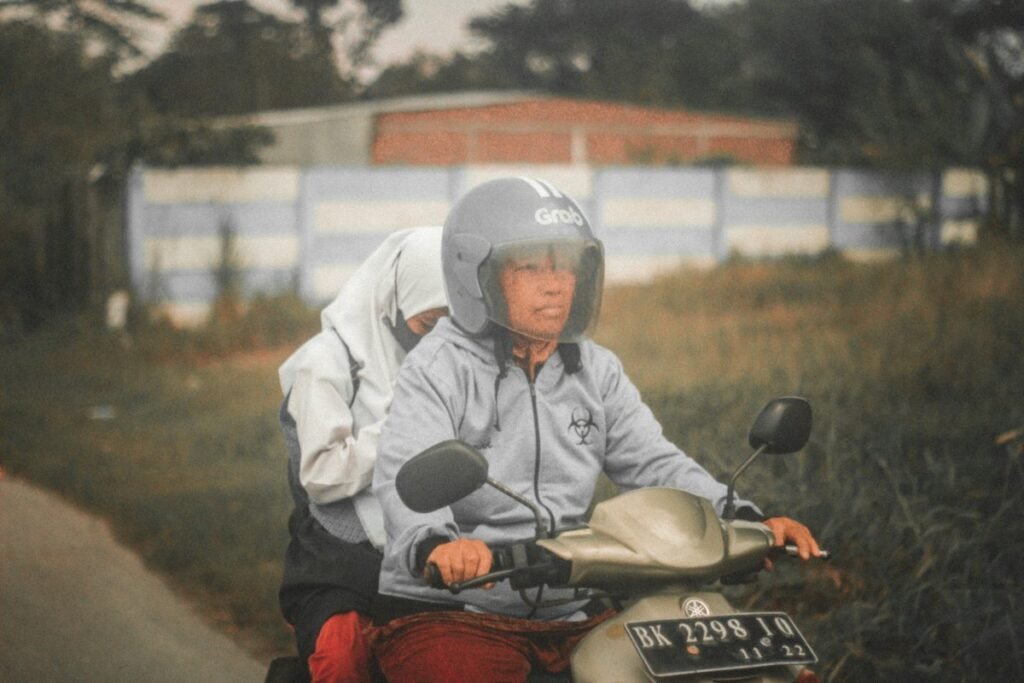
Short answer: an automatic scooter can be a gentle way to show a visiting parent around Hanoi, but only if they want to ride, can step over the seat and hold their balance, and the bike you rented has a proper passenger seat, something solid to hold and footrests they can reach. Check all of that at pickup with the bike parked, agree a calm way of getting on and off, ride more gently than you normally would, and keep a taxi or ride-hailing car as the plan for longer, busier or wetter stretches.
This guide is for a rider carrying one older passenger. If both parents are coming along, plan suitable transport for each of them; do not assume that age alone lets any scooter carry two passengers comfortably or safely.
Start with the passenger, not the bike
Ask your parent directly rather than deciding for them. A few honest questions save a lot of trouble later:
- Can they lift a leg over the rear seat without strain, or would they need to be helped up?
- Can they hold their own balance while seated, including when the bike stops suddenly?
- Do they have joint pain, dizziness or tiredness today? For anything health-related, their own doctor is the right person to ask, not the rider.
- Do they actually want to ride? Persuading a nervous passenger onto a scooter in Hanoi traffic rarely makes for a good afternoon.
If any answer gives you pause, use another form of transport for that journey. That is not giving up on the plan; it is keeping the whole family’s day on track.
What the law says about passengers and helmets
Vietnam’s Law on Road Traffic Order and Safety (Law 36/2024/QH15) sets the general rule in Article 33: a motorbike or moped rider may carry one passenger. Carrying up to two is allowed only in a few listed cases, and carrying an elderly or frail person is one of them. That exception is about the legal count, not a statement that two passengers fit comfortably or safely on a particular scooter, and it does not change the bike’s seating or load limits. The same article requires riders and passengers to wear a helmet that meets the Vietnamese standard, with the strap correctly fastened. For the rules on children and second passengers, see our guide to carrying a child or two passengers in Vietnam.
Check the bike at pickup
Every scooter model is different, so judge the actual bike you are given rather than its name or style. With the bike on its stand and the shop’s agreement, check these points:
| Part | What to look for and ask |
|---|---|
| Rear seat | Is it wide and flat enough for a passenger, or does it slope forward so they slide into the rider? |
| Grab rail or hand hold | Is there a rear grab rail or another solid point to hold? Is it secure, and can it be held with one hand or two? |
| Passenger footrests | Are there pillion footrests? Do they fold out properly and stay out? Are they at a height your parent can reach comfortably? |
| Seat height and floor | How high is the step over the seat? Is the rider’s floorboard wide enough to help with balance at stops? |
| Brakes and suspension | Does the bike stop smoothly? Does the rear suspension sink a lot with two people on board? |
If your parent will ride with you, ask whether they can sit on the bike briefly while it is safely supported, so you both know the seat and footrest position works before you leave. Ask the shop for a helmet that fits them properly as well; our helmet fit and strap checklist works for passengers too. For load limits and two-up riding in general, see two people on one Hanoi rental bike.
Getting on and off safely
- Choose flat, dry ground. Do not load a passenger on a slope, a ramp or a slippery surface.
- The rider gets on first, sits firmly with both feet on the ground and holds the brake so the bike cannot move.
- The passenger steadies themselves on the rider’s shoulder or the grab point, lifts a leg slowly over the seat and sits down gently.
- Settle the position: both feet on the footrests, back upright, a firm hold on the rider or the grab rail.
- To get off, the rider holds the brake and switches off the engine first. The passenger steps down slowly, and the rider waits until they are standing steadily before letting go of the brake.
Take it slowly. Remind your parent to do one step at a time and to look at where they put their feet. Watch for the exhaust: on many scooters it sits low on one side, and it can be hot after a ride, so agree which side they will get off.
Riding with an older passenger
- Ride more gently than you usually would. A passenger cannot anticipate bumps and braking the way the rider can, so they feel every jolt more.
- Brake early and smoothly. Look further ahead for red lights and people crossing so you rarely need to brake hard.
- Choose smoother streets where you can, and slow right down for speed bumps and broken road surfaces.
- Pull away gently. Open the throttle slowly so the scooter does not surge and tip your passenger backwards.
- Agree a signal. Ask your parent to tap your shoulder or speak up straight away if they feel dizzy, tired or uncomfortable, so you can find a safe place to stop.
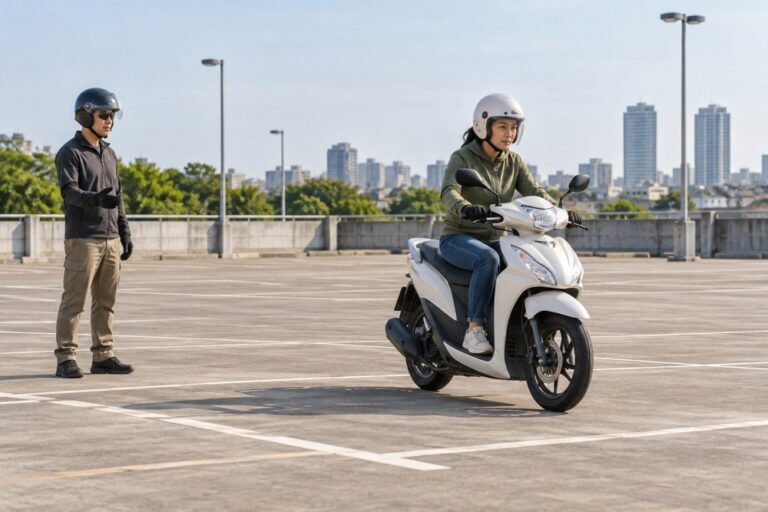
If you have not carried a passenger on this scooter before, practise a short loop on quiet streets first, ideally without your parent on board, so you know how the bike brakes and steers with weight on the back.
Break the day into short legs
Sitting on the back of a scooter for a long stretch can be tiring, especially for an older passenger. Plan the day as short legs with stops for a drink, a rest and a toilet. As a rough idea, if a leg would take more than about an hour, put a stop in the middle, and adjust that to how your parent feels on the day. Fewer destinations at an easy pace usually beat a packed schedule.
When another transport choice is better
- Your parent finds it hard to step over the seat or to keep their balance.
- The journey is long, crowded, or includes steep or rough sections.
- The weather is poor: heavy rain, a cold snap or fierce midday sun.
- You are not used to carrying passengers, or you have only just collected this bike.
In those cases a taxi or ride-hailing car for that stretch is the sensible choice, and you can still use the scooter for the short, easy parts of the day. Our ride-hailing or rental bike worksheet helps you decide which journeys suit which option.
Questions to ask the rental shop
- Does this scooter have a grab rail and folding passenger footrests, and do they work properly?
- Is there a scooter with a lower seat or an easier step-over for an older passenger?
- Do you have a helmet that fits the passenger?
- Is it fine for the passenger to sit on the parked bike to check the position before we leave?
A quick pre-ride checklist
| Check | Ready to go when |
|---|---|
| Passenger | Wants to ride, can step over the seat and hold their balance |
| Seat, grab rail, footrests | Seat is comfortable, a solid hold is available, footrests fold out and can be reached |
| Helmets | Both fit properly and both straps are fastened |
| Route | Short legs, smoother streets, rest stops planned |
| Weather | No heavy rain, cold snap or extreme heat expected |
| Backup | A taxi or ride-hailing option for longer or busier stretches |
Frequently asked questions
Is an automatic scooter easier for an older passenger than a geared bike?
Often the ride feels smoother because there are no gear changes, but what matters most is the seat, the grab point, the footrest height and how gently you ride. Check the actual bike rather than assuming.
Can I carry both parents at once because the law mentions elderly passengers?
The law’s exception concerns the number of people allowed, not whether a particular scooter can carry three adults comfortably and within its load limits. Plan suitable transport for each parent instead.
My parent has a health condition. Should they ride?
Ask their doctor. A rider or a rental shop is not in a position to judge that, and a car may be the better choice for some journeys.
Does my parent need their own helmet?
Yes. Passengers must wear a helmet meeting the Vietnamese standard with the strap fastened. Ask the shop for one that fits.
How long can an older passenger comfortably ride?
It varies from person to person. Keep legs short, stop often and ask how they feel rather than following a fixed time.
What if they feel unwell mid-ride?
Find a safe place to stop as soon as possible, let them rest, and switch to a taxi or ride-hailing car for the rest of the trip if needed.
Ask the shop
Thuê xe máy Nguyễn Hà is at Ngõ 5 Nguyễn Văn Cừ, Bồ Đề, Long Biên, Hanoi (near Gia Lam bus station), open 09:00–21:00 daily. To ask about a scooter with a comfortable rear seat and passenger footrests, call or message 0334 699 969 (Zalo/WhatsApp).
Sources checked
- Law on Road Traffic Order and Safety No. 36/2024/QH15 (consolidated text), Article 33: datafiles.chinhphu.vn