Manual & Semi-Automatic Motorbikes
Passenger Leg Burns From Motorbike Exhausts: Prevention on Step-Through Bikes
On this page
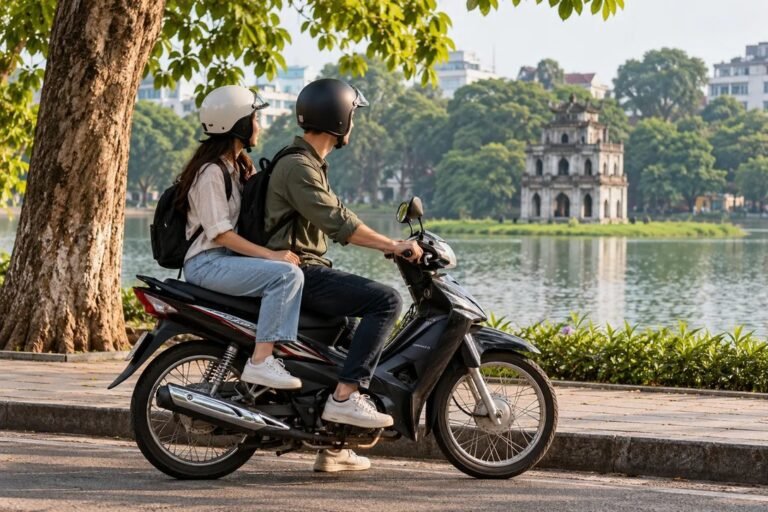
The exhaust of a petrol motorbike can remain hot long after the engine has been turned off. A passenger on a step-through or semi-automatic motorbike may accidentally touch it while climbing on, stepping off or lowering a foot during a stop. The contact can cause a serious burn even if the ride was short. Prevention starts with recognising where the exhaust is on the specific motorcycle, checking the passenger footrests and agreeing on a calm mounting and dismounting routine.
This guide is for passengers and people carrying them, including families using a rental motorbike in Hanoi. Exhaust position, shielding and passenger footrest design vary by model. Do not assume that the muffler is on the same side of every bike or that a metal cover is safe to touch after a journey.
When do passenger leg burns happen?
Some contacts occur when a passenger swings a leg across the seat, especially if the motorcycle is parked close to a wall. Others happen while getting off a hot bike, when a passenger lowers a foot close to the exhaust. Loose clothes or a bag can also brush against hot parts while the bike is stationary.
The exhaust may still be hot even when the engine is no longer running. Treat the area around it as a no-touch zone until the motorcycle has cooled, and keep children away from parked vehicles after a ride.
Three checks before carrying a passenger
- Point out the visible exhaust and nearby hot surfaces on the actual motorbike.
- Show the passenger where both rear footrests are and confirm that each is secure and usable.
- Agree that the passenger will mount and dismount only after the rider has stopped and stabilised the bike.
Do these checks before starting the engine if practical. A person who cannot use the passenger footrests or sit securely should not be carried on that motorcycle. Choose another suitable transport option rather than improvising a foot position near the exhaust.
Clothing and footwear can reduce contact risk
| Item | Better choice | Why it helps |
|---|---|---|
| Trousers | Long trousers that cover the lower legs | Reduce exposed skin; not heatproof protection |
| Footwear | Secure closed shoes or suitable riding boots | Protect feet and improve footing during stops |
| Loose fabric | Tucked or secured trouser hems and coat tails | Keep material away from the exhaust, chain and wheel |
| Bags | Close-fitting, properly secured luggage | Avoid dangling straps and sudden movement |
| Helmet | Appropriate fit and fastened strap | Essential rider/passenger protection, although it does not prevent exhaust burns |
Clothing is not a guarantee against burns. Thin material can become very hot, and even thicker fabric should not contact a running or recently used exhaust. Keep a deliberate gap between skin, clothing and hot motorcycle parts.
How to mount and dismount without rushing
First make sure the motorcycle is stopped, secure and under the rider’s control. The passenger should know which side is easier and safer to use on that particular bike, taking into account the exhaust, traffic, kerb and nearby obstacles. Do not assume the exhaust-free side is always the safest if it means stepping into passing vehicles.
The passenger should move calmly, keep their hands where they can support themselves and place both feet on the dedicated footrests before departure. At the end of the ride, wait for the rider to say the bike is stable before dismounting. Avoid stepping directly next to the exhaust casing.
What about a passenger lowering a foot at traffic lights?
A passenger should normally keep their feet on the passenger footrests while the motorcycle is being controlled, unless the situation calls for a safe dismount after a complete stop. Reaching toward the ground unexpectedly can affect balance and put a calf close to a hot exhaust. Agree on a simple signal beforehand if the passenger feels uncomfortable or needs to stop.
For a related stationary check, read our passenger footrest inspection guide. Do not carry anyone on a bike with missing, damaged or unusable passenger footrests.
When children or older relatives are passengers
A smaller passenger may not be able to reach the footrests, while an older person may find it difficult to swing a leg over the seat. Both situations require consideration before the ride. Do not assume a child can be carried safely simply by asking them to keep their legs still; legal passenger requirements and the actual motorbike’s suitability must also be checked.
If somebody cannot mount and dismount without approaching hot parts or losing balance, consider a different vehicle. An inappropriate fit should not be solved by adding a makeshift footrest or holding a passenger’s feet in place while riding.
Check the heat shield without touching the hot exhaust
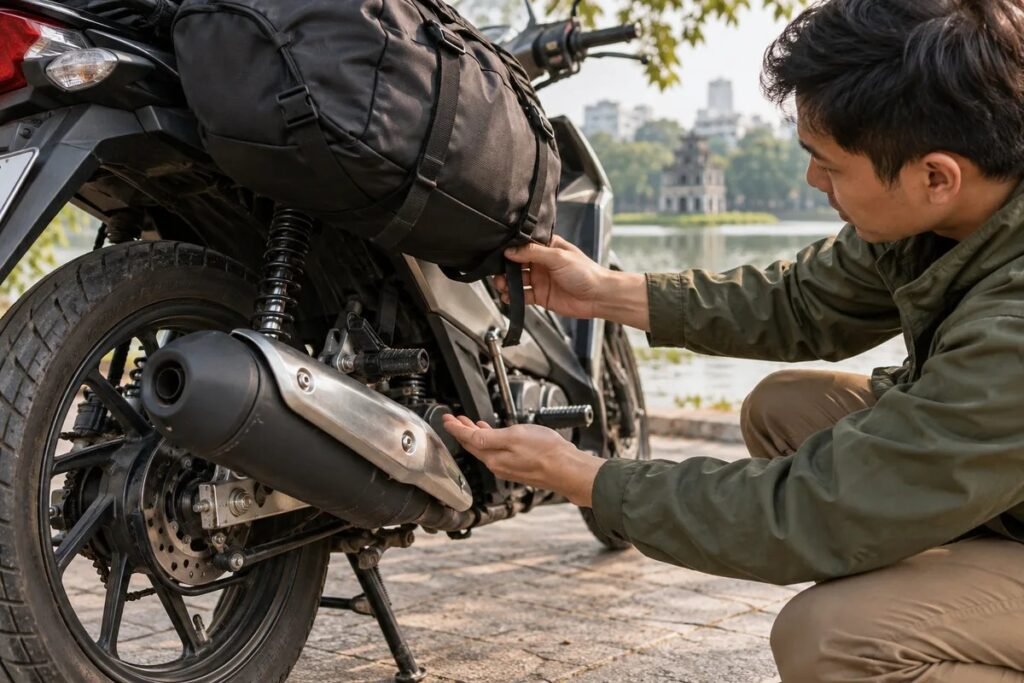
Some motorcycles have a shield over part of the exhaust. It may reduce accidental contact with hot metal, but it does not make the entire area cool or protect every angle. If a shield is cracked, loose or absent, point it out to the shop at pickup. Do not test its temperature by touching it.
Our exhaust heat-shield guide explains what can be checked visually before placing luggage near a hot area. A renter should not remove or modify the shield.
First aid if someone touches the exhaust
Move the injured person away from the hot surface and make sure the motorcycle is secure. Cool a thermal burn under cool running water for about 20 minutes as soon as possible. Keep the rest of the person’s body warm; do not delay urgent treatment for a serious burn. This is consistent with guidance from the UK National Health Service.
Remove nearby jewellery or clothing only if it is not stuck to the burn. Do not pull off material that is attached to injured skin. Do not apply ice, butter, oil, toothpaste or traditional remedies, and do not puncture blisters. After cooling, loosely cover the area with a clean non-adherent dressing, and seek medical assessment according to the severity and location.
When is medical help especially important?
Deep or extensive burns, burns affecting feet, hands, face, genitals or important joints, and injuries in children need prompt professional assessment. Seek urgent help if there are signs of serious injury or if you are uncertain about severity. Even a small exhaust contact can be painful and may develop a blister later.
For a severe injury, request emergency assistance through the appropriate local medical service. Do not postpone urgent care to photograph the motorcycle or debate responsibility for the incident.
Should the passenger keep riding after a burn?
Do not rush the injured passenger back onto the motorcycle. They may have pain, restricted movement or difficulty protecting the wound. Arrange appropriate help and transportation if needed. If the bike has an unusual exhaust position, missing guard or other concerning condition, also report that to the rental provider before using it again.
What to document for a rented motorbike
Take a stationary photo of the exhaust side, passenger footrests and any relevant guard before pickup if permitted. If a contact occurs, prioritise first aid, then tell the rental shop when, where and how it happened. A clear description helps distinguish an unsuitable passenger fit from a suspected equipment problem without making a premature accusation.
A conversation before departure is better than a warning halfway through
Show the passenger where to hold, how to keep feet on the rests and when they may get off. Ask them to tell you immediately if something feels uncomfortable or too hot. Do not rely on shouting instructions over traffic while negotiating a crowded intersection.
Keep luggage and clothing away from the wheel, chain and exhaust. A loose bag hanging over the passenger’s leg can restrict movement and create another hazard. If the bike is carrying two people, observe its intended passenger and weight limits.
Body panels may conceal the hottest parts, but heat can still reach adjacent metal. Ask the shop to identify the hot zone and safe footrest positions on the actual available model. A generic picture of a step-through bike does not guarantee identical layout on another one.
Questions to ask the shop at handover
- Where is the hot exhaust and which parts remain hot after stopping?
- Are both passenger footrests secure and suitable for the person I intend to carry?
- Is the exhaust guard intact, and is there any visible damage I should record?
- What should I do if a passenger is injured or a protective part seems loose?
See Nguyen Ha’s semi-automatic rental information for general vehicle choices and confirm the actual available bike before collection. For handover questions, call 0334 699 969. This article does not promise a particular passenger arrangement is legally permissible or that any model is in stock.