Automatic Scooters
Yamaha Mio Classico or Mio Ultimo: Which to Rent in Hanoi
On this page
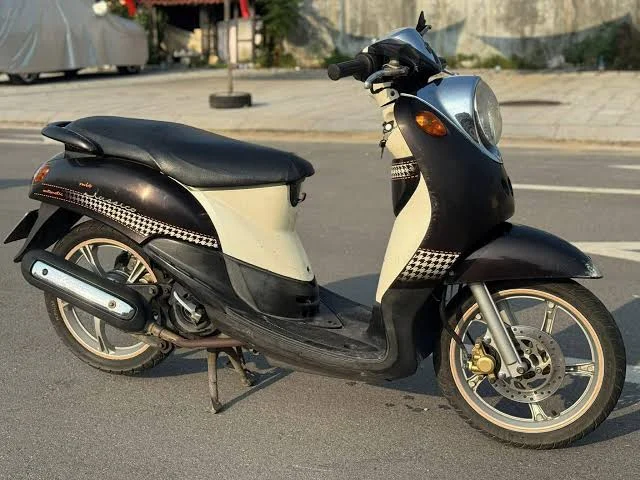
Nguyen Ha’s price table lists two Yamaha Mio scooters side by side: the Mio Classico and the Mio Ultimo. They cost the same to rent, carry the same deposit and, under the bodywork, share the same small engine. So the choice is less about performance and more about which bike fits you, which one is in better condition on the day, and whether a small, older automatic suits the riding you have planned.
Quick answer: both models are listed at 150,000 VND a day, 700,000 VND a week and 1,100,000 VND a month, with a separate 2 million VND deposit. A 2007 Vietnamese motoring review described the Ultimo as new bodywork on the Classico’s mechanicals: the same 113.7 cc air-cooled engine and automatic CVT. Choose on fit, styling and the condition of the actual bike, and confirm which variant is available before you book.
Same price band: listed rates and deposit
These are the reference rates from the shop’s published Hanoi motorbike rental price table, read on 19 November 2026:
| Model | Day | Week | Month | Deposit |
|---|---|---|---|---|
| Yamaha Mio Classico | 150,000 VND | 700,000 VND | 1,100,000 VND | 2 million VND |
| Yamaha Mio Ultimo | 150,000 VND | 700,000 VND | 1,100,000 VND | 2 million VND |
At 1,100,000 VND a month, the two Mio models have the lowest monthly rate among the full-size automatic scooters on the table. A week at 700,000 VND works out at 100,000 VND a day, so if you need a bike for more than a few days, ask for the weekly or monthly price instead of paying day by day.
The table calls these reference rates, so confirm the total for your exact dates and the specific bike before you pay. The deposit is held separately from the rental fee and returned under the conditions agreed at handover. Ask how it is paid, what written record you receive and what could be deducted at return.
Classico vs Ultimo: what actually differs
Yamaha Motor Vietnam launched the Mio Classico in October 2006. Its announcement described a “modern classic” body around an air-cooled, four-stroke, single-cylinder engine with an automatic CVT. By early 2007, Yamaha had added the Ultimo, together with a sister model, the Maximo. Reviewing the pair that March, the motoring section of Báo Pháp luật found that the new models mainly wore new bodywork, while the engine and technical details stayed the same as on the Classico.
The same review’s specification table lists a 113.7 cc engine with forced-air cooling and a CVT, gives a weight of 91 kg for both the Classico and the newer body, and quotes a 4.1-litre fuel tank. These are launch-era figures. The scooters you will see today are older units that may have been repaired, repainted or fitted with non-original parts, so the condition of the individual bike matters more than the name on the side panel.
| Point | Mio Classico | Mio Ultimo |
|---|---|---|
| On sale in Vietnam | From October 2006 | By early 2007 |
| Body | The original “modern classic” design | A newer body on the same base |
| Engine and transmission | 113.7 cc, air-cooled, automatic CVT | Unchanged from the Classico, per the 2007 review |
| Listed rental rate | 150,000 VND a day | 150,000 VND a day |
| Listed deposit | 2 million VND | 2 million VND |
Seat, footboard and storage
The launch-era sources do not give a seat height that can be trusted for today’s bikes, and seat padding on a scooter of this age varies from unit to unit. The practical test takes a minute: sit on each bike with both feet down, walk it backwards a metre, then rock it onto the centre stand. If one feels easier, that is your answer.
For storage, the 2007 review noted that the front storage area is split into two compartments inside the front cowl and that the space under the seat was no different from the Classico’s. Put your own helmet, raincoat or bag into each compartment at pickup rather than assuming they fit.
Who each model suits
Because the mechanicals are shared, either model suits the same kind of rider: someone making short trips around the city who wants a light, simple automatic at the lower end of the price table. On paper, the 91 kg figure makes the Mio a little lighter than the Honda Vision, which Honda Vietnam lists at 93–97 kg depending on version, as our Vision or Air Blade comparison shows.
The Mio is a weaker fit for long days out of town with a passenger and luggage, or for a daily commute across several bridges. A 113.7 cc air-cooled engine has less power to spare than the 125–160 cc scooters, and a 4.1-litre tank means more frequent stops for petrol. For those plans, it is worth comparing a larger scooter before you commit to a week or a month.
Between the two, the decision really is personal: if you like the rounded retro look, ask for the Classico; if you prefer the later styling, ask for the Ultimo. If both are available, take the one with the better brakes, tyres and pull-away, whatever its name.
Licence and the 125 cc line
At 113.7 cc, a Mio is a motorcycle rather than a 50 cc moped, so the rider needs a licence that covers it. Under Vietnam’s Law on Road Traffic Order and Safety (Law 36/2024/QH15, in force since 1 January 2025), class A1 covers two-wheel motorcycles up to 125 cm³, and the minimum age for an A1 licence is 18.
Licences issued before 2025, foreign licences and International Driving Permits each come with their own conditions, so read the category printed on yours. Our guide to licence classes A1 and A under the 2025 rules explains how to match a licence to a bike.
The vehicle registration certificate states the engine capacity, so ask to see it at pickup if you need to confirm that the scooter matches your licence.
What to inspect on an older small scooter
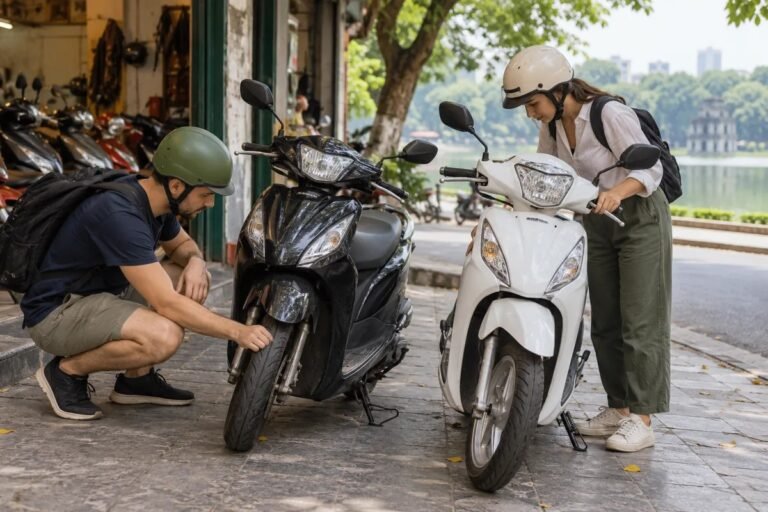
Mio scooters have been on Vietnamese roads since the mid-2000s, so any rental Mio is likely to be an older bike. That is not a problem in itself, but it makes the handover check more important:
- Brakes: squeeze both levers. They should feel firm and stop well short of the grip.
- Tyres: look for cracks in the sidewalls and enough tread, especially before rain.
- Lights, horn and indicators: test each one with the engine running.
- Starting: try the electric start, and ask how the bike should be started if it struggles on a cold morning.
- Pull-away: at walking pace, the scooter should move off smoothly, without juddering or a long burst of revs before it moves.
- Body and gauges: photograph existing scratches, cracked panels and the fuel gauge, and agree them with the staff before you ride away.
A juddering or slipping pull-away on an automatic can point to wear in the transmission. Our guide to CVT belt and roller wear symptoms explains what to note and report to the shop.
Older motorbikes also fall under Vietnam’s motorbike emissions-inspection roadmap. If you plan a long rental, our guide to the emissions-inspection roadmap and Hanoi dates sets out what has been announced.
Booking a Mio
The shop’s own listing describes its Mio rate as a category reference, so say whether you want a Classico or an Ultimo and ask the shop to confirm the actual bike, ideally with a photo. Both appear on the daily scooter rental page.
Nguyen Ha is at Ngõ 5 Nguyễn Văn Cừ, Bồ Đề ward, Long Biên, near Gia Lâm bus station, and opens 09:00–21:00 daily. Call or message 0334 699 969 on Zalo or WhatsApp with your dates and preferred model.
Related guide: How to book a Hanoi motorbike rental.
If you are also weighing a slightly bigger scooter in the same daily price band, see our Honda Click rental guide.
Frequently asked questions
Do the two Mio models cost the same to rent?
Yes. The price table lists both the Mio Classico and the Mio Ultimo at 150,000 VND a day, 700,000 VND a week and 1,100,000 VND a month, with a 2 million VND deposit. Confirm the total and availability for your dates in writing before you pay.
What is the main difference between the Classico and the Ultimo?
Mostly the bodywork. A 2007 Vietnamese review of the Ultimo found that it kept the Classico’s 113.7 cc engine and technical details under a newer body. On bikes this old, condition matters more than the model name, so compare the actual scooters.
Is a Mio suitable for a monthly rental?
At 1,100,000 VND a month, it has the lowest monthly rate among the full-size automatic scooters on the table, which suits riders making short city trips. For long daily commutes or trips with a passenger, test the seat and consider a larger scooter.
Which licence do I need for a Yamaha Mio?
With a 113.7 cc engine, the Mio is a motorcycle under Vietnamese law, so the rider needs a valid licence that covers it: class A1 or higher under Law 36/2024/QH15. Check the category on your licence before booking rather than at pickup.
What should I check on a small scooter at pickup?
Test both brakes, the horn, lights and indicators, look at tyre tread and sidewalls, and photograph existing scratches and the fuel gauge. Agree how fuel is handled at return, note any issue in the handover record, and keep your photos until the deposit is returned.
Sources checked
- Nguyen Ha, Hanoi motorbike rental price table, read 19 November 2026: price table
- Báo Pháp luật (AutoNet), review of the Mio Maximo and Mio Ultimo, 16 March 2007: baophapluat.vn
- VCCI News, Yamaha Motor Vietnam’s Mio Classico launch, 2006: vccinews.com
- Law on Road Traffic Order and Safety No. 36/2024/QH15, licence classes and age: luatvietnam.vn