Hanoi Motorbike Rental by Area
Gia Lam Rental Bike Handover: Check Brakes, Tyres and Lights
About 9 minutes to read
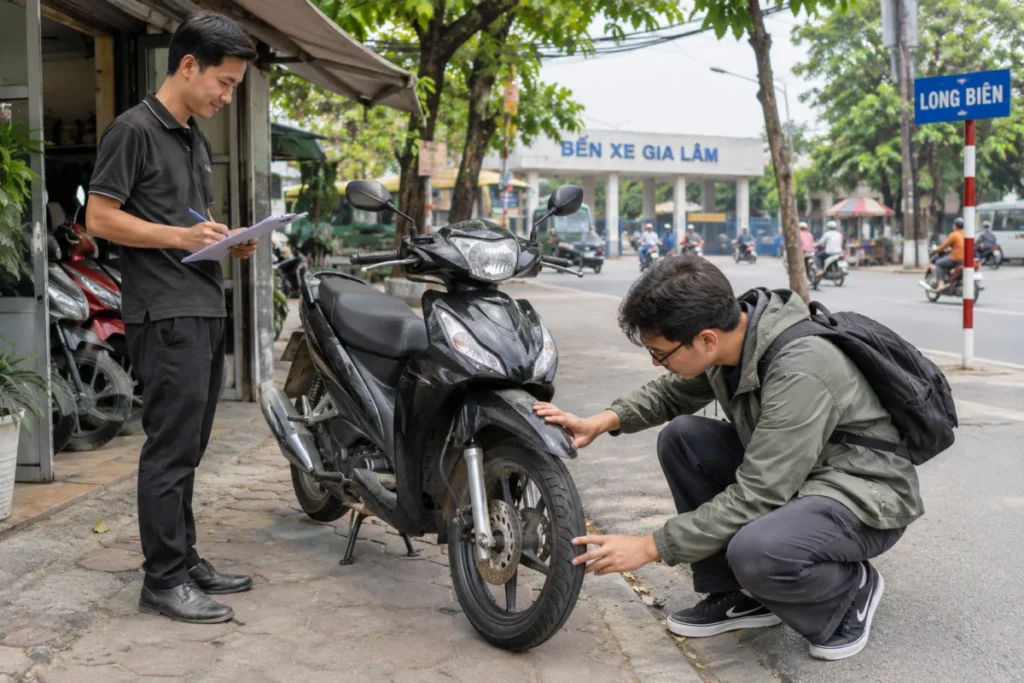
Collecting a rental motorbike near Gia Lam Bus Station means checking the vehicle before riding into Hanoi traffic. Brake operation, tyre condition, lights, locks and an accurate handover record all matter, especially after a long coach journey. This guide gives a practical inspection checklist for customers collecting from Nguyen Ha’s shop in Bo De, Long Bien. It does not claim a rental counter operates inside the bus station.
Your first task after the bus journey is confirming the actual pickup
Travellers arriving near Gia Lam Bus Station sometimes expect a motorbike to be waiting as soon as their coach stops. Nguyen Ha’s published shop is at Ngo 5 Nguyen Van Cu, Bo De, Long Bien, near the bus station, but it is not advertised as a rental desk inside the station. The coach company’s actual drop-off point may differ from the location shown on an older map, so confirm the address and appointment before setting off to collect your bike.
A long coach ride can leave you tired, particularly after an overnight journey. If you are sleepy or carrying large bags, arrange to leave your luggage at your accommodation and take time to recover rather than immediately riding into Hanoi traffic. A rental handover should include a practical inspection, and that takes more than simply exchanging keys. Nguyen Ha lists opening hours of 09:00–21:00 daily; collection outside those hours must not be assumed available.
When you contact the shop, identify the bike model, rental start and end times, a phone number you can answer and whether you will collect at the shop. Ask about the documents and deposit before travelling there. A quoted price is not proof of an available motorcycle, and a request is not a confirmed appointment. Once the details are agreed, allow a few minutes to complete the inspection below.
Check both brakes before riding into busy streets
Start with the motorcycle stationary on level ground in a safe place. Ask the person handing over the bike to identify the front and rear brake controls on that exact model. The layout can differ between semi-automatic and automatic motorcycles, so the rider should never guess which lever or pedal operates which brake. If the controls feel unfamiliar, request a demonstration before agreeing to ride.
Apply each brake gently while the vehicle is stationary and notice whether the control feels unusually loose, jammed or inconsistent. If you or the employee sees something worrying, ask for a proper inspection or another motorcycle rather than trying to diagnose or fix the mechanism yourself. Testing brakes by accelerating into traffic and stopping suddenly is not safe and should not be part of a rental handover.
The shop may help check the brake system using appropriate procedures. You do not need to become a mechanic, but you do need confidence that the brakes and controls behave normally. Ask what to do if a brake warning, unusual noise or loss of braking performance occurs later in the rental. Stop in a safe place and contact the shop rather than continuing a journey with a bike you believe may be unsafe.
Look at both tyres, not only the visible front section
Tyres deserve a visual check before a rental begins. Inspect both wheels for obvious cuts, cracking, bulges, unexpected wear or objects lodged in the tread. Ask the employee to help rotate or position the motorcycle safely if part of a tyre is hard to see; do not place hands near moving components. Uneven or visibly damaged tyres should be assessed before the bike leaves the shop.
A tyre’s correct pressure should be measured with suitable equipment and reference to the motorcycle’s requirements, not estimated by kicking the tyre or pushing it with a finger. If you suspect a problem, ask Nguyen Ha to check it. Different models can require different pressures and load considerations. Do not inflate a rented bike to a guessed number or alter a component without approval.
Look around the wheel for obvious signs of damage to the rim or nearby parts. If the bike seems unstable or you see something unusual, tell the employee while the vehicle is still at the handover point. After a long-distance coach trip, it can be tempting to leave as quickly as possible, but discovering a serious tyre issue in traffic would be far more disruptive.
Lights, indicators, mirrors and locks complete the essential checks
Test the headlight, rear light, turn indicators and horn with the employee. Check that both mirrors are present, secure and can be adjusted for a useful rearward view when you sit on the bike. A rider approaching unfamiliar junctions in Hanoi needs reliable visibility and signals. If any light fails or a mirror is damaged, discuss the issue before agreeing that the bike is ready.
Ask how the ignition, steering lock and seat compartment operate. Some scooters have different ignition layouts or electronic keys compared with older semi-automatic models. Test the key or remote and ask what to do if the bike will not start. Record the registration plate and make sure the motorcycle actually handed over is the one described in the agreement. Having two similar-looking bikes at the shop should not create uncertainty.
Confirm the fuel level and return expectations for a petrol motorcycle. For an electric model, ask about the battery indicator, supplied charging equipment and where charging is permitted; do not use an improvised or incompatible charger. Confirm which helmet or other accessories are included in your particular agreement and their condition. Do not assume every model comes with identical accessories or terms.
Photographs, paperwork and deposit: the handover record
Take clear pictures showing the front, rear and both sides of the motorcycle, with separate close-ups of any pre-existing scratches. This does not replace the contract, but helps everyone remember the condition at the start. If the employee notices a mark that is not in a previous photo, agree on how to record it. Include any charger, key or other item that will have to be returned.
Read the rental dates, exact return time, model, agreed rate and refundable deposit before paying. The shop publishes sample prices such as Honda Wave at VND 150,000 per day and Honda Vision or Air Blade at VND 200,000 per day; these are reference amounts, not proof a specific bike is available for your period. Ask for a written quotation, with any eligible delivery charge listed separately, rather than relying only on a headline price.
You must have the appropriate legal eligibility and driving licence for the type of motorcycle you will actually ride. Vehicle descriptions such as 50cc or electric do not make it safe to assume every document requirement is waived. Ask the shop which identification and driving documents are needed, and verify the rules before using the vehicle. If you are not experienced with its controls, select a familiar bike instead of learning in heavy traffic.
If you find a problem immediately after pickup
Make the first ride short and manageable when you have collected a bike you do not know well. Check that you can turn, stop, use the lights and find the lock easily before setting off on a longer route. If the brakes feel different from the inspection, a tyre appears damaged or an unusual warning appears, pull over where it is legal and safe. Contact the rental shop promptly and describe the symptom without attempting a risky road test.
Do not automatically take a rented motorcycle to an unauthorised repair shop or replace its parts. Ask Nguyen Ha how issues should be reported and what kind of support is available for your specific rental. An agreement for use in Hanoi does not guarantee a mechanic can reach you immediately in any district or province. If you intend to ride outside the city, discuss that plan and any limitations before collecting the bike.
Keep the shop’s contact number and your booking confirmation in your phone. If the problem makes riding unsafe, prioritise getting yourself to a safe location and follow appropriate emergency procedures where necessary. Taking photographs of a fault may help the conversation, but do not put yourself in danger while trying to document it.
Returning the rental should be planned from day one
Decide where and when you will return the motorcycle before leaving the shop. If the end of your rental coincides with a coach departure, allow enough time to travel back to the agreed handover point, inspect the bike and settle any deposit arrangements. Leaving the motorbike near the station and sending a message is not the same as returning it to the authorised recipient.
If your journey or accommodation changes, contact Nguyen Ha before the return appointment to ask about another time or location. The shop does not publish one universal hourly late-return penalty for all agreements, so the revised price and terms need to be confirmed individually. A different return address may also affect logistics and a collection fee.
At the final handover, remove your belongings, check the keys and accessories, and use the original condition photos when comparing the motorcycle. Confirm the agreed fuel or battery expectation, obtain an acknowledgement of the return and clarify when the refundable deposit will be reconciled. Completing the rental properly is just as important as inspecting the vehicle at the start.
Seven-point handover checklist
- Confirm the actual bike model, collection appointment, identification and licence requirements.
- Ask the employee to explain the front and rear brake controls; report anything unusual.
- Inspect both tyres and ask for a proper pressure check if necessary.
- Check lights, indicators, horn, mirrors, key and steering lock.
- Photograph existing marks and record fuel or battery level and accessories.
- Check the rental fee, refundable deposit and return agreement in writing.
- Save the shop contact and allow time to return the bike before onward travel.
Frequently asked questions
Can I inspect a rental bike inside Gia Lam Bus Station?
Nguyen Ha does not advertise a counter inside the station. Arrange a confirmed handover at the published Long Bien shop or another approved legal location.
Should I test motorcycle brakes at speed before accepting it?
No. Begin with stationary checks and guidance at a safe location. Ask the shop to inspect any unusual behaviour instead of attempting a risky test ride.
How do I know if the tyres are correctly inflated?
Ask the employee to check with suitable equipment and the bike’s own specification. Do not guess the correct pressure by feel.
Is a rental automatically available if my bus arrives after 9 pm?
The published hours are 09:00–21:00. Any different appointment needs explicit confirmation, and should not be assumed.
If you are staying longer, see preparing a monthly motorbike rental near Gia Lam Bus Station to plan the deposit and return.
Arrange a confirmed pickup with Nguyen Ha
See the local Gia Lam Bus Station motorbike rental page, pickup and return arrangements, rental pricing guide and how to book a motorbike. Nguyen Ha publishes the shop address Ngo 5 Nguyen Van Cu, Bo De, Long Bien, Hanoi and hours 09:00–21:00 daily. Call +84 334 699 969 or send a WhatsApp enquiry with the desired model and pickup time.