Hanoi Routes & Sightseeing
Hanoi to Sapa: Train, Bus or a Multi-Day Motorbike Plan?
About 8 minutes to read
Sapa is the farthest of Hanoi’s regular weekend destinations — roughly 300–320 km of mountain road northwest of the capital — and that distance is exactly why the “how do I get there” question actually matters here. For Ha Long or Hai Phong the transport is a detail; for Sapa it is a genuine decision between three different trips: sleeping your way up on the classic night train, riding the expressway in a six-hour sleeper bus, or turning the journey itself into the destination with a multi-day motorbike run through the northwest.
The honest summary before the details: the train and the bus are both good answers for a short visit, and which of them you pick is mostly about how you sleep. The motorbike is not a transport answer at all — it is a commitment of three to five days, real mountain riding skill, and a tolerance for fog. This guide lays out all three properly so you can match the option to the trip you are actually planning.
Quick Facts First
| Option | Time one way | Cost one way | Arrival shape |
|---|---|---|---|
| Night sleeper train (to Lao Cai) | ~8 hours, departs ~21:30–22:40, arrives ~05:30–06:25 | From about $32–39 per berth in a shared 4-berth soft sleeper; private 2-berth cabins from around $160 | Dawn at Lao Cai station, then a ~35 km / 1-hour transfer up to Sapa |
| Sleeper bus / limousine van | ~5.5–6.5 hours via the Noi Bai–Lao Cai expressway | Sleeper berths from about $10–20; VIP cabins and limousines a little more | Day buses arrive afternoon; night buses arrive ~4–5 am |
| Motorbike (multi-day) | 2–5 days door to door, riding ~315–455 km depending on route | Fuel, rental and nights on the road; no transport ticket | You arrive having seen the northwest — if you plan it right |
One Rule That Frames Everything
Motorbikes are banned from the Noi Bai–Lao Cai expressway, which is the fast road every bus and car uses. On two wheels you are on the old national roads — the QL70 corridor via Yen Bai, or the long scenic QL32 via Nghia Lo, Mu Cang Chai and the O Quy Ho pass. There is no one-day motorbike version of this trip that anyone should attempt: realistic riding time on the old roads runs from seven hours on the fast route to well over ten on the scenic one, and the last stretch into Sapa is a mountain climb that absolutely should not be met at dusk or in fog.
So the real question is not “train, bus or motorbike.” It is “is Sapa the destination, or is the northwest the destination?” If Sapa is the destination, take the train or the bus and be there for breakfast or lunch. If the ride is the point, plan a multi-day loop — and the rest of this guide covers exactly how.
Option 1: The Night Train, The Classic
How It Works
The railway runs about 296 km from Hanoi to Lao Cai station, at the bottom of the mountains. Night trains leave Hanoi between roughly 21:30 and 22:40 and roll into Lao Cai between about 05:30 and 06:25 — around eight hours — with the return leaving Lao Cai late evening and a daytime return leg also available. Sapa itself has no station: from Lao Cai it is about 35 km and roughly an hour up the mountain, by shared minibus for around 50,000 VND or taxi for roughly 150,000 VND, and the transfer is normally arranged when you book the train ticket.
Most tourists ride the dedicated tourist carriages attached to the SP services — names like Chapa Express and similar private operators run 4-berth shared soft-sleeper cabins and 2-berth private VIP cabins, with lounges at both stations. A shared berth costs from about $32–39; a whole private 2-berth cabin runs from around $160. Expect wood-panelled cabins, proper bedding, and no Wi-Fi — bring a power bank and something downloaded.
Who It Suits
- Travelers who value the arrival. You board after dinner, sleep horizontally, and step out at dawn into mountain air with the whole first day intact.
- Couples and families. The private cabin is a genuine bedroom on rails, and the train saves a hotel night.
- Anyone who dislikes bus sleeping. A flat berth beats a reclining bus bed, plainly.
The trade-offs: the train takes longer than the bus, the berth price is higher than a bus bed, and there is a 5:30 am arrival in a small station — check whether your Sapa hotel offers early check-in, or plan a breakfast stop in town.
Option 2: The Bus, The Workhorse
Buses are the fastest and cheapest way up, and the route is served almost like a commuter line: departures roughly every hour, day and night, run by a long list of operators from Hanoi offices in and around the Old Quarter — many collect you from your hotel first — plus an airport departure that skips Hanoi entirely. All services use the Noi Bai–Lao Cai expressway with a rest stop about halfway, taking roughly 5.5 to 6.5 hours.
The choice is between formats:
- Sleeper buses with rows of lie-flat beds, from around $10–20 one way, some with private cabin beds for a little more.
- Limousine vans with 7–9 reclining seats, a touch more comfortable, roughly $20–22.
The decision that matters more than the operator is the departure time. A morning bus puts you in Sapa by early afternoon with the whole first day for the valley; a night bus saves a hotel night but lands you in Sapa at four or five in the morning, in the cold and the dark, hoping your hotel stores luggage. That is a young-backpacker trade, not a family one. Also note: many buses on the route have no on-board toilet — the halfway stop is the halfway stop.
Who the Bus Suits
- Budget travelers and anyone booking late — capacity is huge.
- Day-trippers-in-spirit who want the maximum Sapa time per dollar.
- Anyone flying into Noi Bai, who can board straight from the airport.
Option 3: The Multi-Day Motorbike Plan
Now the third answer, and the one this guide will not romanticize. Riding to Sapa is one of the great trips in northern Vietnam — and it is a multi-day commitment with real mountain hazards, not a transfer.
Why One Day Does Not Work
The fast motorbike route — Thang Long bridge out of Hanoi, Viet Tri, Doan Hung, then QL70 through Yen Bai to Lao Cai, and finally the QL4D climb to Sapa — is roughly 315–320 km of old-road riding. Even without stops, that is seven to eight hours of saddle time, and the final 30-odd kilometres from Lao Cai are a continuous winding climb on which fog can appear out of a clear sky. Doing it in one push means arriving tired, into the most dangerous hour and terrain of the trip. Every experienced rider says the same thing: split it.
Plan A: The Two-Day Fast Route
- Day one: leave Hanoi early, ride QL70 via Viet Tri and Doan Hung, overnight in Yen Bai city or Lao Cai — roughly half the distance each day, all on national roads with fuel and food all the way.
- Day two: a fresh-morning ride up QL4D to Sapa, arriving with daylight to spare and the whole afternoon for the Muong Hoa valley.
Plan B: The Three-to-Five-Day QL32 Loop
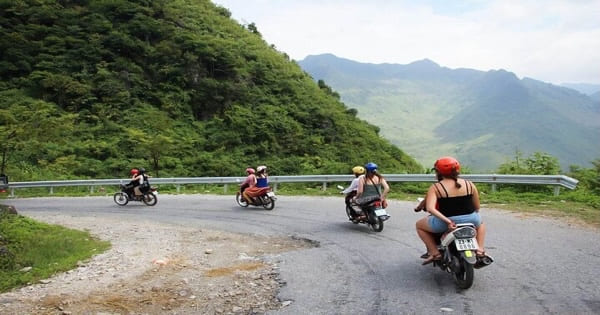
This is the version riders dream about, and it treats Sapa as one stop on a northwest circuit rather than a destination. From Hanoi, QL32 crosses at Trung Ha near Son Tay — the road is an unpleasant, truck-heavy scrum until that bridge, and properly enjoyable after it — and climbs into the hills through Thanh Son to Nghia Lo. From there the route joins some of the most celebrated tarmac in Vietnam: the Khau Pha pass down to Tu Le, the terraced fields of Mu Cang Chai, the high road through Than Uyen, and finally the O Quy Ho pass — one of Vietnam’s four great passes, climbing over 2,000 metres at Tram Ton, the “Heaven’s Gate” viewpoint — before dropping into Sapa from the west.
Count on roughly 420–455 km in the scenic direction, three to five days depending on how much you stop, and a return leg by whatever route or transport you like — several rental companies support one-way arrangements, letting you ride up and bus or train back. If you need to confirm availability or discuss a suitable rental plan before departure, contact the Hanoi rental team directly.
The Hazards, Stated Plainly
- Fog is the real enemy. On the O Quy Ho and the Lao Cai side of the mountains, visibility can drop from clear to a few metres within an hour, even while the far side of the pass stays sunny. Treat forecasts as rough guides, ride the passes in the morning, and if you cannot see through the next bend, stop or turn around.
- Rain season (May to September) brings more than wet roads. Landslides and flash flooding can close QL32 and the pass sections; in the rainy months, check road conditions the same day, not the day before.
- Winter is real at 1,500 metres. Sapa in January can sit near 5°C, and the pass occasionally sees snow. Pack for cold even in months that feel like summer in Hanoi.
- QL32 and QL70 carry trucks