
Motorbike Rental Guides
One-Way Motorbike Rental from Hanoi: Questions to Ask Before Booking
About 13 minutes to read
You want to ride out of Hanoi and not come back. North to Ha Giang, down the coast to Hoi An and Da Nang, or the full length of the country to Ho Chi Minh City, the route runs one way, so the rental should too. One-way motorbike rental exists exactly for this, and several operators run real networks with offices in Hanoi, Ha Giang, Hue, Hoi An and Ho Chi Minh City to make it work. But a one-way rental is a different class of transaction from a scooter around the Old Quarter: the distances are bigger, the bike has to survive longer, the deposit settles hundreds of kilometers from where it was paid, and the questions you should ask before booking are not the ones a city rental asks.
This article is built around those questions. Ask all of them, in writing, before you pay anything, and a one-way rental becomes one of the best travel decisions you can make in Vietnam. Ask none of them, and you are gambling with your deposit, your schedule and your safety at a distance where nothing can be fixed quickly.
What One-Way Rental Actually Is
A one-way rental means you pick up the bike at one of the operator’s offices, in this case Hanoi, ride your chosen route, and drop the keys at another office in another city. The operator absorbs the cost and logistics of getting the bike back into circulation, which is why one-way rentals carry fees and conditions that local rentals do not, and why they are offered mainly by larger, established operators with multi-city networks rather than by single corner shops.
The classic one-way journeys from Hanoi are well known: the coastal run south through Ninh Binh, Phong Nha, Hue and Hoi An toward Da Nang, roughly 800 kilometers to Da Nang alone; and the full north-to-south crossing to Ho Chi Minh City, nearly 1,700 kilometers, usually ridden in ten to fourteen days with stops. The northern highlight, the Ha Giang Loop, is usually ridden as a round trip out of Hanoi or as part of a wider route, though some operators have branches in Ha Giang itself, which opens one-way options in the far north too.
The distances do more than describe the trip. They define the risk profile. A bike that would be fine for three days of city riding can fail on day nine of a mountain crossing, and a deposit dispute with an office 1,000 kilometers behind you is a different problem than the same dispute across town. Everything in the question list below exists to close that gap before it opens.
The Ten Questions to Ask Before You Book
Send these to the operator in one message before booking. A good one-way operator answers all ten comfortably, because they are asked every week. Hesitation on any single one is information. To plan the Hanoi pickup, start with our Hanoi motorbike rental page and Hanoi rental rates and deposit guide; confirm one-way availability, the agreed drop-off and every route-specific charge directly with the operator before paying.
1. What Exactly Does the One-Way Fee Cover, and When Is It Charged?
Almost every operator charges a one-way fee in addition to the daily rate, to cover moving the bike back into their network. Get the fee as a number, get what it includes, delivery of the bike’s documents, drop-off reception, anything else, and confirm whether it is paid at pickup or deducted from the deposit at drop-off. The second version is common and is fine, as long as it is written down at the start and not discovered at the end.
2. Where Exactly Can I Drop the Bike, and When Is That Office Open?
“Da Nang” is a city; your contract needs an address, and your day in the city needs the office’s opening hours. A drop-off that only works because someone happens to answer the phone is not a drop-off, it is a rendezvous. Ask for the exact drop-off location, the hours, and the phone number of the person who will receive the bike, and if your arrival day is fixed, confirm that the office can receive you on that day, including weekends.
3. Which Bike Fits My Actual Route?
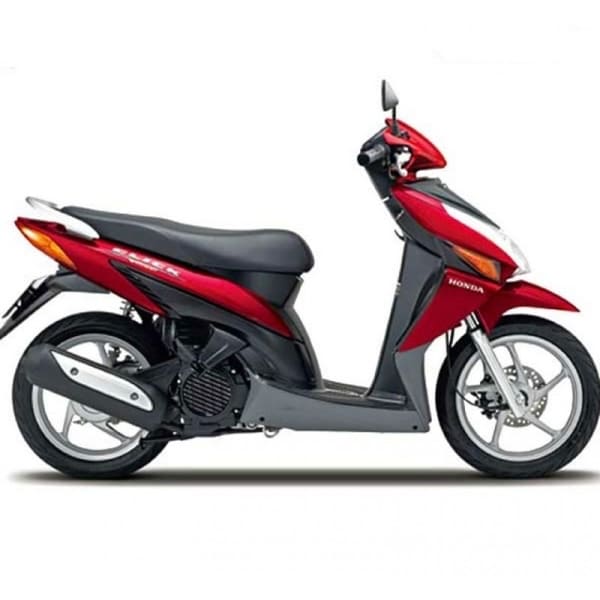
This question separates a real one-way operator from a shop with a website. A 1,700-kilometer crossing with mountain sections is not a Honda Vision journey; it is a semi-manual, touring-class trip on something like a Honda XR150 or a similar machine, with proper maintenance intervals and luggage capability. Conversely, riding the coast on a big trail bike you are not comfortable with is its own mistake. Give the operator your honest route and riding experience, and let them propose the bike. If the answer does not distinguish between your route and a city rental, the operator is not taking your trip seriously.
4. How Does the Deposit Settle at the Other End?
This is the single most important question for one-way rentals. At pickup you hand over money or a document in Hanoi; at drop-off you are dealing with an office that never met you. The best practice, and one some operators guarantee explicitly, is a refund in the exact currency and form you deposited: dollars in, dollars out, cash in, cash out. Card pre-authorization holds, the way hotels handle deposits, are also common; if that is the method, ask when the hold is released after drop-off, typically within several days. Whatever the method, the answer must be in writing before you ride, including the amount, the currency and the timing. A one-way rental with an unspecified refund method is a very long bet.
5. What Happens to My Passport or Documents Mid-Trip?
If the operator holds your passport as security and you are dropping the bike in another city, your passport must physically travel to the drop-off office to reach your hand. Serious operators have this exact process and will confirm it in writing: the passport is sent ahead to the destination office and returned to you at handover, with your ID or a photocopy carried by you in the meantime. The same advice applies as in every rental in this country: prefer cash or card deposits, and treat a passport hold as a last resort, especially across a two-week, 1,700-kilometer gap.
6. What Support Exists Between Hanoi and My Destination?
On a long one-way ride, the support question is not a nice-to-have, it is the product. Ask what happens if the bike breaks down: is there a phone number answered during your riding hours, a network of partner garages along your route, a policy of covering mechanical failures and wear items like tires and chains, and a clear line between what is their cost and what is yours? The good answers are specific. “Don’t worry, the bike is good” is not an answer to this question; it is an answer to a different, easier one.
7. What Insurance Exists, for the Bike and for Me?
Rental prices in Vietnam generally do not include meaningful insurance, and some operators sell additional coverage as an extra daily fee. Beyond the operator’s own coverage, ask yourself the harder question: does your travel or medical insurance cover you riding a motorbike abroad, and does that coverage depend on you holding a valid license for the bike, which in Vietnam means a 1968 Vienna Convention International Driving Permit alongside your national license? Riders without valid documents routinely discover, at the worst moment, that both the rental terms and their medical policy evaporate. This is the question to resolve before booking, not after an incident.
8. What Condition Will the Bike Be In, and What Comes With It?
For a long rental, the handover doubles as a departure inspection. Ask what servicing the bike receives before a multi-week trip, and what travels with it: two helmets, basic tools, a pump or puncture kit, spare tubes for the popular sizes, tie-down straps for luggage, a phone holder. Photograph the bike thoroughly at pickup, exactly as you would for a city rental, but with extra attention to tires, chain and brakes, because those are the items that a long route will test and that you will be discussing, if anything goes wrong, from a roadside in a different province.
9. What Are the Drop-Off Requirements?
Ask what the receiving office will check at drop-off: fuel level, cleanliness, the photo record from pickup, and any paperwork they want from you. The receiving office works from your rental file and your photos, so make sure the pickup documentation, the photos, the walk-around video, the chat with the operator, is complete and shared before you leave Hanoi. At drop-off, film the return handover exactly as you would any return, and get the receiving staff’s confirmation in the chat before you ride away in a taxi.
10. What If My Route or Dates Change Mid-Trip?
Long trips change. Ask what happens if you arrive two days late at the drop-off office, decide to finish in a different city on their network, or want to extend by a few days. The answers cost the operator nothing to give and cost you a lot if improvised: late fees, extension rates, re-routing fees, and whether your drop-off office can still receive you on the new date. Flexibility that is written down is real; flexibility that is assumed is a surcharge waiting to happen.
Route Realities From Hanoi
A rough map of the classic one-way journeys helps calibrate the questions above. Distances and durations are typical planning figures, not promises; weather, road works and your own pace move them substantially.
| Route | Typical distance | Typical riding time | What it demands of the rental |
|---|---|---|---|
| Hanoi to Ninh Binh and back | Roughly 100 km each way | 1–2 days | A city-class scooter is genuinely enough on the main roads |
| Hanoi, Ha Giang Loop, back to Hanoi | Roughly 800–1,000 km round trip | 4–6 days | Mountain-capable bike, high-dispute-area documentation discipline |
| Hanoi to Da Nang / Hoi An | Roughly 800 km one way | 7–10 days with stops | Touring-class bike, support network along the coast |
| Hanoi to Ho Chi Minh City | Nearly 1,700 km one way | 10–14 days | Full touring setup, the complete question list above, no shortcuts |
Notice the pattern: as the distance grows, the questions matter more than the price. On a two-day Ninh Binh trip, a vague shop is a nuisance. On a two-week crossing, it is a structural risk.
The Booking Message That Asks Everything at Once
Hello, I am planning a one-way rental and I would like to confirm the details before booking:

- Route: from Hanoi to [destination city], riding [roughly your route], from [date] to [date]
- Riders: [one / two] people, [one / two] bikes
- Experience: [your honest riding experience, and what bikes you have ridden]

Please confirm:
1. Which bike you recommend for this route and its daily rate
2. The one-way fee, what it includes, and when it is charged
3. The exact drop-off address and office hours in [destination]
4. The deposit amount and form, and how exactly it is refunded at drop-off (I prefer the same currency and form as deposited)
5. What support you provide if the bike breaks down on the route, and what costs are yours versus mine
6. Whether any insurance is included or available, and its cost
7. What comes with the bike: helmets, tools, luggage straps, phone holder
8. Your policy if my dates change by a day or two

I have a valid national license and a 1968 Vienna Convention IDP. I am ready to pay a booking deposit today to hold the bike.

Thank you!
The last line is not a polite decoration. Established one-way operators commonly ask for an advance deposit to hold a specific bike for a specific date, often a percentage of the total, precisely because a two-week rental blocks a valuable machine on your word. Offering it first signals that you are a serious renter, and it moves the conversation from “maybe” to “which bike”.
One-Way Red Flags
- “You can drop it anywhere.” A one-way rental needs a receiving office with an address and hours. Anywhere is nowhere.
- No written settlement of the deposit at the far end. The distance is the leverage; refuse to create it.
- A city scooter offered for a mountain crossing. It means the operator is renting you their convenience, not your route.
- The one-way fee described as “we’ll work it out at the end.” Everything worked out at the end, at a distance, is worked out by whoever holds your deposit.
- No support number for the route. On day ten of fourteen, this is the single most valuable line in your contract.
- License questions waved away. An operator uninterested in your documents is signing you up for problems that are exclusively yours: police fines and invalid insurance both land on the rider.
FAQ
Is one-way rental more expensive than a round trip?
Usually, yes, in two ways: a one-way fee on top of the daily rate, and often higher daily rates for touring-class bikes than city scooters. Both are fair prices for not riding a thousand kilometers back the way you came. Compare operators on the total for your exact dates, including the one-way fee, not on the daily rate alone.
Can I drop the bike in any city in Vietnam?
Only in the cities where your operator has an office or a confirmed receiving partner, which for the main operators means places like Hanoi, Ha Giang, Hue, Hoi An, Da Nang and Ho Chi Minh City. The drop-off list is a network, not a country. Ask for the full list before you plan your route around it.
How far in advance should I book a one-way rental?
Book as soon as your route and dates are real, and expect to pay a booking deposit to hold the bike. Multi-week rentals tie up the operator’s best machines, the suitable bikes are a minority of any fleet, and peak season takes them first. Two to four weeks ahead is a reasonable window; a week ahead may still work in low season for shorter routes.
What happens if the bike breaks down far from Hanoi?
It depends entirely on the operator’s support network, which is why question six exists. Good operators give you a number answered during riding hours, cover wear-item and mechanical failures, and can direct you to partner garages along major routes. Bring the basics regardless: know where the toolkit sits on the bike, carry the operator’s number in your phone, and save the location of a good mechanic the same way you save a good noodle shop.
Is insurance included in the rental price?
As a rule, no meaningful insurance is bundled into standard rental prices in Vietnam; some operators sell additional coverage as an extra daily fee. Separately, check whether your own travel or medical insurance covers motorbike riding abroad and under what license conditions, because invalid documents can void coverage at exactly the moment you need it. Treat insurance as something you arrange, not something you assume.
How do I get my deposit back at the destination?
The clean operators make this explicit: the refund comes in the exact currency and form you deposited, at the drop-off office, counted in front of you. Card pre-authorization holds release after drop-off, typically within several days. Whatever the method, the amount, form and timing belong in writing before you leave Hanoi, and the drop-off handover should be filmed like any other: walk-around, fuel, staff confirmation, closing message in the chat.
Can I ride the Ha Giang Loop as a one-way rental?
The Loop itself is normally ridden as a round trip out of Hanoi, but some operators have branches in Ha Giang, which makes a one-way Hanoi to Ha Giang leg, or a wider route that finishes in the far north, genuinely possible. Ask your operator which of their northern locations can receive a drop-off and on what days, because remote branches have smaller staff and shorter hours than city offices.
What should I do about luggage on a long one-way ride?
Plan for soft luggage. A duffel or backpack strapped to a rear rack with proper tie-downs is the standard setup, and good operators supply the straps. Hard-shell suitcases do not work on motorbikes and usually need to be couriered to your destination city, something operators with offices in both cities deal with regularly and can advise on. Travel light enough that a day’s riding never ends with a wrestling match.
A Short Closing Note
A one-way rental out of Hanoi is the version of motorbike travel that Vietnam is famous for: weeks on the road, the whole country in one direction, no backtracking. It is also the version where the booking conversation decides the outcome. Ask the ten questions, insist on written answers on the fee, the drop-off, the deposit settlement, the support and the insurance, pay the holding deposit for the right bike, and document the machine as if the return were a thousand kilometers away, because it is. Do that, and the ride becomes what it should be: a long, safe, one-way story you chose on purpose.