Tips & Resources
Vietnam SIM Card: Complete Guide to Viettel vs Vinaphone vs MobiFone
About 8 minutes to read
Vietnam SIM Card Comparison: What This Guide Covers
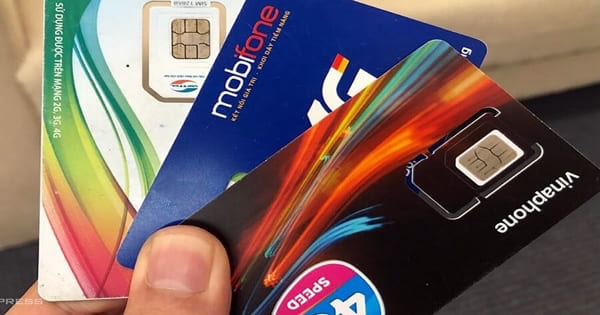
Most visitors to Vietnam choose between three mobile networks: Viettel, VinaPhone and MobiFone. Searches such as “Viettel vs VinaPhone, which is better” or “Viettel vs MobiFone” suggest there is one right answer. In practice, the better network is the one that works well where you will actually be, on a package that matches how much data you use and how long you stay.
This guide sets out what can be checked about each network, how registration works for foreign visitors, where to buy a SIM, and a simple way to test coverage before you commit. It deliberately does not list package names or prices: carriers change their tourist and prepaid packages often, and a price list copied from an old page is more likely to mislead you than help. Check the current package at the counter or on the carrier’s official site, and compare it using the questions below.
Short answer: all three networks sell prepaid and tourist SIMs that need a valid passport to register. Viettel and VinaPhone (VNPT) launched commercial 5G in late 2024, and MobiFone has also commercialised 5G. If you will stay mostly in Hanoi or other big cities, any of the three is a reasonable start; if you plan to ride into the mountains or remote areas, ask locally which network works best on your route and test it before buying a long package.
The three main networks at a glance
| Network | Operator | Mobile service began | Commercial 5G |
|---|---|---|---|
| MobiFone | MobiFone Corporation | 16 April 1993, Vietnam’s first mobile network | Commercialised (VietnamPlus report) |
| VinaPhone | VNPT | 1996 | Launched 20 December 2024 |
| Viettel | Viettel Group | 15 October 2004 | Launched 15 October 2024 |
The launch years come from a 2026 Pháp luật newspaper feature on the history of mobile networks in Vietnam; the 5G dates for Viettel and VNPT come from a Vietnam News Agency report carried by the People’s Army Newspaper. Older articles that quote market-share percentages often rely on figures that are several years old, so this guide does not repeat them; what matters for a visitor is how the network performs in the places you will go.
Viettel vs VinaPhone vs MobiFone: which is better?
None of the three is best everywhere for everyone. Reported speeds and coverage percentages vary with the test, the place, the time and the phone, and many figures that circulate online have no clear source. A more reliable way to decide is to work through four questions:
- Where will you spend most of your time? In central Hanoi, all three networks have a strong presence. Outside the cities, signal can differ from one valley or village to the next.
- How much data do you use? Navigation, ride-hailing apps, messaging and the occasional video call use far less data than streaming. Choose a package by daily or total allowance that matches your habits.
- How long will you stay? Tourist packages are built for short stays; a longer stay may suit a regular prepaid package that you renew each month.
- Does your phone support what you are buying? Check that your phone is unlocked, and whether it supports eSIM or 5G if the package depends on them.
Viettel vs MobiFone
Viettel is the newest of the three as a mobile network but launched commercial 5G first, in October 2024. MobiFone is the oldest network, operating since 1993. For a visitor the practical comparison is not history but signal on your route and the package terms on offer that day. If two packages look similar, the deciding factor should be how well each network works where you are staying and riding.
Viettel vs VinaPhone
Both launched commercial 5G within two months of each other at the end of 2024, and both sell tourist and prepaid SIMs through official stores. Compare the current package terms side by side: total or daily data, validity, local calls, and whether the speed is reduced after an allowance is used up.
How to compare packages without a price list
| Ask about | Why it matters |
|---|---|
| Validity (days) | A package that ends before you leave means a top-up or a new SIM mid-trip |
| Data allowance: per day or in total | A daily allowance suits steady use; a total allowance suits uneven use |
| What happens after the allowance | Some packages slow down rather than stop; ask what speed remains |
| Local calls and SMS | Useful for calling a rental shop, hotel or driver |
| Hotspot or tethering | Matters if you share data with a laptop or a travel partner |
| How to renew or top up | Check whether the package renews automatically and how to stop it |
| eSIM or physical SIM | eSIM avoids swapping cards but needs a compatible phone |
Write down the total price and what is included before paying, and keep the receipt or confirmation message. For a look at data packages aimed at travellers, see our guide to 4G and 5G data packages for travel; if your phone supports it, the Vietnam eSIM guide covers the eSIM route.
Registration: what you need as a foreign visitor
Every mobile subscription in Vietnam must be registered to the user. Under Decree 163/2024/NĐ-CP, in force since 24 December 2024, a foreign national registers with a passport that is still valid for their stay in Vietnam (according to the visa, or the maximum permitted stay for visa-exempt visitors), or with an electronic identification account where the law allows it. The Ministry of Science and Technology tightened the rules on verifying subscriber information in 2026 with Circular 08/2026/TT-BKHCN; the reports read for this guide describe the steps for Vietnamese citizens and do not set out separately how they apply to passport holders.
In practice, bring your passport, expect the staff to complete the registration and verification steps their system requires, and do not buy a SIM that someone offers to register in another person’s name. A SIM that is not registered to you can be blocked, and you lose the number.
Where to buy and activate
- Official carrier stores and counters are the safest place to buy: staff can register the SIM to your passport, explain the current packages and test the connection before you leave.
- Authorised dealers are common in cities. Check that registration is done properly in your name.
- Airport counters are convenient on arrival but may offer a narrower choice of packages than city stores. Our guide to buying at the airport or in city shops compares the two.
Before you walk away, check that you can make a call, send a message and load a web page with Wi-Fi switched off.
Test coverage on your route before committing
If you plan longer rides outside Hanoi, the most useful thing you can do is test before you buy a long package:
- Start with the shortest sensible package on your first choice of network.
- Ask your hotel, the rental shop or people where you are going which network works best there.
- Check signal at your accommodation and at the furthest point of your first day trip.
- If signal is weak where you need it, a second SIM or eSIM on another network can be cheaper than relying on one.
Whatever you choose, download offline maps before leaving the city; our offline maps guide explains how. Signal can drop in hills and valleys on any network.
Using your phone on a rental motorbike
- Give the rental shop a number that works. A local SIM makes it easier for the shop to reach you; our guide on which phone number to give a rental shop compares roaming, a local SIM and messaging apps.
- Stop to use the phone. Set the route before you ride and pull over safely to check it. Vietnamese law prohibits using a phone while riding.
- Plan for battery. Navigation drains a phone quickly; carry a power bank and check how charging works on your bike.
Top-up and renewal
You can usually top up with prepaid cards sold in shops, through the carrier’s app, or by bank or e-wallet payment. Before your package ends, check how it renews and what happens to unused data. If you are leaving Vietnam, ask how to cancel any automatic renewal.
FAQ
Viettel or VinaPhone: which is better for tourists?
Neither is best everywhere. Both sell tourist and prepaid SIMs, and both launched commercial 5G at the end of 2024. Choose the one that works well where you will stay and travel, on a package that fits your data use and length of stay.
Viettel vs MobiFone: which should I choose?
Compare current packages on validity, data allowance and what happens after the allowance, then test signal on your route. MobiFone has operated since 1993 and Viettel since 2004; history matters less than coverage where you go.
Do I need a passport to buy a SIM card in Vietnam?
Yes. Under Decree 163/2024/NĐ-CP, a foreign national registers a mobile subscription with a passport valid for their stay, or an electronic identification account where permitted.
Is 5G available in Hanoi?
Viettel launched commercial 5G on 15 October 2024 and VNPT on 20 December 2024, and MobiFone has also commercialised 5G. Whether you get 5G depends on your phone, your package and the location.
Why does this guide not list prices?
Package names and prices change often, and outdated lists are a common source of confusion. Check the current offer at the counter or on the carrier’s official site, and compare it with the questions above.
Ask the shop
Thuê xe máy Nguyễn Hà is at Ngõ 5 Nguyễn Văn Cừ, Bồ Đề, Long Biên, Hanoi (near Gia Lam bus station), open 09:00–21:00 daily. When you book a bike, you can call or message 0334 699 969 (Zalo/WhatsApp) from your new local number so the shop has it.
Sources checked
- Pháp luật newspaper (Doanh nhân), history of mobile networks in Vietnam, 2026: doanhnhan.baophapluat.vn
- People’s Army Newspaper (VNA), Vietnam accelerates 5G commercialisation: en.qdnd.vn
- VietnamPlus, MobiFone commercialises 5G: vietnamplus.vn
- Cần Thơ legal-information portal, documents for registering a mobile subscription under Decree 163/2024/NĐ-CP: pbgdpl.cantho.gov.vn
- Luật sư Việt Nam, Circular 08/2026/TT-BKHCN on verifying subscriber information: lsvn.vn