Tips & Resources
Do You Need a Motorcycle License in Vietnam? Current Rules
About 13 minutes to read
Planning to explore Vietnam on two wheels? Before riding, it is important to understand which licence rules apply to the specific vehicle you will operate. This guide focuses on motorcycle licensing, foreign driving documents, rental considerations, and the current framework travelers should verify before riding in Vietnam.
Legal Requirements for Motorcycle Riding in Vietnam
This page is the broad Vietnam-wide licensing hub. It covers the general question of whether a rider needs a licence, while narrower topics are handled by dedicated guides: IDP recognition, licensing for rentals, and 50cc/moped rules.
Do You Need a Licence to Ride a Motorcycle in Vietnam?
Under Article 56, a rider must hold a valid driving licence appropriate to the vehicle unless the vehicle is legally classified as a moped covered by the separate rider conditions in Article 56(4). Check the vehicle’s legal classification and specifications rather than relying on a rental label or engine-size nickname.
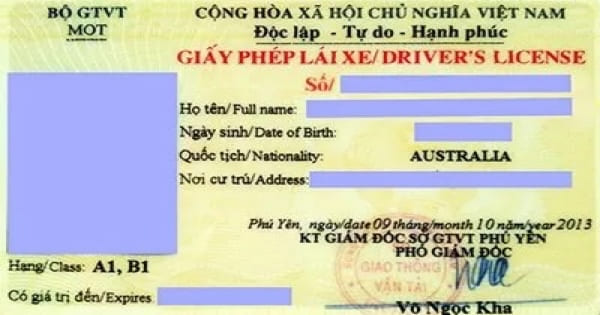
Article 57 sets Vietnamese motorcycle licence classes: A1 covers two-wheeled motorcycles up to 125 cm³ or electric motor power up to 11 kW; class A covers motorcycles above those thresholds and the vehicles covered by A1. These are Vietnamese licence classes, not an automatic conversion table for foreign documents.
For a foreign rider, verify both the legal recognition route for the documents and the vehicle entitlement shown on them. An IDP is not a standalone licence. See the detailed IDP guide, the rental licensing guide, and the separate 50cc/moped guide.
Official source: 2026 consolidated Road Traffic Order and Safety Law (Vietnamese PDF), Articles 56 and 57. Checked 8 October 2026.
International Driving Permits for Vietnam
Article 57 recognises a 1968 Vienna Convention IDP issued by a member state when the rider carries it with the corresponding valid national driving licence and both documents cover the vehicle class being operated. A permit alone does not authorise riding.
Check the issuing convention, validity dates and motorcycle entitlement before travel. Do not assume that a 1949-format permit, a document sold as an “international licence”, or a car-only entitlement satisfies this route. Other foreign licences are usable only where the applicable Vietnamese law, treaty or agreement recognises the specific document and vehicle class.
How an IDP is obtained depends on its issuing country. Use the competent issuing authority and confirm the format before travel; do not rely on a fixed fee or processing time. For the focused explanation, see our International Driving Permit guide.
Official source: 2026 consolidated Road Traffic Order and Safety Law (Vietnamese PDF), Article 57(6) and 57(8). Checked 8 October 2026.
Vietnamese Motorcycle License Requirements
Checking a Vietnamese Licence Application or Conversion
Do not use a stay-length rule or a generic checklist to decide eligibility. The applicable route can depend on the applicant’s status, existing licence, requested class and the procedure in force.
- Confirm whether the application is for a new licence, conversion, replacement or another procedure.
- Use the current document list from the competent authority; do not assume that a visa type, residence paper, medical certificate, translation, photo format or address document applies to every applicant.
- Confirm the examination, health and training requirements for the requested class before submitting documents.
Official procedure source: Circular 108/2026/TT-BCA, issued by the Ministry of Public Security on 29 June 2026 and effective from 1 July 2026. Checked 8 October 2026.
Testing Requirements
Testing requirements depend on the current licence procedure and the licence class being sought. Do not rely on fixed question counts, pass marks, test languages, or a single practical-course format without checking the current official procedure. See Circular 108/2026/TT-BCA for the current framework.
Penalties for Riding Without the Required Licence
How to Check the Applicable Penalty
Do not reuse a single fine figure for every rider. The applicable rule depends on the exact offence, vehicle classification, document held and licence entitlement. Decree 168/2024/NĐ-CP is the penalty framework, and Decree 238/2026/NĐ-CP amended parts of it with effect from 15 August 2026.
- Match the current provision to the exact vehicle and licence situation before quoting a fine.
- Do not treat a rental shop accepting a booking as proof that the rider is legally entitled to operate the vehicle.
- Administrative measures and insurance consequences must be checked under the applicable provision and the actual policy; they are not automatic in every case.
Official sources: Decree 168/2024/NĐ-CP and amending Decree 238/2026/NĐ-CP. Checked 9 October 2026.
Roadside Documentation
Carry the documents required for the vehicle and your circumstances. Follow current traffic signs and lawful instructions from authorities; this page does not claim that foreign riders are subject to a separate regional enforcement rule.
How General Licensing Rules Affect Motorcycle Rental in Vietnam
Why Rent a Motorcycle in Vietnam?
Flexibility and freedom: Explore at your own pace, access remote locations, and experience authentic Vietnamese culture.
Cost-effective: More affordable than private tours or taxis for extended exploration.
Cultural immersion: Navigate local markets, interact with residents, and discover hidden gems.
Types of Motorcycles Available for Rent
Automatic scooters (most popular):
- Honda Air Blade 125cc
- Yamaha NVX 155cc
- Honda SH 150cc
- Suzuki Address 110cc
Semi-automatic motorcycles:
- Honda Wave 110cc
- Honda Blade 110cc
- Yamaha Sirius 110cc
Manual motorcycles:
- Honda XR 150cc
- Yamaha FZ 150cc
- Suzuki GN 125cc
Adventure bikes (limited availability):
- Honda CRF 250cc
- Yamaha WR 250cc
- KTM Duke 390cc
Rental Requirements and Process
Separate legal riding eligibility from the rental provider’s commercial terms.
- Rider documents: if the vehicle requires a licence, verify that the recognised licence route and vehicle entitlement apply. An IDP is used with the corresponding national licence; it is not a standalone document.
- Vehicle documents: check the registration, the valid compulsory civil-liability insurance certificate and any inspection document required for that vehicle.
- Shop terms: identification, deposit, payment, retained documents, return conditions and damage charges come from the actual rental agreement. Do not assume a passport must always be surrendered.
- Age: legal age and licence conditions depend on the vehicle class; a provider may also set a stricter contractual minimum.
Before departure, record the motorcycle’s condition, test essential controls, read the agreement and keep the provider’s contact and incident instructions. See the Hanoi rental requirements guide for the focused checklist.
Rental Costs and Pricing
Rental prices, deposits, included equipment and optional cover vary by provider, vehicle and rental period. This licensing guide does not use old USD ranges as national price benchmarks.
For published Hanoi rates, see our motorbike rental price guide. Before booking, confirm the quoted currency and total, deposit, extension and late-return rules, fuel policy, delivery charge, included equipment and damage terms directly with the provider.
Where to Verify Current Licence and Rental Information
- Vehicle class and road documents: use the current Vietnamese road-traffic law and the vehicle’s registration and specifications.
- Licence application or conversion: use the current procedure from the competent Vietnamese licensing authority.
- Penalties: check the current penalty provision and amendments for the exact offence and vehicle.
- Rental terms: verify the provider’s current address, fleet, price, deposit, included equipment, insurance documents and support terms before paying.
The previous third-party provider list was removed because its claims about locations, prices, availability, service quality and included insurance had not been reverified. For Hanoi preparation, use the rental requirements checklist and confirm the actual contract with the selected provider.
Safety Tips for Riding Motorcycles in Vietnam
Essential Safety Gear
Helmet (mandatory):
- Full-face helmets recommended
- Ensure proper fit
- Check for safety certifications
Protective clothing:
- Long pants (jeans minimum)
- Closed-toe shoes
- Long-sleeved shirts
- Reflective gear for night riding
Traffic Navigation Tips
Understanding Vietnamese traffic:
- Traffic flows like water
- Predictable movement is key
- Maintain steady speed
- Use horn to communicate
Road hazards to watch for:
- Sudden lane changes
- Street vendors
- Construction zones
- Weather-related conditions
Weather Considerations
Rainy season precautions:
- Reduce speed significantly
- Increase following distance
- Avoid metal surfaces
- Consider postponing rides in heavy rain
Hot weather safety:
- Stay hydrated
- Take frequent breaks
- Wear sun protection
- Avoid riding during peak heat hours
Insurance and Legal Protection
Compulsory Civil-Liability Insurance Document
Article 56 requires a driver to carry the valid compulsory civil-liability insurance certificate for the vehicle. Before accepting a rental motorcycle, check that the certificate applies to the vehicle supplied.
This legal road document is different from optional damage, theft, medical or travel-insurance coverage. Do not infer those benefits from the compulsory certificate, and do not rely on the previous fixed coverage or annual-cost figures without checking the current insurance rules and the actual policy.
Official source: 2026 consolidated Road Traffic Order and Safety Law (Vietnamese PDF), Article 56(1)(d). Checked 8 October 2026.
Optional Insurance Coverage
Do not assume that a rental includes theft, collision damage, medical expenses, personal liability or travel cover. Those benefits exist only when they are stated in the relevant policy or rental agreement.
- Read the covered vehicle class, territory, rider-licence conditions, exclusions, excess or deductible and claim procedure.
- Confirm whether damage to the rental motorcycle, theft, third-party property, medical care and repatriation are included or excluded.
- Ask the insurer to clarify ambiguous wording before riding; a provider’s verbal summary is not a substitute for the policy terms.
What to Do After an Accident
- Prioritise immediate safety and medical needs; contact the appropriate local emergency service when necessary.
- Follow lawful instructions from authorities and avoid moving an injured person or altering the scene unless needed for safety.
- If safe, record the location, vehicles, damage and witness details.
- Contact the rental provider and insurer using the notice procedure in the agreement or policy.
- Keep reports, receipts and correspondence required for any claim.
This is a preparation checklist, not a substitute for instructions from emergency services, police, the rental provider or insurer in the actual incident.
Popular Motorcycle Routes in Vietnam
Northern Vietnam Routes
Ha Giang Loop:
- Distance: 350km
- Duration: 3-4 days
- Highlights: Dong Van Karst Plateau, Ma Pi Leng Pass
- Difficulty: Challenging (mountain roads)
Sapa to Ha Giang:
- Distance: 280km
- Duration: 2-3 days
- Highlights: Terraced rice fields, ethnic villages
- Difficulty: Moderate to challenging
Central Vietnam Routes
Hai Van Pass (Da Nang to Hue):
- Distance: 120km
- Duration: 1 day
- Highlights: Coastal views, historic sites
- Difficulty: Easy to moderate
Ho Chi Minh Trail sections:
- Various distances available
- Historical significance
- Jungle and mountain scenery
- Difficulty varies by section
Southern Vietnam Routes
Mekong Delta Circuit:
- Distance: 200-400km (various routes)
- Duration: 2-4 days
- Highlights: Floating markets, rural villages
- Difficulty: Easy (flat terrain)
Dalat to Mui Ne:
- Distance: 160km
- Duration: 1-2 days
- Highlights: Mountain descent, sand dunes
- Difficulty: Moderate
Rental vs Purchase Considerations
This section is secondary to the licensing question. For Hanoi-specific rental requirements and booking preparation, use our Hanoi motorbike rental requirements guide. For the specific International Driving Permit question, see our IDP guide for Vietnam.
For the rental-focused Vietnam licensing article, see Vietnam motorcycle licence rules for rental, which covers the licensing requirements specifically in a rental context.
Compare the Actual Rental and Ownership Obligations
- Rental: compare the total contract cost, deposit, permitted use, return conditions, maintenance responsibility, damage terms and included documents.
- Purchase: consider purchase and transfer costs, registration eligibility, storage, maintenance, insurance, taxes or fees and eventual resale.
Ownership eligibility, vehicle registration and legal permission to ride are separate questions. Before paying for a motorcycle, confirm the current ownership and registration procedure with the competent registration or tax authority, verify the seller and vehicle records, and obtain the transaction documents required for the specific case. Buying a vehicle does not create a valid riding entitlement.
Common Mistakes to Avoid
Licensing and Document Mistakes
- Do not carry an IDP as a standalone licence. Under the 1968 Vienna Convention route, carry it with the corresponding valid national licence and the correct vehicle entitlement.
- Do not assume a photograph or photocopy replaces an original document when the applicable rule requires the document itself.
- Match the recognised riding document to the vehicle’s legal classification and registered specifications, not only its advertised engine-size label.
- Check validity dates and the actual motorcycle entitlement before accepting the vehicle.
Rental Mistakes
Inadequate inspection:
- Document all existing damage
- Test all functions before leaving
- Take photos of condition
Insufficient insurance:
- Verify coverage details
- Understand deductibles
- Consider supplemental coverage
Safety Mistakes
Inadequate protective gear:
- Never ride without helmet
- Invest in quality protective clothing
- Consider weather-appropriate gear
Overconfidence:
- Respect local traffic patterns
- Practice in safe areas first
- Know your skill limits
Cultural and Practical Considerations
Understanding Vietnamese Traffic Culture
Traffic as social system:
- Predictable behavior expected
- Eye contact for communication
- Respect for larger vehicles
- Patience with congestion
Practical Riding Tips
Fuel considerations:
- Petrol stations widely available
- Carry cash for fuel payments
- Know basic Vietnamese fuel terms
Parking and security:
- Use designated motorcycle parking
- Always lock your bike
- Remove valuable accessories
- Park in well-lit areas
Local Etiquette
Respectful riding:
- No excessive horn honking
- Yield to pedestrians
- Avoid blocking intersections
- Park considerately
Planning Your Motorcycle Journey
Pre-Trip Preparation
Research and planning:
- Study route options
- Check weather forecasts
- Identify fuel stops
- Plan accommodation
Essential items to pack:
- First aid kit
- Tool kit (basic)
- Phone charger/power bank
- Cash for tolls and fuel
During Your Trip
Daily routine:
- Check motorcycle condition
- Plan realistic distances
- Stay hydrated
- Monitor weather changes
Navigation tips:
- Use offline maps
- Learn key Vietnamese road signs
- Ask locals for directions
- Keep emergency contacts handy
Frequently Asked Questions
Can tourists ride motorcycles in Vietnam?
Tourists may ride motorcycles in Vietnam only when they meet the applicable Vietnamese requirements for the vehicle they are operating. An IDP is not a standalone substitute for the underlying national driving licence, and there is no blanket “3-month” rule to rely on without checking the current rules and documents.
What happens if I get caught riding without a license?
Penalties depend on the specific traffic violation and the penalty rules in force at the time. Vehicle handling and other administrative consequences may also apply depending on the case. Insurance consequences depend on the policy and the rider’s legal/documentation status, so verify the actual coverage terms rather than assuming a claim will be denied.
Is it safe to ride motorcycles in Vietnam?
Motorcycle riding in Vietnam can be safe with proper preparation, appropriate safety gear, and respect for local traffic conditions. Many tourists ride safely every year, but it requires attention and caution.
How much does motorcycle rental cost in Vietnam?
There is no single national rental price. The total depends on the provider, vehicle, period, deposit, delivery, included equipment and contract terms. For currently published Hanoi rates, see our motorbike rental price guide and confirm the final quote before booking.
Do I need insurance to ride in Vietnam?
Article 56 requires the driver to carry the vehicle’s valid compulsory civil-liability insurance certificate. That certificate does not prove the rental includes damage, theft, medical or travel cover. Check the vehicle certificate, rental agreement and any optional policy separately.
Can a foreign visitor buy and register a motorcycle?
Eligibility and procedure depend on the buyer’s circumstances and the registration rules in force. Confirm the current ownership, transfer, registration, tax and document requirements with the competent authority before paying. Ownership does not by itself establish legal permission to ride.
What motorcycle should a beginner choose?
Choose a motorcycle that the rider is legally entitled and physically able to control. Check fit, weight, controls, braking, luggage or passenger load, route conditions and the vehicle’s actual classification. Do not treat one named model as suitable for every beginner or assume it is available from a provider.
Conclusion
Whether you may legally ride a motorcycle in Vietnam depends on the vehicle’s legal classification and a recognised, valid driving credential that covers that vehicle. For the 1968 Vienna Convention IDP route, carry both the IDP and the corresponding valid national driving licence.
Before booking, verify the motorcycle’s registration details, your document-recognition route, the vehicle entitlement and the required road documents. A rental shop accepting a booking does not by itself establish legal eligibility or insurance coverage.
- Match the licence or recognised foreign documents to the exact vehicle class.
- Carry the registration and compulsory civil-liability insurance certificate required by Article 56.
- Check optional or travel-insurance terms directly with the insurer.
- If eligibility is unclear, use alternative transport while confirming the current rules with the competent authority.
For the separate IDP question, read our International Driving Permit guide. For Hanoi rental preparation, use the Hanoi rental requirements guide.
Official source: 2026 consolidated Road Traffic Order and Safety Law (Vietnamese PDF), Articles 56 and 57. Checked 8 October 2026.
Read More: Vietnam SIM Card: How to Choose the Best for Tourists
Renting a bike? See which licence and documents a rental shop checks in our Vietnam motorcycle rental licence guide.