Riding Skills & Safety Planning
Watch for Car Doors Opening Along Parked Vehicles in Hanoi
On this page
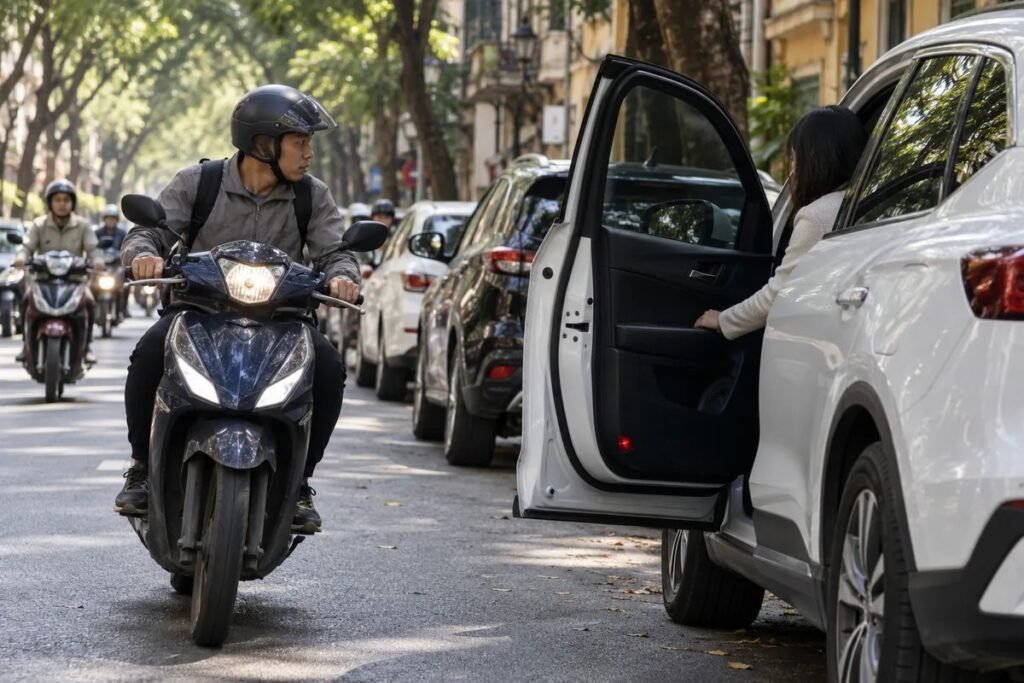
How do you avoid being hit by a car door when riding past parked cars in Hanoi? Leave a door’s width of space where traffic allows, slow down along rows of parked cars, and watch for the signs that a door is about to open: someone in the driver’s seat, brake lights, a moving head or a car that has just stopped. Vietnam’s traffic law requires people to check before opening a car door, but riders still need to protect themselves, because one careless moment is enough. Watch, too, for pedestrians stepping out between parked vehicles.
Many Hanoi streets have cars parked along the kerb or on the pavement edge, and motorbikes flow through the narrow space beside them. This guide explains the risks and the habits that reduce them.
What the law asks of people opening doors
Article 19 of the consolidated Law on Road Traffic Order and Safety says a vehicle door may be opened only when the vehicle has stopped or parked. Before opening it, the person opening the door must look ahead, behind and on the side of the door, open it and get out only when it is safe, and must not leave the door open if that is unsafe.
That rule places a clear duty on car occupants. It does not stop a door from opening in front of you, so your own riding still matters.
Signs that a door may open
- Someone visible in the driver’s seat, or heads moving inside the car.
- Brake lights or reversing lights on a car that has just pulled in.
- A taxi or ride-hailing car stopping to let passengers out.
- Hazard lights flashing on a car stopped at the kerb.
- A delivery vehicle with its doors or tailgate already open.
Treat any of these as a door that could open at any moment.
Choose your line and speed
Position: where traffic allows, ride far enough from parked cars that an opening door would not reach you; about the width of a car door is a useful guide. In narrow streets this is not always possible, which is exactly when you should slow down.
Speed: reduce speed along rows of parked cars so you can stop within the distance you can see. Cover the brakes in busy sections.
Lane choice: moving away from the parked cars must not put you into conflict with traffic beside you. Check mirrors and signal before moving out. The guide on which lane a motorbike should use on wide Hanoi roads explains the rules on lanes.
People stepping out between parked vehicles
Pedestrians, including children, often step into the road from between parked cars, where they cannot see you and you cannot see them. Watch for feet visible under vehicles, people walking towards a gap between cars, school gates, markets and shopfronts, and slow down near them.
Do not get squeezed
The most dangerous spot is a narrow gap between parked cars on one side and moving buses, trucks or cars on the other. If a door opens there, you have nowhere to go. Hold back rather than filtering into a gap you cannot escape from. The guide on trucks and buses beside you in Hanoi explains blind spots and where not to ride.
When you are the one parking
The same lesson applies when you stop beside a car or your passenger gets off. Make sure your passenger looks behind before stepping down on the traffic side, and park your bike so it does not block car doors or the pavement.
If a door opens in front of you
- Brake firmly with both brakes while keeping the bike upright; avoid swerving into moving traffic.
- If you stop safely, move to a safe place before dealing with the situation.
- If there is contact or anyone is hurt, follow the steps for a collision: make the area safe, get help if needed and record the details.
- Contact the rental shop if the bike is damaged, and send photos.
For collisions, Article 80 of the same law sets duties for those involved, including stopping, helping anyone injured and notifying the authorities.
Practice habits that help
- Scan parked cars well ahead, not just the one beside you.
- Keep both hands ready to brake in streets lined with parked vehicles.
- Use the horn briefly to warn only when a situation could become unsafe, as the law allows; it is not a substitute for slowing down.
- Ride a little slower at dusk and after dark, when it is harder to see people inside cars.
What the law does not settle
The law sets duties for door opening and for riding generally, but it does not prescribe a minimum distance between a motorbike and parked cars. Use judgement: space and speed together give you time to react.
Questions to ask the rental shop
- Are the brakes on this bike in good condition, and does it have combined braking or ABS?
- If the bike is damaged by a car door, which photos and details do you need?
Message to send the shop
Hello Nguyen Ha, a car door opened in front of me on [street] and the [model, plate number] was [not damaged / damaged]. I am safe and have photos. What do you need from me, and is the bike safe to ride?
Frequently asked questions
Who is responsible if a car door opens into a motorbike in Vietnam?
Article 19 of the 2024 law requires people to check before opening a door and only open it when it is safe. Responsibility in a specific crash depends on the facts and how the authorities assess them.
How far from parked cars should a motorbike ride?
The law sets no figure. Where traffic allows, keeping about a door’s width away gives an opening door room; otherwise, slow down.
What are the warning signs of a door about to open?
People inside the car, brake or hazard lights, a taxi stopping to drop passengers and a car that has only just parked.
Nguyen Ha Motorbike Rental: Ngõ 5 Nguyễn Văn Cừ, Bồ Đề, Long Biên, Hanoi, Vietnam, open 09:00–21:00 daily. Call +84 334 699 969 if your rental bike is damaged by an opening car door.