Blog
Vietnam Off-Road Motorcycle Rental: Cost, Rules, and Tips
About 17 minutes to read
Vietnam Off-Road Motorcycle Rental: What to Know Before You Ride
This guide focuses on Vietnam off-road motorcycle rental from a practical, country-wide perspective: rental considerations, legal and documentation checks, bike selection, safety, route planning, and what to verify before accepting a rental. For Vietnam-wide dirt-bike rental support, see our Vietnam dirt bike rental guide; for Hanoi-specific dirt bike rental information, see our Hanoi dirt bike guides.
Off-road motorcycling in Vietnam isn’t just about the ride—it’s about immersing yourself in the culture, exploring remote villages, and discovering landscapes that remain untouched by mass tourism. Whether you’re a seasoned rider or someone looking to try off-road biking for the first time, Vietnam provides options for every skill level.
Vietnam Off-Road Motorcycle Rental: Why Choose It?
Diverse Terrain and Landscapes
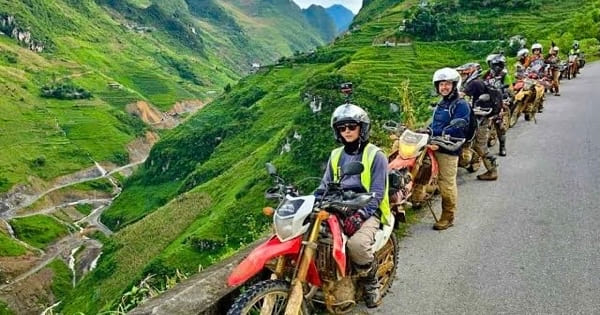
Vietnam’s geography is incredibly varied, making it perfect for off-road exploration. The northern regions feature dramatic mountain ranges with winding passes like Hai Van Pass and Ma Pi Leng. Central Vietnam offers coastal routes combined with highland plateaus, while the south provides river deltas and countryside paths.
Cultural Immersion
Riding through Vietnam’s backroads allows you to encounter ethnic minority villages, local markets, and traditional ways of life that haven’t changed for centuries. This cultural richness adds depth to your adventure beyond just the physical challenge of riding.
Cost-Effectiveness
Compared to other adventure destinations worldwide, Vietnam offers exceptional value. From affordable rentals to inexpensive accommodation and meals, your adventure dollar stretches significantly further here.
Year-Round Riding Opportunities
While some seasons are better than others depending on your chosen route, Vietnam’s length means there’s always somewhere suitable for riding regardless of when you visit.
Off-Road Motorcycle Types for Vietnam Rental
These are motorcycle model families to research, not confirmed rental inventory for Nguyễn Hà or any specific operator. Check the exact model, engine capacity, road registration, tyres, riding position and rental availability before making a decision.
Smaller Dual-Sport Motorcycles
Models such as the Honda XR family illustrate relatively lightweight dual-purpose motorcycles. Suitability depends on seat height, weight, road equipment, licence requirements and rider skill, not engine capacity alone.
Trail and Enduro Motorcycles
Honda CRF, Yamaha WR and Kawasaki KLX families include different versions for mixed road and trail use. Ask whether the actual motorcycle is road legal on the proposed route, which protective equipment is needed and whether off-road travel is allowed by the contract.
Higher-Performance Models
Larger off-road and adventure motorcycles require more control skills and may be difficult to handle in tight traffic or on loose ground. Avoid assuming that a high-priced specialist rental exists locally just because the model is discussed online.
For ordinary rental rates in Hanoi, use the Hanoi motorcycle rental price table, which is not an off-road motorcycle quotation.
Vietnam Off-Road Motorcycle Rental Costs: What to Compare
There is no one verified price schedule for specialist off-road motorcycle rentals across Vietnam. Current availability, rental price, insurance, deposit and allowed terrain must be confirmed for the actual registered bike, dates and operator.
Ask for the Complete Rental Quote
| Cost category | Questions to ask |
|---|---|
| Vehicle and duration | Exact make, model, engine capacity, daily or longer-term total and return time |
| Deposit and payment | Actual amount and currency, receipt, refund terms and damage deductions |
| Insurance | Applicable policy, exclusions, excess, intended terrain and claims procedure |
| Safety equipment | Helmet, protective gear and what the written price includes |
| Route expenses | Fuel at current pump rates, lawful parking, lodging, any agreed delivery or return charge |
| Breakdown or damage | Repair authorisation, recovery area, support hours and payment responsibility |
Long-Term Discounts Are Not Automatic
Ask for a written weekly or monthly quotation; do not assume fixed percentage discounts. Compare the same motorcycle over the same dates and check route, mileage and early-return conditions.
Documentation and Deposits
Record the vehicle’s condition and retain payment evidence. Check the contract’s refund conditions rather than assuming every deposit is automatically returned in full. Do not leave an original passport as a substitute for understanding a written rental agreement.
If starting in Hanoi, consult the standard Hanoi motorbike rental prices only for conventional models, then seek a separate quote for any off-road motorcycle. See the Vietnam dirt-bike rental preparation guide for related selection and safety checks.
Vietnam Off-Road Motorcycle Licensing & Legal Requirements
Motorcycle License Requirements
Before riding: Confirm the motorcycle licence category that applies to the vehicle you plan to ride, and make sure your foreign licence and any international driving permit are recognized for use in Vietnam. Current rules are governed by Vietnam’s road-traffic and international-driving-permit regulations, so verify the exact documentation before departure. Official road-traffic law: Articles 56 and 57 (checked 13 October 2026).
Do not rely on a rental shop’s willingness to hand over a bike as proof that you are legally permitted to ride it. Insurance and liability terms can also depend on whether the rider meets the applicable legal requirements.
Because licence categories, recognition rules, and enforcement can change, check the current official requirements before your trip rather than relying on fixed fine amounts or informal local practice.
International Driving Permit (IDP)
Under the 1968 Vienna Convention route, carry a valid IDP with its corresponding national licence covering the motorcycle. An IDP alone is insufficient. Check the issuing authority, convention, expiry and vehicle entitlement; fees and application requirements vary.
Official source: 2026 consolidated road-traffic law, Article 57. Checked 13 October 2026.
Vietnamese Motorcycle License Conversion
Confirm whether a conversion route applies to your status and existing licence with the competent Vietnamese licensing authority. A long stay does not by itself establish eligibility.
Use the current procedure to check required documents, translations, health or examination requirements, fees and where to apply. Do not rely on the previous generic checklist or fixed processing-price range.
Official procedure reference: Circular 108/2026/TT-BCA. Check the provision for the specific application; this guide does not promise approval.
Insurance Coverage
Check the vehicle’s compulsory civil-liability insurance certificate (Article 56). It does not establish optional cover.
Ask the insurer to confirm off-road use, medical care, evacuation, theft and rented-bike damage against the actual policy. Check exclusions, licence requirements, benefit limits, excess, notice deadlines and claims evidence. Do not assume the rental fee includes these benefits or adopt an unverified universal medical-coverage minimum.
Official road-document source: 2026 consolidated road-traffic law, Article 56; optional benefits must be checked in the actual policy.
Traffic Rules and Regulations
Check the vehicle’s permitted road access, current signs, speed restrictions, helmet and passenger requirements before riding. Do not use the old urban/rural/highway speed table or a fixed helmet-fine figure as universal rules.
Follow lawful priority and traffic instructions; vehicle size is not a substitute for those rules. Use the current penalty amendments with the applicable provision for the actual offence. This page does not predict an automatic licence suspension or other consequence.
How to Compare Off-Road Motorcycle Rental Providers in Vietnam
A rental operator’s current specialist-bike inventory, legal documents, operating locations, insurance and support can change. This guide does not rank named businesses or verify that any operator offers an off-road bike on your travel dates.
Check the Operator and the Actual Motorcycle
- Confirm a genuine business address, current contact and independent recent customer feedback.
- Ask for photographs or an in-person inspection of the motorcycle you would receive, not just a model catalogue.
- Verify engine capacity, registration and the legal licence category needed for the rider.
- Obtain a signed or written agreement covering permitted routes, off-road use, pickup and return locations.
- Ask about protection for the rented vehicle, third-party liability, theft, medical costs and exclusions.
- Confirm what support is actually offered, during which hours and in which geographic area.
Compare Offers on Equal Terms
Request model-specific quotes for matching dates and conditions. A shop’s advertised price may exclude safety gear, return transport, fuel, repairs or insurance. Do not assume that local or international companies are always cheaper, better maintained or available around the clock.
Use the Hanoi dirt-bike rental questions guide for city-specific comparisons. It does not confirm that Nguyễn Hà stocks a particular off-road model.
Essential Tips for Renting Off-Road Motorcycles
Pre-Rental Inspection Checklist
Before accepting any rental bike, conduct a thorough inspection:
Engine and mechanical:
- Start the engine and listen for unusual sounds
- Check oil level and condition
- Test throttle response
- Inspect chain tension and condition
- Verify gear shifting smoothness
Brakes:
- Test both front and rear brakes
- Check brake pad thickness
- Inspect brake fluid levels
Tires:
- Measure tread depth (minimum 2mm)
- Check for cracks or damage
- Verify correct tire pressure
Lights and electricals:
- Test headlight (high and low beam)
- Check turn signals
- Verify horn functionality
- Test brake lights
Frame and body:
- Photograph existing damage from multiple angles
- Document scratches and dents
- Check suspension for leaks
Documentation Requirements
Always ensure you receive and carry:
- Rental agreement with terms clearly stated
- Registration papers (blue card)
- Insurance certificate
- Emergency contact numbers
- Bike serial number and plate number photos
What to Check in Your Rental Agreement
Critical clauses to review:
Damage liability: Understand what you’re responsible for and deductible amounts
Mileage limits: Some rentals have daily kilometer restrictions
Geographic restrictions: Certain areas may be off-limits
Breakdown protocol: Know who to call and what’s covered
Return conditions: Understand fuel level, cleanliness, and timing requirements
Late return fees: Clarify penalties for delayed returns
Theft policy: Understand your liability if the bike is stolen
Choosing the Right Bike for Your Skill Level
Beginners:
- Choose lighter bikes (under 150cc)
- Opt for lower seat heights
- Consider semi-automatic transmissions
- Start with easier routes
Intermediate riders:
- 200-250cc bikes offer good balance
- Can handle most Vietnamese terrain
- Suitable for multi-day tours
- Good power-to-weight ratio
Advanced riders:
- 250cc+ for challenging terrain
- Consider premium European bikes
- Can tackle technical single-track
- Suitable for extreme mountain passes
Popular Off-Road Routes in Vietnam
Northern Vietnam Routes
Ha Giang Loop (4-5 days)
Arguably Vietnam’s most famous motorcycle route, the Ha Giang Loop offers stunning mountain scenery, dramatic passes, and ethnic minority villages.
Distance: Approximately 350-450km depending on route variations Best season: September to November, March to MayDifficulty: Moderate to challenging Highlights: Ma Pi Leng Pass, Dong Van Karst Plateau, Lung Cu Flag Tower
Northwest Loop via Sapa (7-10 days)
This extended route covers Vietnam’s highest mountains and most remote areas.
Key stops: Sapa, Mu Cang Chai, Dien Bien Phu, Son La Distance: 800-1000km Difficulty: Challenging Best season: September to November
Ba Be Lake Circuit (2-3 days)
A shorter loop perfect for beginners wanting to experience northern Vietnam’s beauty without extreme challenges.
Distance: 200-300km Difficulty: Easy to moderate Highlights: Ba Be National Park, waterfalls, lake scenery
Central Vietnam Routes
Ho Chi Minh Trail (multiple days)
Following the historic supply route, this journey combines historical significance with natural beauty.
Distance: Can be 500-2000km depending on how much you ride Difficulty: Moderate Highlights: War history sites, mountain plateaus, remote villages
Central Highlands Circuit (5-7 days)
Exploring coffee plantations, waterfalls, and hill tribe communities around Dalat and Buon Ma Thuot.
Distance: 600-800km Difficulty: Moderate Best season: November to April
Southern Vietnam Routes
Mekong Delta Exploration (3-5 days)
Very different from northern mountain routes, the Delta offers flat terrain, river crossings, and waterway culture.
Distance: 400-600km Difficulty: Easy Best season: December to April (dry season)
Coastal Route from Mui Ne to Phan Thiet (1-2 days)
Shorter coastal riding with beach access and sand dunes.
Distance: 100-200km Difficulty: Easy Highlights: Sand dunes, fishing villages, coastal scenery
Safety Tips and Precautions
Protective Gear Essentials
Mandatory equipment:
Full-face helmet: Don’t settle for half-helmets; full-face offers crucial protection. Choose a properly fitting, certified motorcycle helmet in sound condition. Check its protection, comfort and the seller’s current price rather than relying on an estimated USD range.
Riding jacket: Abrasion-resistant material with CE-approved armor at shoulders, elbows, and back. In hot weather, mesh jackets provide protection with ventilation.
Gloves: Full-finger motorcycle gloves protect hands during falls and shield from weather.
Knee and shin guards: Essential for off-road riding where falls are more common.
Riding boots: Ankle protection is crucial; regular shoes don’t provide adequate support.
Eye protection: Even with a full-face helmet, quality goggles or a good visor prevents dust and insects from impairing vision.
Riding in Vietnamese Traffic
Understanding local traffic behavior:
Vietnamese traffic operates on different principles than Western countries. Always obey local traffic rules, signs and traffic signals. Drivers and other road users may behave unpredictably, so ride defensively and allow extra room.
Key strategies:
Stay visible: Use your horn liberally—it’s not rude; it’s communication
Maintain steady speed: Predictability helps other drivers anticipate your movements
Expect the unexpected: Vehicles may turn without signaling, pedestrians may cross anywhere
Avoid rush hours: 7-9 AM and 5-7 PM in cities can be overwhelming
Watch for blind spots: Larger vehicles may not see you
Road Condition Awareness
Types of surfaces you’ll encounter:
Paved roads: Quality varies significantly; even main roads may have potholes
Gravel roads: Common on mountain routes; reduce speed and avoid sudden braking
Mud: Extremely slippery when wet; requires careful throttle control
Sand: Can be treacherous; maintain momentum but stay light on the handlebars
Water crossings: Test depth before committing; watch for hidden obstacles
Emergency Procedures
Breakdown protocol:
- Move bike to safe location off the road
- Contact rental company immediately
- Document the issue with photos
- Don’t attempt major repairs yourself
- Follow company instructions for towing or repair
Accident procedures:
- Ensure safety of all involved
- Call emergency services if needed (dial 115 for ambulance)
- Contact your insurance and rental company
- Document scene with photos
- Exchange information with other parties
- File police report if required
Emergency contacts to have saved:
- Rental provider’s actual support number and confirmed support hours
- Travel insurance emergency line
- Embassy or consulate contact
- Local emergency services (113 for police, 114 for fire, 115 for ambulance)
- Hospital locations along your route
Weather Considerations
Seasonal weather patterns:
Weather and riding conditions: Rainfall, fog and visibility vary by province, elevation and travel date. Review the destination-specific forecast and current road conditions instead of assuming one dry or wet season applies to every route.
When storms or heavy rain are forecast: Postpone the ride or use a safer alternative; avoid flooded crossings and unstable terrain.
Regional variations:
- North: Cold winters (December-February), hot summers
- Central: September-January brings heavy rain and potential flooding
- South: Relatively consistent year-round, wet season May-October
Riding in rain:
- Reduce speed to suit visibility, grip, traffic, weather and the motorcycle’s braking capability
- Increase following distance
- Avoid painted road markings (very slippery)
- Use smooth, controlled braking with both brakes as appropriate for the bike and available grip; avoid abrupt control inputs
- Watch for hidden potholes filled with water
Maintenance and Repairs on the Road
Inspect the Rental Motorcycle Before Departure
Ask the rental provider to demonstrate the bike’s controls and show its recommended tyre pressure, fuel requirements and routine checks. Inspect the tyres, both brakes, chain or drive system, lights, leaks and visible damage before accepting the motorcycle. Record the condition with photos.
Breakdowns and Common Problems
If a tyre loses pressure, the chain becomes noisy, the engine misbehaves or the brakes feel unreliable, stop in a safe place. Contact the provider and agree on a repair, recovery or replacement plan before authorising work. Do not adjust a rental motorcycle’s brakes, cables, electrics or other safety-critical parts without the provider’s agreement and suitable expertise.
Finding a Workshop
You may see motorcycle repair shops identified by signs such as “Sửa xe”. Availability of parts and qualified mechanics varies by town and model, especially for specialised off-road bikes. Explain the symptoms, show photos and ask the workshop and rental provider for an agreed written estimate before work begins.
Repair Costs and Responsibilities
There is no verified nationwide price for punctures, chains, brake parts or recovery. The actual fee depends on parts, labour, motorcycle type and location; the rental agreement determines who is responsible for paying. Keep invoices, receipts and written messages authorising repairs.
Items Worth Carrying
Bring your charged phone, offline maps, emergency contacts, drinking water and basic first aid items. Carry only tools and spares the provider has approved and explained; avoid improvising repairs by the roadside.
Accommodation Options Along Popular Routes
Guesthouses and Homestays
For rural and mountain routes, search for registered guesthouses or homestays near your intended overnight stop. Compare the full quoted price for your dates, meals, check-in time, cancellation rules and whether the property has secure, lawful motorcycle parking. Availability and rates vary significantly by season and location.
Hotels and Lodges
Hotels, small lodges and other licensed accommodation may offer private bathrooms or different levels of comfort. Check road access and the distance from the last fuel stop, especially when arriving after dark. A generic USD nightly price is not a reliable booking quote.
Camping and Protected Areas
Do not assume camping or riding is permitted in national parks, protected areas or on private land. Obtain approval from the relevant property manager or authority and check local access rules before travelling. Use established, authorised sites where available and verify prices directly.
Plan Overnight Stops
Choose realistic riding distances, allow for mountain weather and avoid relying on “just show up” accommodation in remote areas. Save your confirmed property details and let a trusted person know your planned route.
Food and Fuel Stops
Finding Fuel Along the Route
Petrol stations may be frequent in cities but more spread out on remote roads. Identify legitimate stations on your planned route before departure, check their operating hours when possible and ask which fuel the exact motorcycle requires. Pump prices change; use the posted price on your travel date rather than relying on fixed USD or VND estimates.
Estimate fuel cost with this formula: planned distance ÷ expected kilometres per litre × current fuel price per litre. Add a sensible reserve. Do not transport spare fuel in improvised containers; discuss a safe plan with the rental provider if a route has few stations.
Food and Water
Phở, rice dishes, bánh mì and fresh fruit are available in many towns, but prices and opening times vary by vendor and area. Check a menu or ask the price before ordering, choose food prepared and stored hygienically, and carry safe drinking water between stops.
Planning Longer Stretches
Download maps offline, record fuel and rest-stop options, and avoid riding while tired or dehydrated. Build the food and fuel budget from actual receipts and conditions, not a one-size-fits-all daily allowance.
Environmental and Cultural Considerations
Responsible Riding Practices
Minimize environmental impact:
Stay on established trails: Creating new tracks damages vegetation and causes erosion
Pack out trash: Carry a bag for waste; littering is unfortunately common but shouldn’t be perpetuated
Respect wildlife: Slow down or stop for animals; don’t chase or harass them
Reduce noise pollution: Avoid unnecessary revving in villages
Interacting with Local Communities
Cultural etiquette:
Dress modestly: Especially in ethnic minority villages and religious sites
Ask permission: Before photographing people, always ask (gesture if language is a barrier)
Learn basic phrases: “Xin chào” (hello), “Cảm ơn” (thank you), “Xin lỗi” (excuse me/sorry)
Support local economy: Buy from village shops, stay in homestays, hire local guides
Respect traditions: Remove shoes when entering homes, accept offered tea politely
Photography Etiquette
Many travelers love photographing Vietnam’s ethnic minorities, but this requires sensitivity.
Guidelines:
- Never photograph without permission
- Offer to share photos (have email/social media ready)
- Don’t treat people as exhibits
- Consider that some believe cameras capture souls
- Ask guides about local customs regarding photography
Frequently Asked Questions
Do I need a motorcycle licence to rent in Vietnam?
Separate a provider’s contract requirements from legal permission to ride. Confirm the exact motorcycle classification and applicable licence or foreign-document recognition rules before you take the bike onto public roads. A shop’s willingness to rent is not proof of legal eligibility.
What is the minimum age for renting?
Legal riding requirements depend on the vehicle category, while each provider may have contractual eligibility conditions. Ask about both; do not assume one universal minimum for every bike.
Can I ride a rental motorcycle from north to south?
Only consider a long-distance trip after confirming your motorcycle, riding documents, insurance, legal road access, weather and the provider’s written permission for the proposed route. Not every operator offers cross-city or one-way returns, and there is no verified universal one-way fee.
What happens if the motorcycle breaks down far from Hanoi?
Move out of traffic where safely possible and contact the rental provider. Ask about the agreed support area, repair authorisation, recovery arrangements, response hours and who pays. Do not assume that every rental company guarantees 24-hour recovery or a replacement bike.
Is off-road motorcycle riding dangerous?
Yes. Loose surfaces, unexpected obstacles, poor visibility and remote medical access can create serious risks. Match the route to demonstrated skills and protective equipment, and do not attempt an unfamiliar trail alone or without permission.
Is off-road riding appropriate for beginners?
Not without suitable training, safe supervision and legal eligibility. A newcomer should not treat a mountain route as a place to learn motorcycle controls. Choose appropriate instruction or another way to travel.
What time of year is best?
Conditions differ among northern mountain, central coastal and southern routes. Check current local forecasts, road closures and daylight for the exact trip dates. Postpone or change transport if conditions are unsuitable.
Conclusion
A Vietnam off-road motorcycle journey requires more than choosing an attractive destination. Confirm that the route permits motor vehicles and that the specific registered bike, your riding entitlement and experience, its condition and the rental contract are suitable for the journey.
Before You Commit
- Choose the bike carefully: verify the exact model, capacity, road-legal equipment, brakes, tyres and seat fit rather than trusting an advertised category name.
- Build a real budget: obtain written rental and deposit quotes, then estimate fuel, lodging, meals, protection, repairs and return arrangements from actual providers and dates. Avoid generic USD daily budgets.
- Put safety first: wear appropriate protective equipment, avoid unfamiliar terrain without training and plan for weather and remote assistance limitations.
- Verify legal access: check riding documents, registration, any route restrictions and whether your insurance covers the proposed use.
- Plan alternatives: keep additional time for rain, closures and fatigue, and choose another vehicle or itinerary when conditions do not support safe riding.
For standard motorbike rentals in the Hanoi area, the Hanoi motorbike rental price guide provides the published local pricing reference. It does not guarantee the availability or rate of a specialist off-road motorcycle; request an actual quote before making plans.