Luggage, Equipment & Navigation
A Small First-Aid Kit for a Motorbike Trip: What to Pack
On this page
What should go into a small first-aid kit for a motorbike trip from Hanoi? Pack basic wound-covering materials, a few hygiene items, any medicines prescribed for your own needs, and the contact information you might need to obtain medical help. The kit should fit securely without obstructing the rider or becoming difficult to access at a stop. It is intended for minor situations and preparation, not for treating serious road injuries yourself. A serious crash, major bleeding, suspected fracture, head injury or impaired consciousness needs appropriate emergency or professional medical care.
A first-aid kit is not permission to take a risky trip
Taking a small medical pouch can improve preparedness, but it does not make a long journey safe or replace a suitable helmet, valid driving entitlement, competent handling, a roadworthy bike and sound route planning. Some accidents demand immediate medical services rather than anything inside a pouch. Do not assume that having dressings means a rider can continue after a fall.
The contents should match the people travelling, the length of the journey and the environments you may encounter. Someone with a known medical condition may need arrangements beyond a generic kit, which should be discussed with their clinician before travelling.
A compact packing list to customise
| Item | Purpose | What to check before leaving |
|---|---|---|
| Adhesive bandages in a few sizes | Cover small superficial wounds after appropriate cleaning | Packaging intact; suitable sizes |
| Sterile gauze or non-stick dressings | Cover a minor injury appropriately | Sealed and within marked expiry date |
| Medical adhesive tape | Secure a suitable dressing | Keep dry and avoid known adhesive allergies |
| Disposable protective gloves | Reduce contact with bodily fluids | Correct fit and intact packaging |
| Hand hygiene supplies | Help keep hands clean before handling supplies | Store securely, away from high heat |
| Small blunt-ended scissors, if appropriate | Cut dressings or tape | Keep sheathed and packed safely |
| Personal prescriptions and instructions | Maintain an existing treatment plan | Correct medicine, original labelled container, adequate supply |
| Emergency contact and relevant health details | Help communicate important information to professionals | Accurate and handled privately |
The CDC Yellow Book guidance on travel health kits recommends adapting supplies to the traveller and type of trip, using durable water-resistant storage and keeping necessary items accessible. This is not a mandatory inventory for every motorbike rider. Carry only items you know how to use safely, and consult a clinician when personal medical needs require a different plan.
Keep the kit small enough for the actual bike
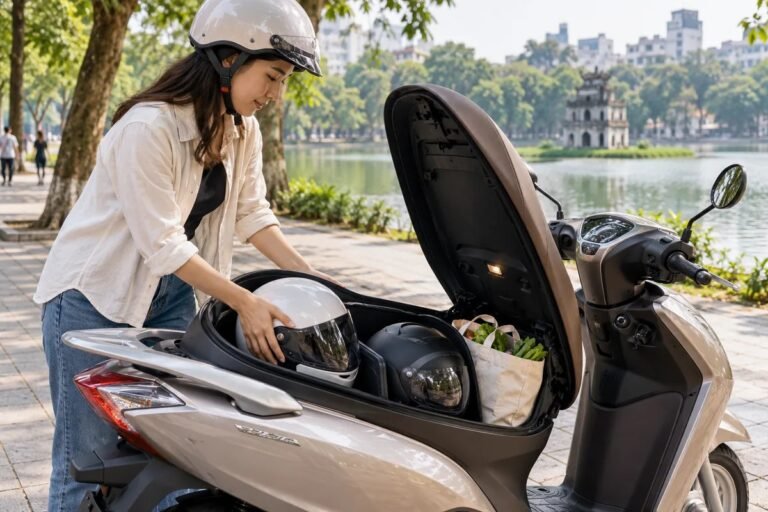
Motorbikes have limited secure storage, and the under-seat compartment on one scooter may be different from the storage available on a semi-automatic bike. Ask to see the actual vehicle and identify a secure location for a soft pouch before departing. Do not hang loose bags from the handlebar or position supplies where they interfere with brakes, throttle, steering, lights or balance.
When travelling with friends, one shared pouch may be convenient for general supplies, but each traveller should retain responsibility for their own prescription medicines. Avoid placing medication in someone else’s luggage without telling them how and when it will be needed.
Under-seat compartment or a separate bag?
The deciding factors are temperature, moisture, security and access while stopped. A scooter’s under-seat compartment can become hot and may not be the right place for temperature-sensitive medicine. A small bag can also heat up when left in direct sunlight. Check the storage instructions printed on the actual medicine and ask a pharmacist how to transport it during your trip. Do not assume every medicine can be kept at any temperature for a full day.
A water-resistant pouch can help protect bandages from rain, but an airtight wet bag can trap moisture. Keep supplies in original wrappers where possible, avoid crushing bottles and protect anything sharp from puncturing other items. The pouch should be opened only after stopping safely; never search inside luggage while riding.
Personal medicines need their own plan
If you take prescribed medicine regularly, bring the amount your prescriber recommends for the entire journey, accounting for reasonable delays. Keep original labels so you can identify the product and dosing instructions. Do not substitute a friend’s medication or take a new medicine because another rider says it worked for them.
Be particularly cautious with products that may cause drowsiness, blurred vision, poor coordination or slow reactions. Some cold and allergy medicines can affect driving. Before riding, review your specific medicine with a doctor or pharmacist and follow its warnings; do not rely on coffee or a fixed waiting period to cancel possible impairment.
What about an ordinary scrape or shallow cut?
Stop in a safe location and assess the situation calmly. If there is heavy bleeding, a deep wound, signs of serious injury or uncertainty about the person’s condition, seek medical care rather than treating it as a routine scrape. For minor superficial injuries, follow credible first-aid guidance on hygiene and suitable dressing; do not use unverified liquids, loose cotton or improvised chemical mixtures on a wound.
A small pouch cannot reveal whether the rider also has a concussion or an internal injury after a fall. Symptoms such as confusion, fainting, worsening pain or unusual weakness should not be ignored because an external scratch looks small. Appropriate medical assistance takes priority over completing the journey or returning the bike on time.
Store supplies so they can be found without unpacking everything
Put the medical pouch in one clearly marked location and tell your travel companion where it is. Separate general dressings from personal prescription medication if that helps avoid mix-ups. Check the bag before departure and again after rain or another event that may have damaged packaging.
Do not leave the bike unattended with personal health records in a publicly accessible compartment. If you carry an emergency information card, keep the details proportionate to the purpose and share them only with people who need them.
What should stay out of a self-made kit?
Avoid carrying unfamiliar prescription drugs to give to others, unlabelled pills, expired products, poorly sealed chemicals or tools you have no training to use. Do not pack items that are prohibited in the area of travel or create a puncture hazard inside a soft bag. A tour group should not describe its own improvised kit as a professionally staffed medical service.
Do not administer medications to another person without appropriate medical guidance or consent. If someone has a known allergy or complex condition, their medical professional should advise on the necessary supplies and emergency plan beforehand.
First-aid preparation and rental conditions are separate
Ask the rental provider whether your actual bike has suitable storage and what to do if an accident or breakdown occurs during the trip. The shop may need to know the bike’s location, plate, visible damage and whether it can be moved safely. Do not assume the shop provides insurance, ambulance service or emergency medical treatment as part of a standard rental.
Related trip preparation is covered in the Vietnamese first-aid kit and personal medicine guide. The source article distinguishes medical advice from practical packing suggestions and has a longer list of supporting references.
Before setting off: ten-minute inspection checklist
- Check that the kit is compact and can be secured away from moving controls.
- Inspect packaging, expiry dates and moisture damage.
- Keep personal medication labelled and stored according to its instructions.
- Save appropriate emergency and medical contacts.
- Check the bike’s tyres, brakes, lamps and mirrors separately from the kit.
- Ensure the rider has valid legal entitlement and enough practical experience.
- Ask the shop whether the specific route is permitted.
- Confirm safe parking and rest stops without relying on a phone while moving.
- Tell a trusted companion where the supplies are kept.
- Be ready to cancel the trip if medical or road conditions make it unsafe.
Message to the rental shop
Hello Nguyen Ha, I plan a motorbike trip from Hanoi on [date] and will carry a compact first-aid pouch and my personal medication. Which actual bike is available, and is there a safe, secure place for a small bag? Please confirm the permitted route, return time, deposit and how to contact the shop if the bike develops a problem away from Hanoi.
Frequently asked questions
Can a motorbike first-aid kit replace medical care after a crash?
No. Serious injuries require emergency or professional medical attention, even if visible wounds seem limited.
Should I leave prescription medicines under the seat all day?
Not without checking their storage requirements and the compartment’s heat exposure. Ask a pharmacist for product-specific guidance.
Does the rental shop automatically provide first-aid supplies?
Do not assume so. Ask what equipment, if any, accompanies the actual bike.
Nguyen Ha Motorbike Rental: Ngõ 5 Nguyễn Văn Cừ, Bồ Đề, Long Biên, Hanoi, Vietnam. Open 09:00–21:00 daily. Call +84 334 699 969 for bike availability and rental terms.