Riding Skills & Safety Planning
Your First Ride on an Unfamiliar Scooter: A Low-Traffic Practice Sequence Built From Safety Pages
About 7 minutes to read
For first-time riding of a scooter in Hanoi, the pages gathered here put practice away from traffic before anything else. This article turns that into a sequence of practice steps, each tied to a page: the Honda Vietnam safe-riding booklet and LEAD 125 manual, the Motorcycle Safety Foundation (MSF), the United States road-safety agency NHTSA, the NZ Transport Agency, and UK and Australian government travel advice for Vietnam. The order of the steps is the article’s own. The pages give no time for each step, name no place in Hanoi, and only the UK advice mentions hiring a motorbike.
Why the pages put practice before traffic
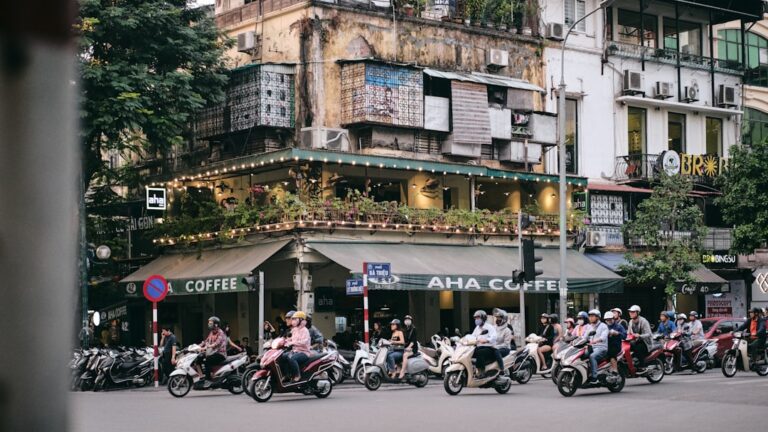
The UK government says travelling by motorbike in Vietnam is much riskier than in the UK and advises against hiring a motorbike unless an experienced rider. It lists checking the motorbike thoroughly and using a good helmet, and says compliance with road laws is poor. Australia’s Smartraveller (updated 24 September 2026) lists crowded streets in major cities and drivers ignoring road rules among the hazards, says traffic can appear from any direction, and advises avoiding riding a motorcycle if not familiar with local conditions.
The training pages start from practice. NHTSA says to get accustomed to the feel of a new or unfamiliar motorcycle by riding it in a controlled area, and says that once comfortable the rider can take it into traffic. The Honda LEAD 125 manual says that even a rider who has used another vehicle should practise in a safe place to get used to this one’s controls, size and weight. The NZ Transport Agency says a rider is more at risk on an unfamiliar motorcycle.
For a first-time or uncertain rider, arrange qualified hands-on training before a rental ride. This article is a source comparison, not a lesson plan that certifies you for Hanoi traffic. Legal eligibility, demonstrated control and road judgement must be established separately; a shop handover or a few successful laps is insufficient.
Choosing a practice area
The MSF booklet names a well-marked parking lot as its choice and warns of oil left by parked cars. It suggests lots that are not in constant use at shopping centres, schools, churches or community centres, for instance a school lot in the evening or a shopping centre early in the morning, and says to get the owner’s permission and check front, sides and rear for traffic before each exercise. Those examples are written for the United States, and no page names a practice place or time in Hanoi, so this article does not either. The booklet also says to inspect the machine first, check the area for loose gravel, glass or oil, take a friend if possible to watch traffic and help if something goes wrong, and bring six small markers.
The sequence, step by step
| Step | Practise | What the pages say |
|---|---|---|
| 1 | Checks and controls | Honda: squeeze and release the brake several times to find a snapped or stuck cable early; check signals, brake light, beams and horn; adjust mirrors. NZ: find the indicators, horn, headlight switch, fuel valve and engine cut-off so they can be found without looking, and work the throttle and brakes a few times before taking off |
| 2 | Getting on, off and pushing | Honda has separate sections: on and off safely (to reduce the risk of losing balance or hitting someone behind, and to remember the side stand) and moving the bike with the engine off, using the hand on the front brake to control speed |
| 3 | Posture and slow balance | Honda: eyes far ahead, shoulders relaxed, hips centred, feet on the footboard for a scooter; head facing straight with a wide view, hips and abdomen holding balance, handlebars moved gently from side to side, with low-speed balance and throttle coordination taught directly by an instructor; do not treat adding throttle as a general recovery method for a leaning bike |
| 4 | Smooth throttle and moving off | LEAD 125 manual: turn the throttle slowly to accelerate; before moving off, switch on the turn signal and check for approaching vehicles |
| 5 | Stopping | Honda: close the throttle, use both brakes together (scooter: right hand front brake, left hand rear brake) with force rising evenly and the front stronger than the rear; hard front braking lifts the rear wheel, hard rear braking locks it; arms firm, steering straight |
| 6 | Turns and bends | Honda: slow before the bend, limit braking inside it, head level, throttle added gradually at the end. NZ: on an unfamiliar motorcycle take turns slower and allow extra stopping distance |
| 7 | Looking behind | Honda: look over the shoulder as well as in the mirror, without turning the whole body or shoulders, because the handlebars may turn with them |
| 8 | Deciding about traffic | NHTSA: traffic once comfortable. LEAD 125 manual: do not ride beyond your ability and the conditions. MSF: no practice for more than one or two hours at a time |
For step 1, a separate guide, Scooter Rental Hanoi: How to Check the Bike First – Complete Pre-Rental Inspection Guide, is about checking the bike first, and Find the Exact Manual for Your Rental Scooter: Model Code, Year and Market is titled on finding the right manual.
The MSF drills, with their printed speeds
The speeds below describe the source exercises, not targets for a beginner on a rental scooter. The guide requires pre-existing basic skills and instruction if these are missing. Do not transplant its speeds or layouts into an unassessed space, or increase speed because the previous run felt comfortable.
The MSF booklet puts numbers on drills. A straight-line stop starts from 15-20 mph (about 24-32 km/h, the article’s own conversion). A quick stop is practised at 10 mph, then 15 mph, then 20 mph, not beyond 20 mph. Weaves between markers run at 15 mph without braking and, it says, help with lane changes in traffic or changes of direction. Basic turns begin at 10-15 mph, slowing before the turn. For stops it says to squeeze the front brake rather than grab, to keep steering straight if the rear wheel locks, and to hold the brakes until fully stopped. MSF’s practice-drills page lists short clips for stops, weaves, turns, sharper turns and stops in a curve, meant for review while practising in a parking lot.
Where the pages differ
The MSF directions mention shifting and the clutch, and the booklet says not to attempt its exercises unless one can already use clutch and throttle, shift and ride straight, and to seek instruction first if not. Honda’s controls for a scooter differ, and its first balance tip, low gear, has no meaning on an automatic scooter, although the booklet does not say which bikes it means. The different sources do not establish a validated combined scooter-training programme. Their audiences and conditions differ: general training guidance and advice against inexperienced visitors riding in Vietnam are not automatically contradictory. Do not use a practice sequence to bypass that travel advice or the need for qualified instruction. On choosing a bike, Scooter Rental Hanoi: Tips to Choose the Right Bike for Your Perfect Adventure is a separate page.
What the pages leave out
No page names a practice place or time of day in Hanoi, or says anything about the area around any pickup point; the MSF examples are American ones. No page gives a time for each step or says an hour is enough, and the only time figure is MSF’s limit of one or two hours at a time. No page tests readiness for traffic: NHTSA says only once comfortable, and Honda says not to ride beyond one’s ability. No page adapts the MSF drills to an automatic scooter. Honda’s booklet carries no date in the extracted text, NHTSA writes for the United States and the NZ page for New Zealand, and the only description of traffic in Vietnam is the UK and Australian advice for the whole country. The only mentions of hiring a motorbike are in the UK advice (not to hire one without experience, and to rent from a reputable organisation), and no page says what a rental shop offers or requires of a first-time rider.
Sources checked
- Honda Vietnam: safe-riding booklet
- Honda Vietnam: LEAD 125 owner manual
- NHTSA: motorcycle safety page
- UK government: Vietnam safety and security
- NZTA: pre-ride motorcycle check
- MSF: riding tips and practice guide
- MSF: practice drills page
- Smartraveller: Vietnam travel advice (24 September 2026)
Thuê xe máy Nguyễn Hà is open 09:00–21:00 daily at Ngõ 5 Nguyễn Văn Cừ, Bồ Đề, Long Biên, Hà Nội (near Gia Lâm bus station). Phone: 0334 699 969.