Weather & Seasonal Riding
Helmet Visor Fogging in Cold, Damp Hanoi Weather: Keep a Clear View Without Riding Open-Faced
About 7 minutes to read
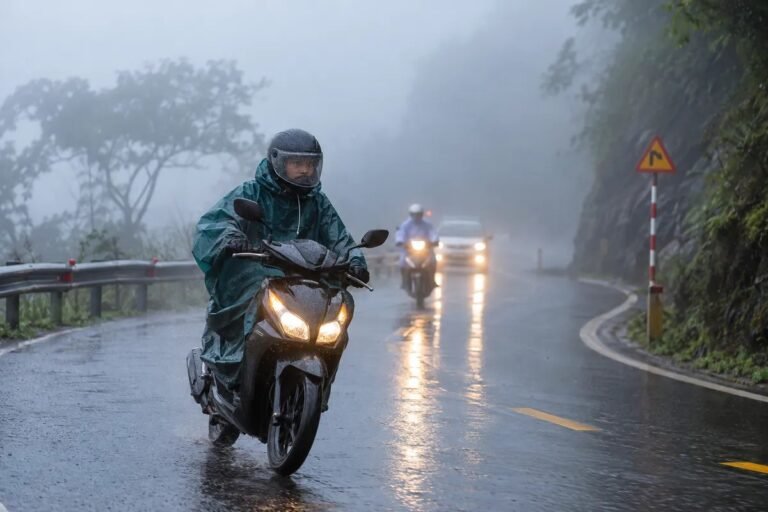
On a cold, damp Hanoi morning you pull the visor down and within seconds it is covered in grey mist. You want to see the road clearly without lifting the visor all the way and taking wind, dust and drizzle in the face. Visor fog forms when your warm, moist breath meets a visor that is colder than it is. The ways to reduce it all come down to three things: less moist air reaching the visor, a visor surface that stays less cold, or air moving across it. This guide explains why visors fog, the practical ways to keep your view, what to do when it fogs mid-ride, what not to do, and what to check before a cold, wet ride on a rental.
The short answer
Before you set off, clean the visor and find out how your helmet’s visor detents and vents work, with the bike stopped. While riding, a visor opened by one small notch and open vents let air carry the moisture away. Wear a mask or scarf so your breath goes down, not up. If the visor fogs so you cannot see clearly, slow down, increase your gap and pull over somewhere safe before wiping it gently. Never take the helmet off to see better, and never use a dark or daytime-only visor at night.
Why visors fog
| Condition | What happens |
|---|---|
| Cold air, cold visor | Warm breath condenses on the cold inner surface as a film of fine droplets |
| Humid air or drizzle | Moisture in the air settles on the visor too, especially when you stop |
| Breath directed at the visor | A snug helmet, mask or scarf over nose and mouth can push exhaled air upwards |
| Stopped at a red light | No airflow, so moisture builds up faster than when moving |
| Dirty, scratched or greasy visor | An uneven surface holds moisture and adds glare |
How badly a visor fogs depends on the helmet, the weather and how you wear it, so try several of the methods below rather than expecting one trick to solve every case. Ontario’s Motorcycle Handbook, quoted in our guide to riding in Hanoi’s winter drizzle and fog, notes that face-shield fogging is worse in cold weather.
Ways to keep your view without opening the visor fully
- Use the first visor notch. Many helmets have a small open position. A narrow gap lets air flow across the inside of the visor and carry moisture out. Set it while the bike is stopped somewhere safe, then ride.
- Open the helmet’s vents. Some helmets have chin or brow vents that direct air onto the visor. Check how they work on your helmet before you set off.
- Use an anti-fog insert or coating if the helmet has one. Some visors come with, or accept, an anti-fog insert or an inner coating. Follow the helmet maker’s instructions for fitting and cleaning so you do not damage it.
- Change how you cover your nose and mouth. If a mask or scarf sends your breath upwards, adjust it so the air escapes downwards or to the sides. Our guide to wearing a face mask under a helmet covers fit and breathing.
- Breathe out gently and downwards when you notice the visor starting to mist, especially at traffic lights.
- Keep the visor clean. Wash it with clean water and a soft cloth. A dirty or greasy visor fogs more easily and glares more.
If the visor fogs while you are riding
- Ease off gradually rather than carrying on with poor vision.
- Leave a bigger gap to the vehicle in front, because you see less and react later.
- If you cannot see clearly, pull over somewhere safe before dealing with the visor. Do not wipe it with one hand while riding.
- Once stopped, wipe the outside gently with a soft cloth. If the inside has an anti-fog insert or coating, follow the helmet’s instructions, and do not scrub.
- Do not take the helmet off to see better. You lose the protection the helmet is there to give.
Mist inside or rain outside?
On a drizzly morning there can be two problems at once, and they need different fixes. Mist on the inside of the visor comes from your breath and the cold, and clears with airflow: a small visor gap, open vents, breath directed downwards. Drops on the outside come from rain and spray, and smear when you wipe them while moving. If you are not sure which you are dealing with, stop somewhere safe and look: a uniform grey film that a fingertip cannot reach from the outside is on the inside.
Which method for which situation
| Situation | What usually helps |
|---|---|
| Fog builds at every red light | Breathe out gently and downwards; with the bike fully stopped, lift the visor one notch, then lower it before moving off |
| Fog stays even when moving | Ride with the visor on its first notch and open the vents; check whether your mask pushes breath upwards |
| Just left a warm indoor car park into cold air | Clean the visor and give it a few minutes to reach outside temperature before riding |
| Fog and glare at night | Use a clear, clean visor; a scratched or tinted visor makes both worse |
If you wear glasses
Glasses under a helmet can fog as well as the visor, and you cannot wipe them without stopping and lifting the visor. The same principles apply: keep air moving, direct your breath downwards, and keep the lenses clean. At pickup, check that the helmet goes on and sits correctly over your frames without pressing them into your face, and that the visor closes without touching them. The helmet fit checklist covers strap and size checks.
What not to do
- Ride on when the fog stops you seeing lights, signs or pedestrians clearly.
- Rub the visor dry with a shirt sleeve or rough tissue. It scratches easily, and scratches add glare; see our guide to visor scratches on a rental helmet.
- Smear cream, soap, saliva or other home remedies on the visor. They can damage coatings or leave streaks that glare at night. Use only anti-fog products the helmet maker says are suitable.
- Use strong cleaners the helmet’s instructions do not allow.
- Flip the visor or change notches while riding, which takes a hand off the bars.
- Use a dark-tinted visor, or one marked for daytime use only, after dark. At night, use a clear visor; clear or tinted visor explains how to match the visor to the light.
The visor and Vietnam’s helmet regulation
Vietnam’s technical regulation for motorcycle helmets, QCVN 2:2021/BKHCN, was issued with Circular 04/2021/TT-BKHCN and covers the helmet including its protective visor. The anti-fog advice in this guide is general practice, not a requirement taken from that regulation. If a rental helmet’s visor is badly scratched, cracked or discoloured, ask the shop for another helmet or visor rather than riding with it.
Before a cold, damp ride on a rental
- At pickup, check that the helmet has a visor notch and vents, and try them with the bike stopped.
- Clean the visor before you leave and carry a clean soft cloth.
- Ask the shop whether it has a helmet with a clear visor or an anti-fog insert if you will ride early in the morning or after dark.
- Ride more slowly than usual on cold, damp mornings, when the road can be slippery and visibility poor.
- If heavy rain or thick fog is forecast, consider leaving later or postponing the ride.
Frequently asked questions
Why does my helmet visor fog up on Hanoi winter mornings?
Your warm, moist breath condenses on a visor that is colder than it, and damp air adds more moisture. It is worst when you stop and there is no airflow.
Is it safe to ride with the visor slightly open?
A visor set on its first small notch, adjusted while the bike is stopped, lets air clear the moisture while still shielding your eyes from most wind and drizzle. Fully open, your eyes take wind, dust and rain.
Does an anti-fog spray or insert work?
Products made for helmet visors can help, but use only what the helmet maker says is suitable, and fit and clean it according to the instructions so the visor is not damaged.
Can I use a tinted visor on a foggy morning?
A tinted visor cuts the light you have. In low light, fog or after dark, a clear visor is the safer choice, and a visor marked for daytime use only should not be used at night.
Thuê xe máy Nguyễn Hà is at Ngõ 5 Nguyễn Văn Cừ, Bồ Đề ward, Long Biên, Hanoi (near Gia Lâm bus station), open 09:00–21:00 every day. If you plan early or late rides in the cold months, ask at pickup about a helmet with a clear visor, or call or message 0334 699 969.