Manual & Semi-Automatic Motorbikes
Scooter or Semi-Automatic for a Long Trip? Which Bike Type Tires You Less Over Several Hundred Kilometres

About 5 minutes to read
Planning a trip of a few hundred kilometres over several days, and torn between a semi-automatic, a manual clutch bike and a scooter? Choosing a scooter or semi-automatic for a long trip by asking which one tires you less has no single answer, because fatigue comes from many places: the left hand, the left foot, the back, the wrists, vibration and the stress of riding. This article separates the sources of fatigue, compares the three types on each, and suggests how to choose for your habits and route. It compares general tendencies, not the specifications or measurements of any model.
Where fatigue comes from on a long ride
| Source | What you feel | How it relates to the type of bike |
|---|---|---|
| Left hand | Forearm ache, numb fingers from holding the clutch for long | Only a manual clutch bike needs the clutch at every shift and stop |
| Left foot | Constant shifting when the road keeps climbing and falling | Semi-automatics and manual clutch bikes; a scooter has no gear lever |
| Wrists and shoulders | Ache from holding the bars for long, especially when leaning forward | Depends more on the bike’s shape and handlebars than on the gearbox |
| Back and seat | Ache from sitting for long on a seat that gives poor support | Depends on the seat and the riding position |
| Vibration and bumps | Whole-body tiredness after many hours | Depends on the wheels, suspension and road condition |
| Riding stress | Heavy concentration on difficult stretches | Depends on how familiar you are with the bike |
The three types compared, source by source
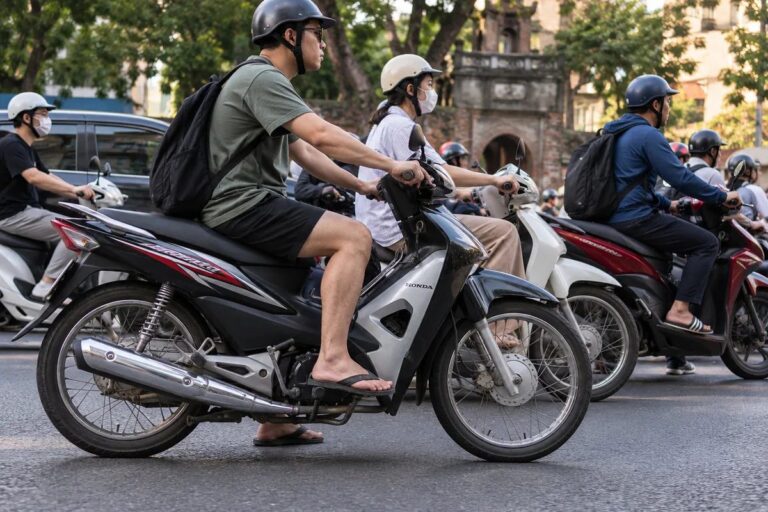
- Scooter: no clutch lever and no gear lever, so the left hand and left foot have less to do (the left hand still works the rear brake). On long, steady roads with few stops, that is an advantage. Scooters also have under-seat storage. Points to weigh: some scooters have small wheels and short rear suspension for rough roads, and weaker engine braking on long descents.
- Semi-automatic (no clutch lever): no clutch to pull, only gear changes with the foot. On flat, steady roads there is not much shifting. When the road keeps rising and falling, the left foot works harder.
- Manual clutch: gives you the most control over pulling power, which helps on mountain passes, but the left hand and left foot work hardest, especially in heavy or stop-start traffic.
In short: if the trip is flat and steady, a scooter or a semi-automatic may tire your hands less. If it has many climbs and you already ride a clutch bike, controlling the bike through the gears may feel more comfortable. If you are not used to any of them, familiarity matters more than the type of bike. Geared bike or automatic for long climbs and descents looks at hill roads specifically, automatic vs semi-automatic in stop-start Hanoi traffic compares the controls in the city, and semi-automatic vs manual clutch motorbikes explains the two geared types.
Factors that matter more than the type of bike
- How familiar you are with the bike. A full day on a type you know well can be less tiring than one on a type you are still learning, because you are less tense.
- Riding position and seat. Sitting upright on a supportive seat makes a trip easier than choosing by gearbox.
- Tyres and suspension. Correct tyre pressure and sound suspension reduce the jolts that reach your body.
- How you split the stages. Stopping to rest at the right time reduces fatigue whatever the bike.
- Weather and time of day. Strong sun, rain and cold tire you faster on any bike.
How to split a trip of a few hundred kilometres
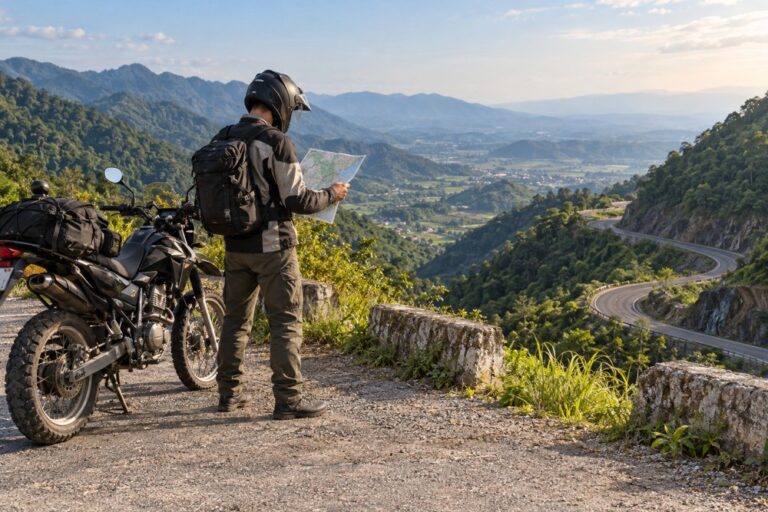
- Break it into several short stages with stops instead of riding straight through. For example, rest after each stage of about one to two hours, and adjust to how you feel.
- Put the stops where there is shade, a toilet and drinking water, and pin them on the map beforehand.
- Leave early in the morning to avoid the harshest sun and keep time in reserve.
- Stop early when you feel tired rather than pushing on to the end point. Fatigue slows your reactions.
- Plan for day two: the next day’s stage should be lighter if the first one was long.
If you have only one day and want to see many places, how far is realistic in one day helps you build a distance budget, and fatigue on a Hanoi motorbike day trip sets rest stops and a return cutoff.
Reducing fatigue whatever the bike
- Keep a loose grip; holding the bars tightly tires you quickly.
- Change position at the stops: stretch your wrists, roll your shoulders, straighten your back.
- Drink water regularly and eat lightly so your energy does not drop.
- Wear gloves and clothing that suit the weather; cold or hot hands both tire faster.
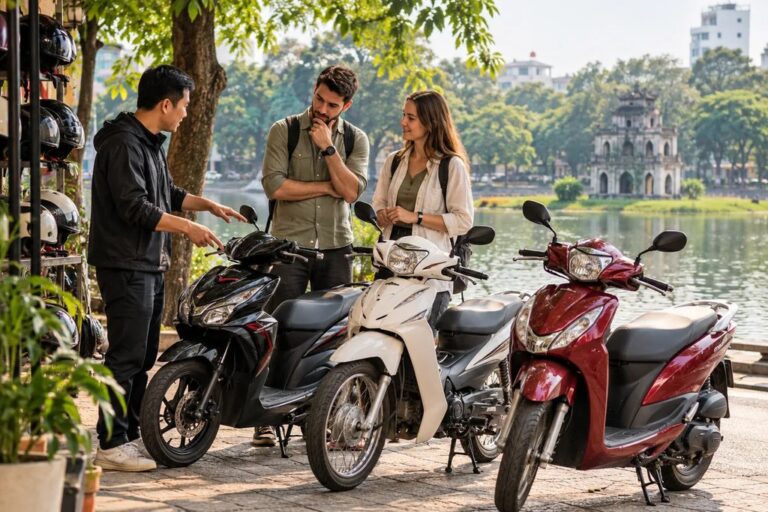
- Check the bike at pickup: brakes, tyres and lights, and tell the shop about anything unusual.
Choosing for your situation
| Situation | Suggested direction |
|---|---|
| Flat roads, steady riding, you are used to scooters | A scooter is the natural choice |
| Mountain passes and climbs, you are used to semi-automatics | A semi-automatic or clutch bike may suit you better, since the gears control pulling power |
| You are not used to any type of bike | Do not use a trip of a few hundred kilometres to learn to ride. Complete suitable instruction and confirm legal eligibility and ability for the exact bike first; choose other transport if you are not ready |
| Two people plus luggage | Prioritise a bike that carries weight well and has a wide seat, rather than the gearbox type |
For riders who have ridden semi-automatics for years, a geared motorcyclist on an automatic scooter looks at keeping the gears or trying a scooter from the geared rider’s side.
What to ask the shop before choosing a bike for a long trip
- How far the rental bike may go: where your trip goes and how far. Rental motorbike mileage limits explains what to read in the contract.
- Which bike has a seat and suspension that suit a long trip.
- How to get in touch if the bike breaks down on the way.
Planning a long ride out of Hanoi? Ask Motorbike Nguyen Ha before you book: call +84 334 699 969, or message on Zalo or WhatsApp, 09:00–21:00 every day. The shop is at Alley 5 Nguyen Van Cu, Bo De, Long Bien, near Gia Lam Bus Station (open the shop location in Google Maps). The scooters are introduced on Hanoi scooter rental.
Related: smooth upshifts and downshifts without a clutch lever.