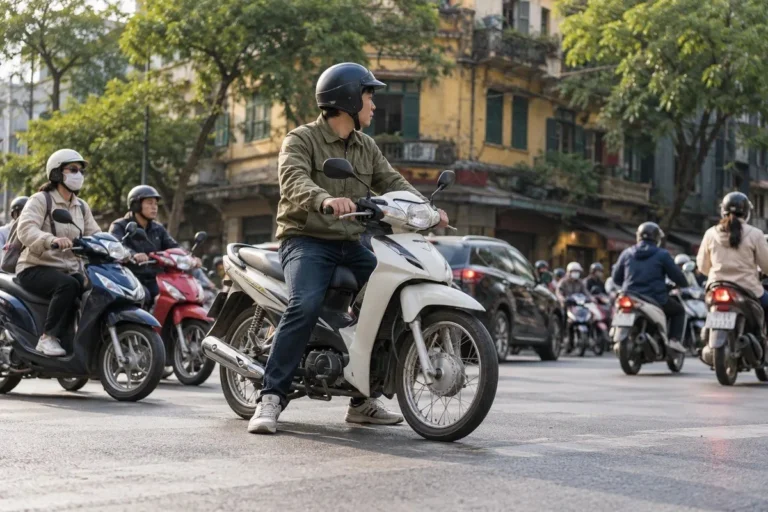
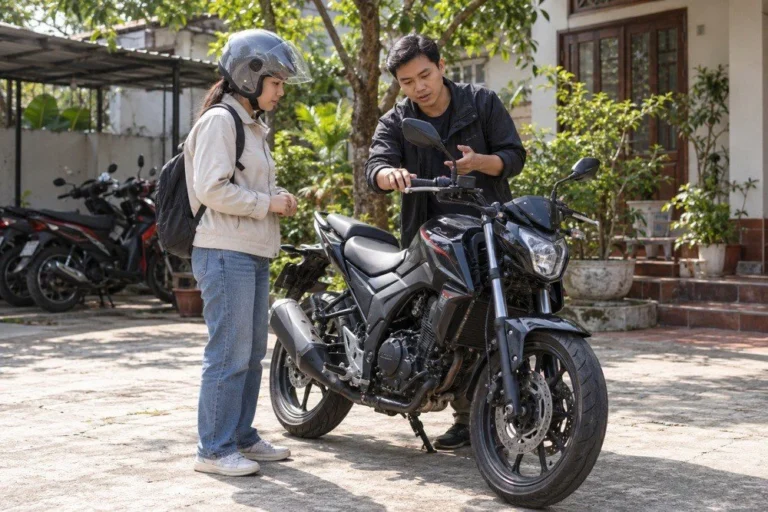
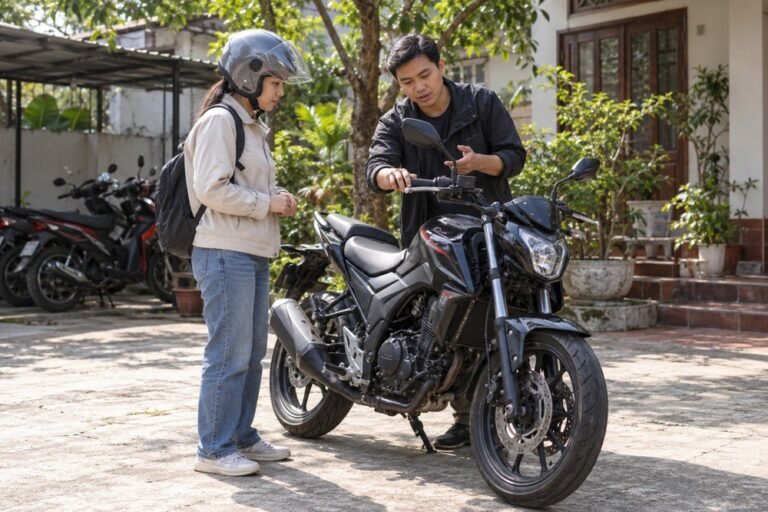
Manual & Semi-Automatic Motorbikes
Renting a Manual-Clutch Bike as a Learner: Ask About Damage and Rules
On this page
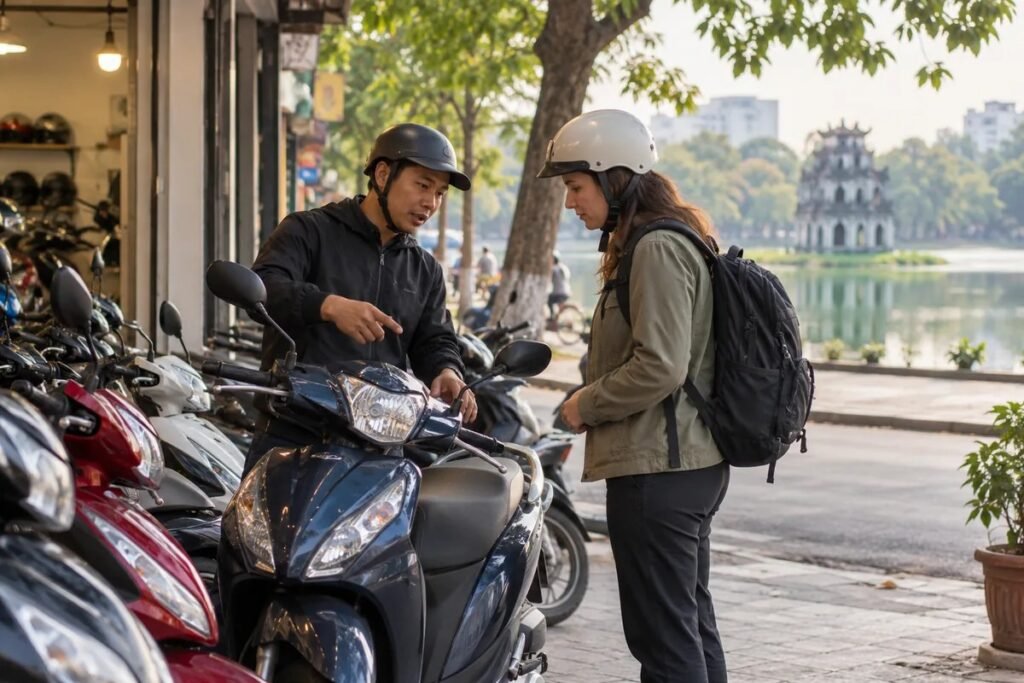
If you are still learning to ride a manual-clutch motorcycle, renting one for practice may sound convenient. But a learner can stall, drop the bike at low speed or use the clutch incorrectly, and a commercial rental may not be intended for training. Before paying a deposit, ask whether the business even rents this type of motorcycle to learners, what legal eligibility it requires and how any damage or unusually rapid clutch wear would be handled.
Do not assume Nguyen Ha has manual-clutch bikes in its current fleet. Its published semi-automatic category is a different type of motorcycle. This article is a checklist for discussing a possible rental and responsibility, not a promise that the shop offers manual-clutch training, a lesson, a particular model or a fixed compensation price.
Start with three separate questions
The first issue is availability: does the exact business have a manual-clutch motorcycle it is willing to rent? The second is rider eligibility: do you already meet the applicable licence and age requirements, and can you ride safely? The third is contractual responsibility: what happens if a clutch overheats, a mirror breaks or the bike falls?
These questions need independent answers. A provider’s willingness to take payment does not automatically establish that a learner is permitted to ride on a public road, and an insurance claim or compensation clause does not make an unsafe practice session acceptable.
| Question | What to ask the provider | What not to assume |
|---|---|---|
| Availability | Is a manual-clutch model actually available for these dates? | That a shop advertising semi-automatics also stocks clutch bikes |
| Eligibility | Which licence, age and experience requirements apply? | That paying a deposit gives a learner permission to ride |
| Training | Is any supervised, permitted familiarisation available? | That the shop provides an instructor |
| Damage | How are pre-existing marks and new damage documented? | That there is a standard national price for a dropped bike |
| Clutch wear | What counts as ordinary wear versus damage under the contract? | That a smell alone establishes responsibility |
What does “burning the clutch” mean?
A manual-clutch motorcycle uses a clutch lever to control how engine power reaches the transmission. Some slipping during low-speed operation can be part of the normal technique, but excessive or prolonged slipping may produce heat and wear. Riders sometimes call the resulting problem a “burnt clutch”, although the actual condition requires inspection.
A strange smell, slipping sensation or poor drive does not by itself prove who caused a problem, how much wear was present earlier or what repair is necessary. These are questions for a qualified technician and the documented condition of the particular bike.
Ordinary wear and accidental damage are not interchangeable
Clutch plates, tyres and brake components experience wear with use. Damage from a fall may affect mirrors, handlebars, levers, panels or a gear pedal. The boundary between reasonable use and chargeable damage depends on the contract and evidence, not a vague statement that “the learner always pays”.
Ask how the provider evaluates wear, how repair costs are calculated, what documentation is supplied and whether the renter can review the assessment. Do not agree to an unexplained amount in advance or assume every mark will be charged as a new part.
What to document before receiving the motorbike
- Photograph the front, rear and both sides of the actual bike in good light.
- Take clear pictures of mirrors, brake and clutch levers, gear pedal, handlebar ends and visible panels.
- Record the odometer and any pre-existing scratches, bends or broken components.
- Ask the staff to demonstrate the ordinary feel of the clutch and selector while the bike is secure.
- Confirm existing defects in the rental record or a written message.
- Keep the agreed deposit and damage terms with your booking confirmation.
Record the vehicle condition before practice, not after a dispute. Your own photos help establish what was present at handover, but they should supplement rather than replace any formal check-in procedure offered by the business.
Can you practise on public roads while learning?
Do not treat a rental as a way around driver training or licence requirements. Riding must be legal for the particular motorcycle and location, with appropriate supervision where relevant. A quiet street is still a public road and may have children, residents and traffic. If you are not yet qualified or confident, choose an authorised training environment with a suitable instructor rather than attempting to learn alone on a rented bike.
Use the manual-clutch readiness checklist to identify questions about controls and experience before deciding whether this kind of vehicle is appropriate. The checklist is not a substitute for training.
What should you ask about a practice area?
Ask whether a supervised familiarisation or a short stationary demonstration is available, and where any permitted moving practice could take place. Do not assume that an empty-looking car park is open for learner motorcycle practice. Verify permission from the site operator, applicable traffic rules and safe separation from others.
Practising starts, stops or tight turns without guidance can be unsafe, especially if the motorcycle is heavier than the machines you know. Never take a passenger while you are still struggling with basic control.
What if you drop the bike?
Protect people first. If anyone is injured, seek appropriate medical help. If the bike smells strongly of fuel, leaks, has a damaged brake or steering control, or shows smoke, stop attempts to ride and move away from danger. Do not restart merely to show that the engine still works.
Once the location is safe, record the position and visible damage from a distance, report it to the owner and follow the agreed process. Do not replace a broken lever or arrange unauthorised repair simply to hide the incident. Clear communication reduces the risk of later disagreement.
Can you change to a semi-automatic if a clutch bike is unsuitable?
That depends entirely on the provider’s actual availability and its contractual change terms. Ask before booking whether a change is permitted, whether fees apply and how any deposit is handled. Some providers may offer another bike and some may not; this page does not invent a shop policy.
Our semi-automatic versus manual-clutch guide explains the control difference. A semi-automatic still needs correct gear selection and does not remove the rider's legal or safety responsibilities.
Why a written answer matters
Verbal explanations can be forgotten or misunderstood, particularly when terms are discussed in two languages. Ask for the conditions in a message or rental agreement. Keep the amount of the deposit, any permitted familiarisation, the responsibility for damage and the procedure for reporting a fault together in one place.
Do not expect a one-line “all damages paid by renter” answer to resolve every situation. Ask for examples of how a pre-existing scratch, a broken mirror, normal clutch wear and a verified fault would be treated. This is about gaining clarity, not arguing over hypothetical events.
Questions to ask before paying a deposit
- Do you rent a manual-clutch bike at all, and is one available for the requested dates?
- What licence, age and experience documents will be checked?
- Are learners accepted, and what is the permitted setting for any familiarisation?
- How do you distinguish normal clutch wear from damage requiring payment?
- How are scratches, bent levers and broken mirrors recorded and charged?
- What happens if I decide not to proceed after inspecting the bike?
- How can a problem be reported, and may the vehicle be repaired by someone else?
A concise message you can send
“I am considering a manual-clutch motorbike, but I am not yet confident on that type. Do you have one available, and what licence and experience do you require? Is any legal supervised familiarisation possible? Please explain your written policy for clutch wear, accidental damage, deposits and pre-existing marks before I make a booking.”
It is acceptable to decide that a training course rather than a rental is the more appropriate next step. A rental business provides transport under its terms; it is not automatically responsible for teaching somebody to ride.
Choosing a vehicle you already know how to control
If you are comfortable on a semi-automatic but have not mastered a clutch lever, an already familiar model may be more practical for ordinary travel around Hanoi. Explore Nguyen Ha’s semi-automatic information for that separate category, then ask what is actually in stock. Do not assume a model is available based on an educational article.
For shop-specific availability and written terms, contact Nguyen Ha on 0334 699 969. Only the shop and an agreed contract can confirm any fee, deposit or damage assessment for a particular rental.