Manual & Semi-Automatic Motorbikes
Smooth Gear Changes With a Passenger on a Semi-Automatic Motorbike
On this page
When you change gear on a semi-automatic motorcycle, a small lurch that barely bothers a solo rider can make a passenger’s head nod forward or pull their body toward the rider. The solution is not to shift as fast as possible. It is to anticipate changes in speed, use smooth throttle inputs, choose a suitable gear and avoid abrupt braking or acceleration. A passenger adds weight and independent movement, so even familiar motorcycles can feel different with two people aboard.
This guide focuses on common semi-automatic underbones used around Hanoi, with a short comparison to manual-clutch motorcycles. It assumes the rider is properly licensed, experienced with the actual bike and permitted to carry a passenger. Learning how to control a motorcycle should happen before the first two-up ride, not during a trip through busy city traffic.
Why a passenger feels every sudden change
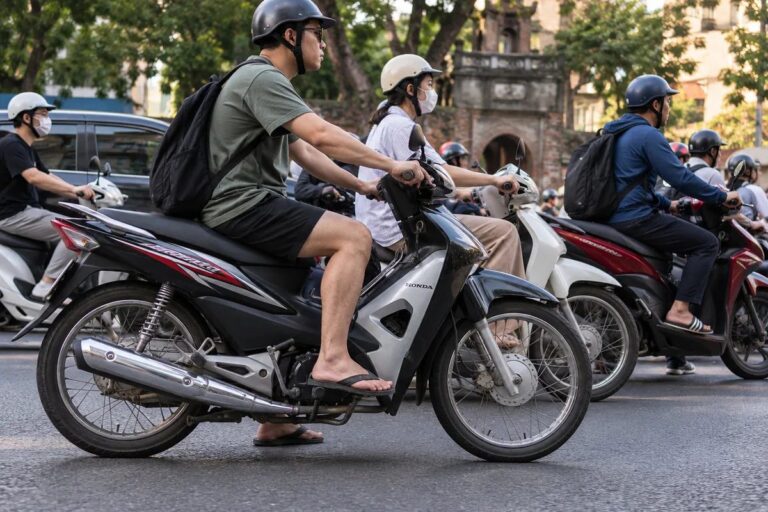
A passenger does not control the throttle, brake or gear pedal and cannot always predict what the rider is about to do. If acceleration stops abruptly and then resumes sharply, the passenger’s body tends to keep moving relative to the motorcycle. Strong braking can make them move forward and press against the rider’s back.
The New South Wales Government’s passenger-riding guidance notes that carrying a pillion changes braking, handling and suspension response and that smooth gear changes matter. Those are general safety principles rather than rules governing the booking terms of any Hanoi rental business.
What produces the familiar head-nod?
| Situation | What the passenger may feel | What to improve |
|---|---|---|
| Throttle closes suddenly before a shift | Their upper body moves forward | Plan the change and reduce power smoothly |
| Throttle returns too strongly afterwards | A pull backwards after the pause | Resume acceleration progressively |
| Inappropriate lower gear is selected at speed | A pronounced forward jolt from engine braking | Slow first and match the gear to road speed |
| Hard brake application at a red light | Weight pushes toward the rider’s back | Leave space and start slowing earlier |
| Passenger moves unexpectedly | Bike balance changes during low-speed control | Agree on posture and signals before leaving |
These causes can overlap. If a bike produces violent jolts, grinding or repeatedly refuses to hold a gear under ordinary use, do not assume the rider’s technique is the whole problem; stop and report a possible fault.
Semi-automatic is not the same as twist-and-go
A typical semi-automatic underbone has a foot-operated gear selector but no hand clutch lever. A fully automatic scooter usually manages the ratio without rider-selected gears. A manual-clutch motorcycle has a clutch lever that requires separate coordination. These descriptions are useful, but the exact controls vary by model.
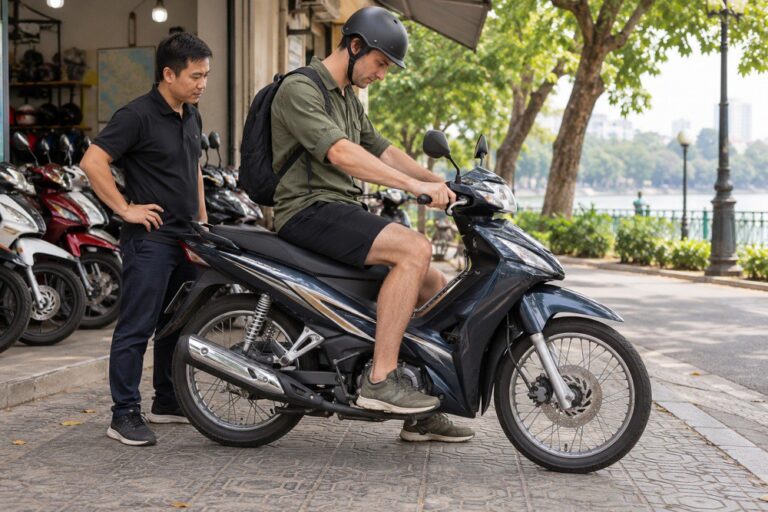
Our comparison of semi-automatic and manual-clutch motorcycles explains the distinctions. Have the rental provider demonstrate the gear pattern of the actual bike. Do not copy a manual-clutch technique onto a machine without the lever.
Smoothness begins before moving away
Riders often notice the biggest difference as a motorcycle pulls away with an additional person. The bike may accelerate more slowly under load, and small throttle changes can be transmitted through the seat. Settle the passenger comfortably before moving and make the first acceleration calm and predictable rather than abrupt.
Starting with a passenger in a confined space or on a steep slope can be especially demanding. If the rider cannot move away consistently and stop reliably while alone, carrying someone else is not an appropriate next step. The safer decision is to gain training and experience without a passenger.
Plan each gear change instead of rushing
Look ahead at the traffic and select a gear suitable for the engine and road speed, following the bike’s handbook. When a shift is needed, use a controlled change in throttle and the manufacturer-approved shifting method so that the driving force does not disappear and return violently. The objective is predictable acceleration, not the fastest possible gear movement.
Do not stare at the gear indicator or pedal while moving. If you are unsure of the motorcycle’s shift sequence, learn it while stationary at pickup. Choosing a different, more familiar model may be safer than attempting to relearn your controls with a passenger already on board.
Downshifting also affects passenger comfort
A large change in engine braking can pull both occupants forward, especially if a lower gear is selected before the motorcycle has slowed sufficiently. In traffic, notice a red light early, reduce power and brake smoothly so that each gear transition occurs at an appropriate road speed.
Wet roads require even more care because abrupt downshifts can affect rear-wheel grip. A separate guide on downshifting on wet roads explains the traction risk. That discussion matters for both rider control and the comfort of somebody sitting behind you.
What does a passenger need to do?
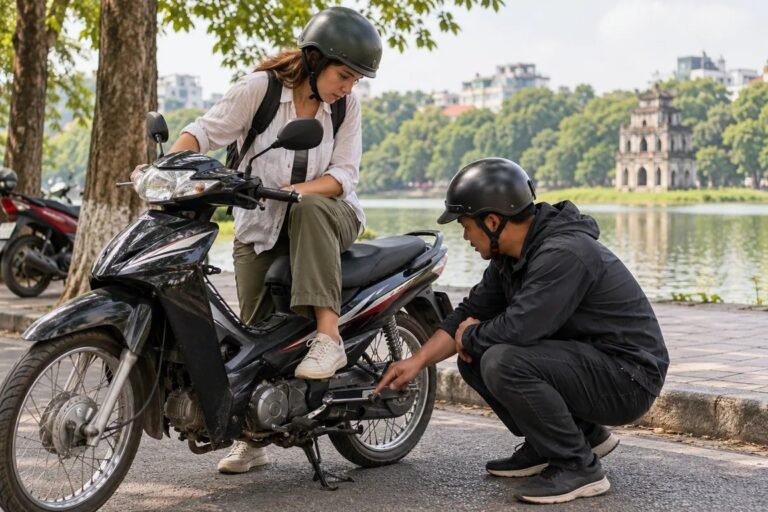
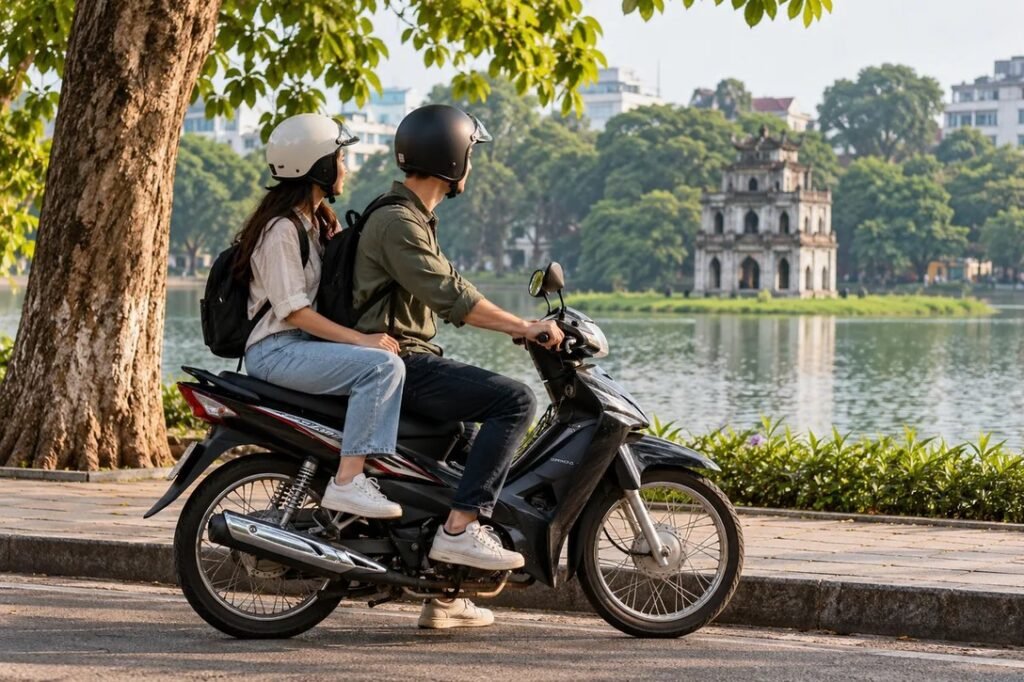
Before departure, show the passenger where to hold: the grab rail if equipped and suitable, or a secure position recommended by the bike’s manufacturer. Both feet should remain on the passenger footrests. Ask them to stay aligned with the motorcycle rather than suddenly leaning in another direction or shifting position at an intersection.
A passenger who wants to stop or adjust clothing should tell the rider, allowing a planned stop in a safe place. Do not encourage them to reach around for a phone or move a bag while the motorcycle is travelling.
Helmets, seat fit and footrests come first
Even impeccable shifting cannot compensate for an unsuitable passenger seat, a missing footrest or a helmet that does not fit. Check whether the actual motorcycle is designed to accommodate a passenger, and whether the combined load remains within the manufacturer’s limits. Do not assume every small motorcycle is suitable for every adult passenger.
The Motorcycle Safety Foundation’s passenger guidance explains how added weight can affect acceleration and stopping. Check the specific model's handbook before making adjustments; a renter should not modify suspension or tyre pressures without authorisation and qualified guidance.
How to handle braking with a passenger
Allow more room ahead and begin slowing sooner so that the final stop is controlled rather than abrupt. With added load, the motorcycle can respond differently to braking, and the passenger may move closer to the rider. Good braking technique depends on the vehicle, conditions and training; do not rely on a fixed distance or attempt an emergency manoeuvre merely to see how the passenger reacts.
Before a journey, agree that the passenger should stay in position and keep their feet on the footrests through an ordinary stop. Ask them not to push off the roadway unexpectedly, since doing so may change the bike’s balance.
What about the passenger’s head hitting the rider?
Helmet contact during braking may indicate abrupt deceleration, unsuitable seating distance or unexpected passenger movement. Review the bike’s fit and the riding conditions rather than asking the passenger to sit in an unsafe position. Passenger posture should be comfortable, stable and consistent with the manufacturer-approved seat and handholds.
A person who cannot reach both passenger footrests securely should not ride on that motorcycle. If an older relative has difficulty getting on and off, choose a more suitable form of transport instead of trying to compensate for the poor fit while moving.
Five conversations to have at the kerb
- Where will the passenger hold on and place their feet?
- Will they wait until the bike is stable before getting on or off?
- How will they ask for a stop or communicate discomfort?
- Can the rider operate the exact motorcycle confidently with added weight?
- Are helmets, seat, footrests and the combined carrying load appropriate?
Discuss these before the engine starts. Trying to explain the controls through traffic noise is stressful for both people and increases distraction.
Does this mean everyone should rent a bigger bike?
No. A physically bigger bike is not necessarily easier to handle, safer to stop or suitable for your licence. The correct choice depends on your experience, the passenger, model-specific limits and the road conditions. A familiar semi-automatic may be a reasonable option for a capable rider, but its availability and suitability must be verified rather than assumed.
Browse Nguyen Ha’s semi-automatic rental information as a starting point, then ask about the specific available vehicle and the passenger arrangement.
When should you stop the trip?
If the gear pedal feels abnormal, the engine produces repeated sharp jolts, the passenger cannot remain stable, or a brake feels wrong, stop somewhere safe. Do not keep accelerating and changing gears to see whether the symptom disappears. Report mechanical concerns to the rental provider and seek a suitable alternative if you cannot control the bike confidently.
Related guide: Shifting a Semi-Automatic Bike Without a Tachometer: What to Notice.
Questions for the rental shop
- Is the available model approved for a passenger, and what are its load limits?
- Can you show the passenger footrests and suitable grab points?
- What is the correct gear pattern for the actual model?
- What should we do if we notice unusual jolting or gear engagement?
For current models and a handover explanation, call Nguyen Ha at 0334 699 969. This guide does not confirm today’s stock or promise a specific rental policy.