Manual & Semi-Automatic Motorbikes
Downshifting on Wet Roads: Avoid Sudden Rear-Wheel Slip
On this page
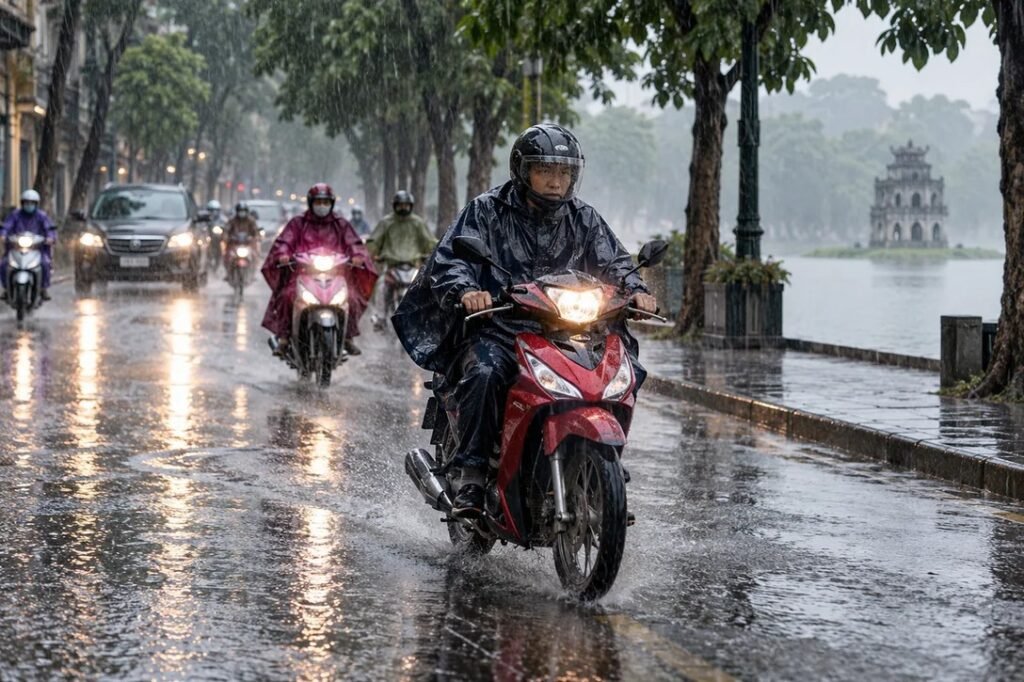
It has just rained in Hanoi, and you are approaching a junction on a semi-automatic or manual-clutch motorcycle. You select a much lower gear while the bike is still travelling quickly. A sudden change in rear-wheel torque may make the motorcycle jerk or lose traction, especially on a wet painted line or polished surface. The safer idea is to anticipate the slowdown, use the brakes smoothly to reduce road speed and select an appropriate gear without abrupt control inputs.
This article explains why a rough downshift can upset the rear tyre, not a universal sequence to recover every skid. The precise procedure depends on whether the bike uses a hand clutch, its gearbox and any electronic aids. If you have never ridden a geared motorcycle, supervised practice on a permitted course is preferable to learning a new technique in wet traffic.
Why a lower gear can upset the rear wheel
When a motorcycle changes down, engine speed must match the new relationship between the road speed and selected gear. If the engine and drivetrain connect abruptly while the road speed is too high for that gear, the rear wheel may be asked to slow suddenly. On a wet or slippery road, that change can consume more of the available traction than the tyre can provide.
It is an interaction among road speed, engine braking, clutch engagement, gear ratio and tyre grip—not proof that a particular gearbox is defective. Conditions such as worn tyres, poorly adjusted controls or a heavy load can also make the response less forgiving.
Why the surface matters more after rain
The New York State motorcycle operator manual explains that wet pavement, painted lines and steel covers may offer less traction. It advises slowing before slippery areas and making smooth changes in speed, direction, gear selection and braking. Those principles are relevant to riding conditions, although this is a foreign rider-training source rather than a Vietnamese legal rule.
The first part of a shower can be particularly unpredictable where dirt or oil is present. A glossy painted arrow may behave differently from neighbouring asphalt, and a shaded lane may remain damp even when the main road appears dry.
Three situations that deserve extra care
| Situation | Why the rear wheel may feel unsettled | Safer planning principle |
|---|---|---|
| Downshifting quickly before a bend | Strong engine braking arrives while cornering grip is needed | Reduce speed early, before turning when possible |
| Selecting a much lower gear at speed | Drivetrain speed mismatch can produce an abrupt deceleration | Use an appropriate gear for the actual road speed |
| Changing gear across wet paint or metal | The surface may supply less traction during the torque change | Avoid unnecessary inputs over slippery patches |
| Carrying a passenger or luggage | The combined weight changes handling and response | Allow more distance and make transitions smooth |
These examples explain risk, not a guarantee that a given manoeuvre will cause a skid. A rider should not intentionally reproduce any of them to identify the bike’s grip limit.
Brakes are for controlled slowing; gears match the road speed
Braking systems are designed to slow the motorcycle. Using the gearbox to create a strong, sudden braking effect is not a good substitute for smooth braking, particularly in uncertain traction. Look ahead and begin decelerating early enough that you do not have to combine an urgent stop and an aggressive downshift.
The motorcycle’s manual may provide recommended speed ranges or other instructions. Do not copy fixed gear-change speeds from a different motorcycle, because gearing, tyre sizes and engine behaviour vary.
Semi-automatic and manual-clutch bikes differ
A common semi-automatic underbone uses a foot gear pedal but normally has no hand-operated clutch lever. A manual-clutch bike requires the rider to manage that lever as part of ordinary gear changes. The controls and technique should be demonstrated on the actual model, not inferred from the fact that both have numbered gears.
For a basic comparison, see our semi-automatic versus manual-clutch explanation. The main practical point in rain is that abrupt changes should be avoided with either transmission style.
What about the clutch on a manual motorcycle?
A trained rider learns to coordinate throttle, clutch and gear selection so the power connection is controlled. Releasing the clutch abruptly in a much lower gear may generate a sharp engine-braking effect. Holding the clutch slipping for an extended period, however, is not a safe or sensible remedy.
If the clutch feels abnormal, sticks, smells burnt or changes engagement suddenly, stop safely and tell the rental shop. Do not adjust or dismantle a rented clutch to pursue a smoother shift.
Cornering and downshifting should be planned separately
When a motorcycle leans to turn, its tyres also need traction for cornering. Sudden braking or gear engagement can compete for the same limited grip. Select a suitable speed and gear in advance where conditions allow, and keep the motorcycle’s movements smooth through the bend.
The Ontario motorcycle handbook stresses that harsh downshifts can cause the rear wheel to skid and recommends selecting gears before turning. That is general training guidance; do not treat it as a substitute for instruction on a specific motorcycle.
What if the bike starts to slide?
Focus on staying upright and responding according to your training and the actual situation. Do not jerk the handlebars, force another gear change or rely on one generic command to release or hold the brake. Recovery depends on whether the front or rear wheel is affected, how far the bike is out of line, the road surface and whether ABS is fitted.
Once the motorcycle is stable and you can stop safely, assess whether a fault, tyre problem or impact occurred. Do not ride on simply because the bike straightened itself. If a vehicle component feels abnormal or the bike has fallen, contact the rental owner and request guidance.
What does rain change about your stopping distance?
Wet surfaces may require greater stopping distance, but a universal “double the distance” claim cannot be guaranteed for every tyre and road. Increase your following gap substantially and leave space for other road users’ unexpected movement. Avoid rushing to make up time when a shower slows traffic.
See our Hanoi drizzle and road-grip guide for further observations about wet weather and visibility. This page stays focused on the transmission side of deceleration.
Common slippery surfaces in Hanoi
- Painted lane markings and directional arrows.
- Metal drainage covers and temporary road plates.
- Wet leaves, sand or construction residue near the kerb.
- Polished paving at parking entrances.
- Puddles that conceal potholes or changes in surface height.
Do not attempt an abrupt downshift, harsh brake application or sharp turn just as you cross one of these areas. Scan ahead so a safer speed is chosen before the front tyre reaches a potential hazard.
Five pre-ride checks for a rental bike on rainy days
- Ask which type of transmission the actual bike uses.
- Identify both brake controls and the ordinary gear pattern at pickup.
- Look for obviously damaged tyres or an unusual warning indicator; ask staff to inspect anything suspicious.
- Make sure footwear gives stable access to the gear and brake pedals.
- Plan extra journey time so you are not tempted to rush an intersection or turn.
Do not change tyre pressure or adjust controls on a rental without permission and proper instructions. If rain becomes too heavy to see clearly, stop at a safe location rather than continuing because a booking schedule is tight.
Is engine braking itself unsafe?
No. A moderate, predictable engine-braking effect can occur during normal riding. The problem is an abrupt or unsuitable gear change when the tyre has little grip available. The distinction matters: the goal is not to avoid using the gearbox, but to control transitions in a way that suits the motorcycle and conditions.
What if you are new to shifting gears?
Learn the controls with a qualified instructor in a lawful, safe practice area before attempting complicated road conditions. Never practise traction loss by intentionally downshifting sharply on wet pavement. An experienced rider can still make a mistake on an unfamiliar model; understand the gear pattern and stopping procedure before leaving the shop.
If you are choosing a bike for everyday transport, inspect Nguyen Ha’s semi-automatic rental information and confirm current stock and the exact model before making arrangements.
Related guide: Descending a Long Hill on a Semi-Automatic: Brakes and Gears.
When to report a problem
If a normal shift produces repeated loud clunks, the bike slips out of gear, the rear wheel behaves unusually or a warning lamp appears, stop and document the incident. Do not try several more downshifts to prove it happens. Describe the speed and surface from the original event, the gear selected if you remember it, and whether there was a passenger.
For questions about a specific Nguyen Ha rental in Hanoi, call 0334 699 969. This educational guide does not certify any particular motorcycle’s condition or replace qualified training.