Fuel & Running Costs
Morning vs Evening Refuelling: Does It Really Save Money?
On this page
Travel advice often says you should fill a motorbike early in the morning or late at night because cooler petrol is denser. There is a real physical principle behind the claim: liquid fuel changes volume with temperature. But that does not mean scheduling a trip to a petrol station at dawn will produce a noticeable saving. The temperature of fuel at the nozzle may not follow the outdoor air temperature, especially where the station stores petrol underground.
Practical answer for Hanoi renters: choose a reputable, convenient station, buy the manufacturer-recommended fuel, check the pump display and keep a receipt when possible. Do not make a special trip across town or wait until an unsafe hour because a social-media tip promises extra litres.
Why this common fuel-saving tip sounds plausible
Petrol is sold by volume, normally litres at a filling station. Like many liquids, it expands when warmed and contracts when cooled. At a lower temperature, a given volume may contain a slightly greater mass of fuel. This is the real physics people refer to when they say the cooler hour must always be the better bargain.
However, the relevant temperature is the actual petrol being dispensed—not the air around the rider. A dashboard weather display or the temperature of a parked motorcycle seat cannot tell you the fuel temperature inside a storage tank.
Why the morning air is not the whole story
Many filling stations use underground tanks, where temperature changes across a day can be smaller than those at street level. Fuel can also spend time in the pump assembly or exposed pipework, and not every station has the same storage arrangement or turnover. There is no universal reason to assume that fuel emerging from a particular nozzle at 7 a.m. is always cooler than it is at 7 p.m.
In a 2026 Consumer Reports examination of daytime refuelling, the organisation measured how pump and underground-tank conditions affect fuel temperature. The test illustrates why a change in outdoor temperature is not equivalent to a change in the petrol delivered. Its results come from the tested installation and should not be presented as measured data from every petrol station in Hanoi.
What can a renter actually verify?
| Question | What you can usually observe | What remains uncertain |
|---|---|---|
| Does the pump start a new transaction? | Its displayed figures and staff explanation | Hidden calibration and internal accuracy |
| Which petrol are you buying? | Product grade and blend label | Laboratory composition without testing |
| How many litres are billed? | Display and receipt | Any unmeasured deviation in the dispenser |
| Is fuel colder this morning? | Usually no public nozzle-temperature reading | Actual temperature of the delivered fuel |
| Is the price better tonight? | Posted price at time of sale | Future market changes |
That is why the simple morning-versus-evening argument rarely gives a rider enough evidence to plan around it. A petrol station’s actual operating hours and safe access are easier to assess.
Choose the right fuel before choosing the time
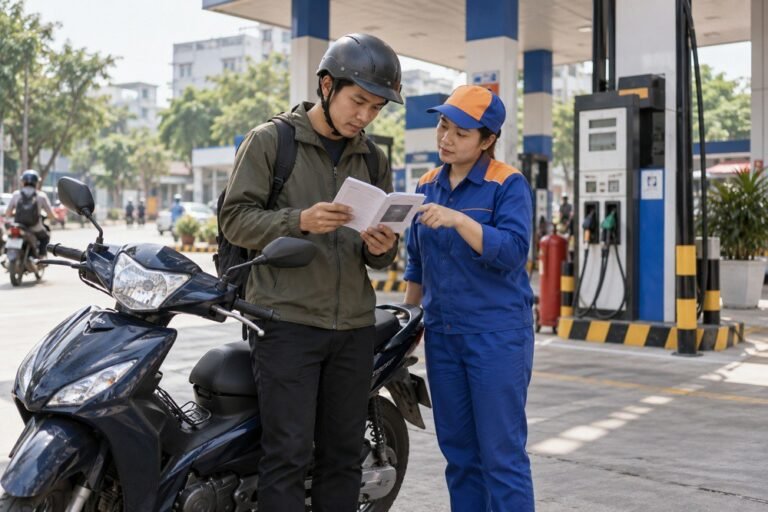
The rented bike’s engine and model year determine which petrol grade the manufacturer recommends. Vietnam’s range of ethanol blends and RON grades can be unfamiliar to visitors. Ask the owner which product to use for the exact motorcycle rather than assuming any available petrol will be suitable.
What if a station looks busier at one hour?
A long queue means time lost and potentially more idling if you leave the engine running. Choosing a quiet, conveniently located station may be worthwhile, but there is no guaranteed best hour for every Hanoi neighbourhood. Traffic, delivery schedules and opening times differ among stations.
Do not ride far out of your way merely because an internet post recommends refuelling at sunrise. The extra distance and time can easily become more important than a tiny theoretical density difference that you cannot establish.
Do not overfill the tank to chase a saving
Some riders try to maximise the number of litres purchased by filling all the way to the physical rim. That can exceed the safe fill level stated by the manufacturer and may increase spillage risk as fuel warms. The correct fuel limit does not change because you have chosen a cooler or hotter hour.
Read our guide to overfilling a motorcycle tank before sun exposure for the distinction between a stated tank capacity and the safe fill limit. Follow the actual bike’s manual and the pump attendant’s safety instructions.
Does a receipt prove how much fuel the bike used?
A receipt records a purchase, not the energy consumed across a trip. To estimate consumption, record the litres added, the odometer and the conditions of normal travel across several comparable intervals. A short stop-start journey and a long quiet road are not fair comparisons.
Do not use an advertised tank capacity as a precise measure of what was in the motorcycle at pickup or after return. Gauge readings often change with tilt and tank design. The rental shop’s agreed fuel-return condition is a separate contractual question.
Fuel level when collecting and returning a rental
Ask what level of petrol the motorbike will have when you receive it. Is the expectation to return it with the same indicated level, a full tank, or another agreed arrangement? This is not standardised across all shops, and this article does not impose an invented rule on Nguyen Ha.
Take an ordinary stationary photo of the fuel gauge and odometer at collection if useful. Keep the written terms with the booking. When returning, record the same indicators under comparable conditions if possible so both sides can discuss the actual agreement.
What if the pump does not clearly show zero?
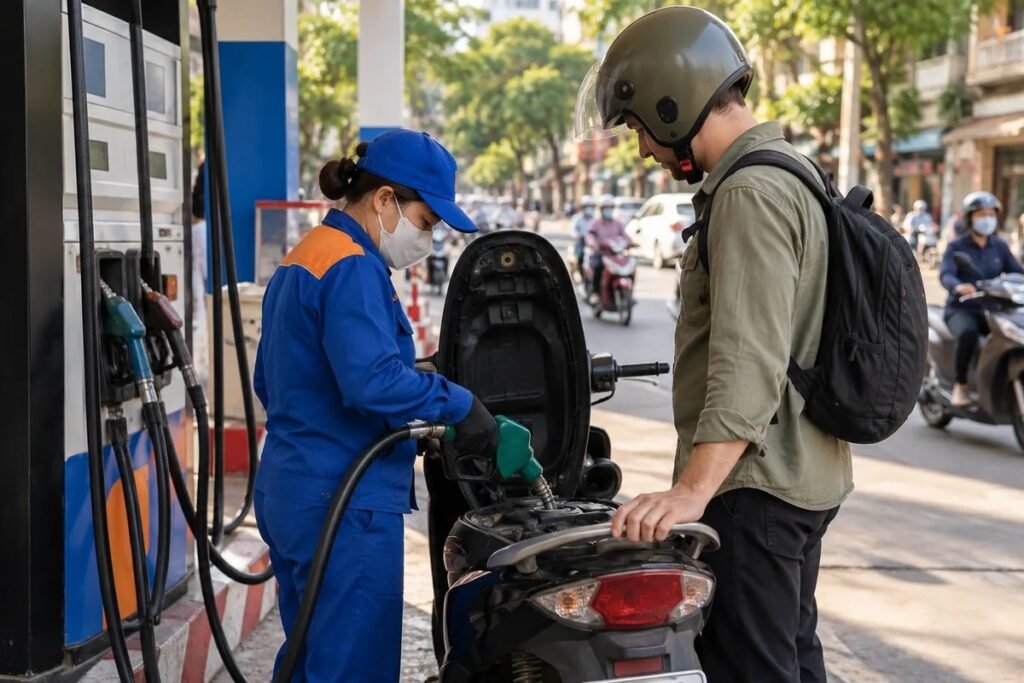
Ask the attendant to clarify that a new transaction has begun before petrol is dispensed. If the display or product label remains unclear, choose another pump or station. Keep the discussion polite and do not interfere with the dispenser’s measuring mechanism.
A visible zero is a useful customer check, not proof of the accuracy of every internal component. Inspection of measuring equipment is handled through the relevant regulatory and technical processes.
Do not refuel while the engine is running
Park in the designated area and switch off the engine before opening the tank. Obey warnings about smoking, flames and other ignition sources. Keep people clear of a spill and alert the attendant rather than attempting an improvised clean-up. If a strong fuel smell persists around the motorcycle, ask the rental provider for guidance before starting.
Do not use a phone while handling the nozzle if the station prohibits it. The exact station’s signs and instructions take precedence over a casual travel tip.
Morning might still be convenient for another reason
If you have a long trip planned, refuelling before leaving the city can help you avoid running low in an unfamiliar area. Choose a time when the station is open, lighting and access are appropriate, and you are not rushed. That is a scheduling benefit rather than proof of receiving more fuel per litre.
An evening refill can also work perfectly well if the station is reliably open and the route is safe. The right choice depends on your journey and station availability, not an alleged universal temperature advantage.
What if the bike needs a different grade than the station sells?
Do not substitute an uncertain blend or octane rating merely to refuel at your preferred hour. Ask the shop, review the appropriate manufacturer’s instructions and consider a different station. Fuel compatibility can differ across model years and modified fuel systems.
How to check the numbers that really matter
- Confirm the correct petrol grade for the actual rental model.
- Select a lawful, accessible station along your journey.
- Check the product label and new-sale display before fuelling.
- Do not exceed the manufacturer-stated fill level.
- Keep the receipt or note the product, amount and date.
- Compare refuelling records only across reasonably similar journeys.
For routine measurement rather than myths, see our fuel-use log for longer motorbike rentals. That guide deals with actual litres and kilometres rather than presumed fuel temperature.
Questions worth asking Nguyen Ha
Ask which fuel grade is appropriate, how to find the filler cap on the exact bike, and what fuel level is expected at return. These practical answers can matter much more than whether you visited a particular station before breakfast.
For the currently available bikes and booking information, call 0334 699 969. This article does not claim Nguyen Ha has a special fuel policy or that early-morning refuelling guarantees savings.