Automatic Scooters
Scooter Storage for School Runs and Groceries: Underseat or Front Hook?
On this page
A Hanoi parent who drops a child at school, buys groceries and then heads to work may look for an automatic scooter with the biggest possible underseat storage. But a large underseat compartment and a front bag hook solve different problems. The compartment can keep suitable belongings contained; a hook provides convenient access for small, lightweight bags when the manufacturer allows it. Neither storage feature guarantees that a child’s school bag, shopping, helmet or work laptop will fit safely. Choose by testing the actual vehicle and the objects you normally carry.
Before booking, ask which scooters are available and what storage each specific unit has. The Hanoi automatic scooter page is a starting point, not a guarantee that any listed model has a particular underseat volume, hook capacity or approved passenger arrangement.
Plan a real morning rather than choosing from a brochure
Think of the route as three separate phases. On the first leg, a child may have a backpack, drinking bottle or raincoat. On the next, you may buy fruit, vegetables or other groceries. On the final commute to work, you might need a laptop, charger, documents or clean clothing. These objects have different sizes and sensitivities.
Ask which items must remain accessible during parking stops and which can be stowed before the journey. If you need a bag several times each morning, opening a seat every time may be less convenient than carrying a small item in an appropriate way. But convenience does not override the manufacturer’s instructions for a storage hook.
Make a list of your typical daily objects and their approximate dimensions. Then bring those objects, or cardboard mock-ups of the same size, if the provider allows you to check storage at handover. An online volume figure measured in litres cannot guarantee a rigid laptop sleeve or a particular helmet will fit through a narrow compartment opening.
Do not pack for a hypothetical trip with unusually many items, then assume the daily scooter must carry them all. For occasional bulkier shopping, consider arranging separate transport rather than choosing a heavier or unsuitable scooter for every school run.
What the underseat compartment does well
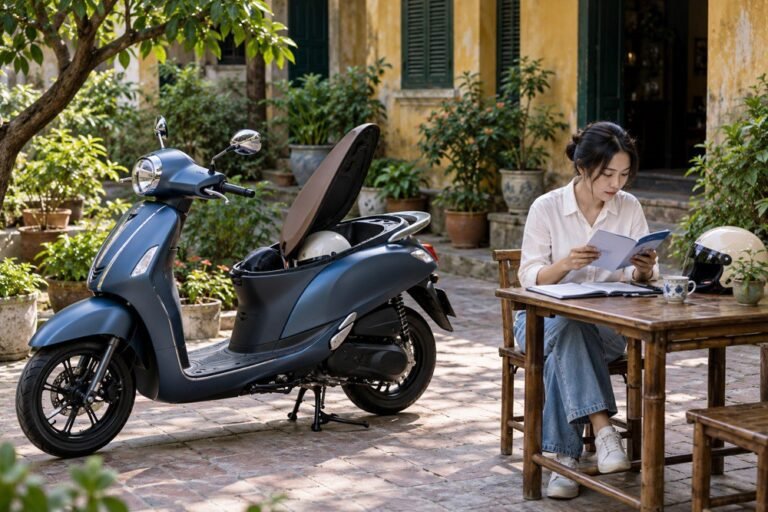
Underseat storage can help keep suitable light belongings together and away from direct road spray. But it is not a waterproof safe: seams, weather, heat and the vehicle’s design affect protection. Keep documents and electronics in their own protective sleeves and never leave valuables unattended merely because they are out of sight.
The compartment may not have the shape suggested by its total published volume. Battery housings, fuel-tank design, hinges and seat shape create irregular spaces. Test the height, depth, opening and the ability to close the seat without forcing it. Do not compress a laptop or helmet under the seat until the latch barely clicks.
Check the maker’s instructions for limitations on heat, load and items that must not be stored there. Hot or moisture-sensitive objects, hazardous liquids, flammable materials and delicate electronics may be inappropriate depending on the vehicle. Avoid leaving food that could spill or develop unpleasant odours in a confined compartment.
A helmet may fit some underseat spaces and not others. The helmet’s shell and visor should not be crushed against the latch. If it does not fit easily, ask about a secure and safe alternative approved by the shop instead of forcing the seat shut.
What a front hook is actually for
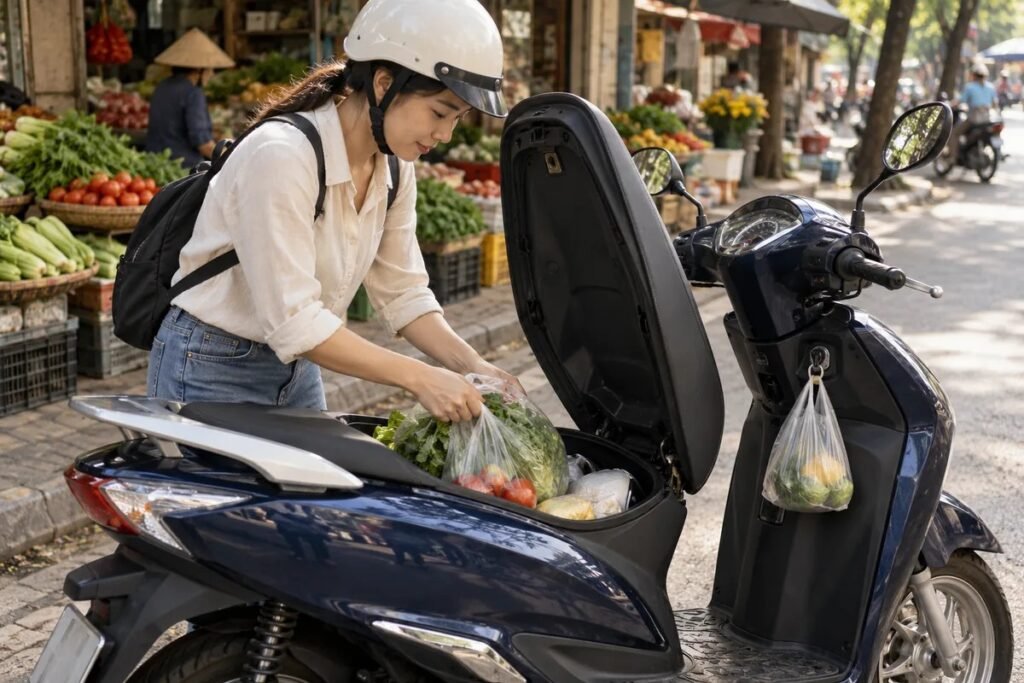
A fitted shopping-bag hook can make a small bag convenient to carry, but it usually has a model-specific load limit. A hook should not be treated like an unlimited luggage rack. Confirm that it is original, securely fitted and rated to carry the actual load you propose.
Use light, compact bags only within the maker’s limits. Avoid bags that swing into the front wheel, touch the rider’s legs, obstruct steering or catch a control. When a heavy load shifts unexpectedly, it can affect balance even if the hook itself does not break.
A bag hung loosely in a footwell can become a hazard during braking or turning. Do not wrap straps around handlebars, levers or throttle. If a hook is absent, ask whether the shop permits any accessory; do not drill or clamp a makeshift replacement without consent.
For foods that might spill, think about packaging rather than relying on the hook to keep everything upright. A bag can move when the scooter accelerates or brakes, and sharp containers or leaking liquids should not be placed where they can distract the rider.
School runs require a separate passenger assessment
Storage and passenger carriage are different questions. Before riding with a child, verify the current legal rules on who may be carried, child age, seating, helmet requirements and the operator’s eligibility. Do not assume that a scooter with a large seat automatically makes every passenger arrangement legal or safe.
A passenger must be able to remain seated safely without interfering with the rider, handlebars or brakes. A bulky school bag between the rider and child can compromise position and control. Avoid carrying shopping bags in any way that destabilises the scooter or leaves the passenger without safe support.
The child may be uncomfortable with the seat height, traffic noise or weather, and the rider may have difficulty balancing the scooter when stopping. Assess those real conditions rather than choosing from storage volume alone. If the arrangement is unsuitable, use another means of transport.
Do not put a child in the scooter’s footwell or allow a child to stand while the vehicle moves. The correct passenger arrangement must match the vehicle design and applicable rules. Ask the provider about the specific scooter’s capacity, and follow the law and manufacturer guidance.
Compare two hypothetical morning setups
Imagine scooter A has a large underseat compartment but no front hook. It can hold a lightweight raincoat, a compact lunch bag and some documents without overfilling, but the rider must open the seat to retrieve them. Scooter B has a smaller underseat compartment and a maker-approved light-duty hook, so the rider can keep a small shopping bag accessible if it is within the load limit.
Neither choice is automatically better. If your commute includes a laptop that needs a rigid protective case, the shape and fit of underseat storage may matter most. If you buy a small bag of groceries on the way home, an approved hook might be convenient, but only after load and clearance checks.
If you need to carry a child too, determine passenger legality and comfort before making any storage comparison. A scooter that handles shopping well may be a poor choice for the overall family journey. This illustration does not describe any particular scooter currently rented by Nguyen Ha.
A quick in-person storage test
Inspect the exact scooter
Step 1: Ask to inspect the exact vehicle with the employee. Identify all installed storage and hooks; don’t assume a pictured accessory is included on the unit offered.
Confirm load limits
Step 2: Check the manufacturer’s stated limits. If the shop cannot confirm the permitted load of a hook, avoid using it for a substantial bag until the model documentation is available.
Test underseat fit
Step 3: Place a representative bag in the underseat space. Close the seat gently and confirm the latch operates normally. Do not force the seat closed over a protruding item or allow straps to catch in the hinge.
Check hook clearance
Step 4: With the scooter parked, assess whether a small hanging bag would touch the front wheel, interfere with steering, obstruct the rider’s legs or swing across the floorboard. If it does, find a different safe way to carry it.
Step 5: Check normal riding comfort and parking: the rider must be able to sit, brake, turn and put the scooter on its stand. Storage convenience has little value if the scooter is too unwieldy for the real parking area.
Step 6: Inspect brakes, tyres, lights and visible condition before acceptance. A familiar storage design should never persuade a renter to overlook a safety-critical defect.
Rain, heat and theft: limitations that matter in Hanoi
During wet weather, underseat space can help shield some belongings but is not automatically fully waterproof. Sensitive documents, electronics and clothes should be protected in appropriate bags. If a compartment is visibly wet or the seat seal is damaged, report it to the owner instead of trusting it with a laptop.
When parked outside in hot weather, confined scooter compartments may become hot. Do not leave food, heat-sensitive electronics, medicines or other vulnerable objects there without considering the manufacturer’s guidance and the item’s storage requirements.
A closed seat compartment is not a guarantee against theft. Never leave passports, large cash amounts or other valuable items unattended just because the seat is locked. Follow local parking instructions and take essential belongings with you.
If you carry groceries, separate wet, heavy, sharp or fragile items into suitable containers. A leaking container can damage the compartment, stain the rented scooter and make a later handover more complicated. Photograph any pre-existing marks or damage at pickup.
Choose for the full rental period
If the scooter is needed for a few weeks or months, daily convenience adds up. Ask yourself how often you need the underseat area, whether the hook meets actual load needs and whether the vehicle is comfortable to park. A small daily inconvenience can matter more than a specification that sounded impressive on booking day.
For a monthly rental, ask about confirmed price, deposit, storage accessories and the process for reporting a damaged hook or seat latch. The monthly rental guide can help you prepare questions, but the actual agreed vehicle and terms control.
Avoid buying a larger rack or replacement hook before checking the owner’s permission. The bike belongs to the rental provider, and a modification may damage panels or create safety issues. Storage problems are better resolved with the right vehicle than an unapproved accessory.
Questions to ask the rental shop
Does the offered scooter have underseat storage and an original hook? What items fit without forcing the seat closed? What load limit applies to the hook? Are there any restrictions on what may be kept in the compartment? Does the provided helmet fit there when parked?
If carrying a passenger, ask about vehicle capacity and the model-specific rider/passenger setup. The provider’s answer cannot substitute for current road law. If the proposed arrangement is unsafe or not permitted, choose an alternative.
Confirm what happens if the seat latch, hook or other accessory develops a fault during the rental. Do not assume repairs can be ordered independently or deducted from the rental payment. Report the issue and seek the owner’s instructions.
Frequently asked questions
Is a larger underseat compartment always better? No. Opening shape, seat height, model suitability, everyday cargo and safe access matter as much as total litres.
Can I put a heavy shopping bag on the front hook? Only within the exact manufacturer’s load limit and when it does not interfere with steering, brakes or balance. Never assume a hook is a cargo rack.
Does a scooter with an underseat compartment guarantee a helmet fits? No. Helmet shell shape, compartment opening and hinge clearance vary. Test the actual item without forcing the seat.
Can I carry a child and groceries together? The legal passenger arrangement and safe handling come first. If the bags interfere with rider or passenger position, take less cargo or use other transport.
Ask Motorbike Nguyen Ha to compare real models
Motorbike Nguyen Ha is at Alley 5 Nguyen Van Cu, Bo De, Long Bien, Hanoi, open 09:00–21:00 according to its published hours. Call +84 334 699 969 or send a Zalo/WhatsApp message explaining your daily route, luggage and passenger needs. The shop can confirm which actual scooters are available and what storage they have; none is guaranteed by this guide.