
Riding Skills & Safety Planning
Should You Carry a Mini Tyre Pump or Puncture Kit on a Rental Bike?
On this page
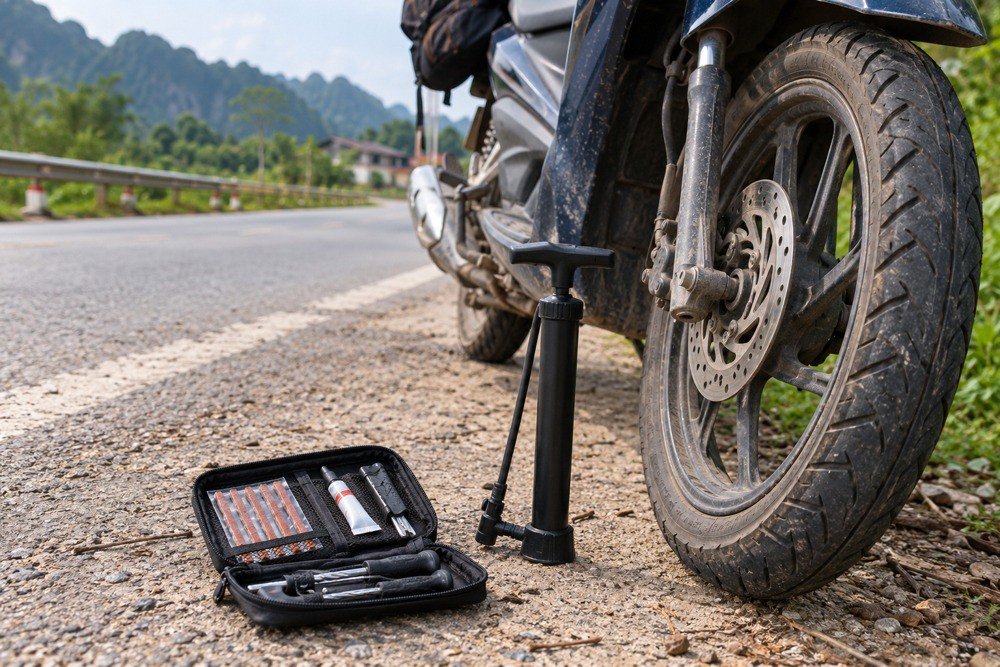
Before taking a rented motorbike from Hanoi toward another province, it is reasonable to wonder what will happen if a tyre goes flat. A compact hand pump or emergency puncture kit looks reassuring, but neither is a guarantee that a damaged motorcycle tyre will be safe to ride. The first questions are which type of tyre the actual bike uses, whether the rental owner permits any repair, and how you will arrange qualified inspection or recovery if the damage is beyond safe temporary handling.
Short answer: you do not automatically need to buy a puncture kit for a rental. A fully charged phone, an agreed breakdown-contact procedure, the right tyre information and a realistic route plan may be more valuable. A mini pump can help only in suitable conditions; it cannot close a puncture, repair a torn sidewall or establish that hidden tyre damage is absent.
Find out which tyre the motorcycle has
Motorbike tyres may be tubed or tubeless, and their construction and repair approaches differ. A kit intended for one type may not be appropriate for the other. Ask the rental company about the specific model and tyres rather than buying supplies based only on the marketing name of the bike.
Photographs can help confirm the brand, size and visible type markings, but they do not always reveal how the tyre has been fitted. The correct pressure also depends on the motorcycle, load and manufacturer instructions.
What a mini pump can and cannot do
| Item | Potential use | Important limitation |
|---|---|---|
| Small hand pump | Inflating a tyre when an appropriate procedure is confirmed | Does not repair damage or determine whether a tyre is safe |
| Battery-powered air compressor | Faster inflation with a usable gauge | Needs charge, suitable valve and correct pressure target |
| External tubeless plug kit | May offer temporary sealing in certain situations | Not approved for all tyres or damage; professional assessment is needed |
| Tube patch supplies | Used in specialised tube repair | Typically involves wheel or tyre work that a renter should not improvise |
| Phone, offline map and shop contact | Helps ask for an inspection or arrange recovery | Coverage, response and costs must be checked beforehand |
The purpose of the comparison is to avoid assuming that carrying tools makes an unsafe tyre safe. Some problems require a specialist and suitable transport regardless of what is in your luggage.
Why a flat motorcycle tyre should not be ridden on
A tyre that loses significant air pressure can affect balance and the ability to steer or brake. Continuing to ride may damage the tyre’s internal structure and the rim, even over a short distance. The danger is especially serious on two wheels, where a single damaged tyre changes the vehicle’s stability.
Can a roadside plug make the bike safe?
A temporary repair may be possible in narrowly defined circumstances, but it is not a universal solution. The damage’s location, size, tyre construction, how long the tyre was underinflated and manufacturer recommendations all matter. A puncture near a sidewall, a tear, deformed bead or rim damage calls for a different response from a small tread puncture.
Does a rental customer have permission to repair?
Not necessarily. This article does not establish Nguyen Ha’s policy on roadside tyre plugging or who pays for repairs. Ask before the trip: may a renter use a temporary kit, should they contact the shop first, and can an approved local tyre professional inspect the wheel?
Unauthorised work can affect safety and complicate responsibility for later damage. A shop may ask for photographs, a receipt, the tyre model or the details of the person performing the inspection. Agree on those requirements in advance rather than after a problem occurs.
What if the tyre loses pressure while riding?
If handling becomes unstable or you suspect a puncture, avoid sudden throttle, braking or steering movements. Concentrate on maintaining control and slowing to a safe stopping place as your training and conditions allow. Do not attempt an unfamiliar manoeuvre or steer sharply toward the kerb. Once parked, keep clear of traffic and assess the situation without touching moving or hot components.
Do not continue toward the nearest tyre shop on a visibly flat tyre. If moving the motorcycle by hand is also unsafe or the wheel will not move freely, request suitable assistance.
What should the first message include?
- Motorbike registration plate, model and rental reference if known.
- Your current location and a nearby landmark.
- Whether the front or rear tyre is affected.
- Any visible cut, puncture, sidewall deformation or rim damage.
- Whether the motorcycle is safely parked and whether anyone is injured.
- What equipment, if any, you have without attempting an unauthorised repair.
A useful text might be: “The rear tyre of my rental has lost air near [location]. The bike is safely parked and I have not tried to ride on it. I can send a photograph of the tyre. Please advise whether you want a local specialist to inspect it and how the transport or cost should be handled.”
What to check before departing Hanoi
Observe the tyres for obvious cracks, bulges or embedded objects. Ask the rental provider for the model-specific cold pressure and a professional pressure check when appropriate. Do not use the maximum number printed on a tyre’s sidewall as the everyday operating target unless the vehicle’s instructions specifically say so.
Keep your phone charged and save the rental contact information offline. Identify populated towns or service points along the planned route, but do not assume a map listing is currently open or that a shop can perform specialist motorcycle tyre work.
How the type of journey changes the decision
A short urban trip with many repair shops is different from a sparsely populated route outside Hanoi. On remote roads, lack of phone coverage and limited transport options can make a breakdown much more complicated. A mini pump may be useful to a trained rider in a suitable context, but it cannot replace a safe recovery plan.
If you are not confident about riding or recovering the bike on that route, choose a shorter trip or a more populated itinerary. Avoid leaving late in the day with a tyre concern simply to meet an unrealistic destination plan.
What if the bike has a slow leak?
A tyre that needs repeated air top-ups may have a puncture, valve problem or another fault. Do not treat repeated inflation as a substitute for assessment. Inform the owner and request professional inspection. A pressure reading that drops overnight is useful evidence even if the tyre looks normal at first glance.
Do not experiment with sealants in a rental
Liquid sealants, adhesives and external plugs are not universally compatible with every motorcycle tyre. Some products can complicate later professional inspection. Ask the owner and specialist before applying a substance, and never assume a spray can makes it safe to ride with a damaged sidewall or rim.
What if a shop is far from where you stopped?
Discuss the location with the provider. If the tyre is unsafe and the bike cannot be ridden, arrange suitable transport or professional assistance instead of continuing slowly on a flat. Costs and availability depend on the agreement and actual location, so no free or nationwide recovery service is promised here.
Ask about the tyre at handover
- Is it a tubed or tubeless tyre on the exact rental bike?
- What cold pressure applies with the rider’s intended load?
- What is the required procedure if a puncture occurs?
- May a local tyre professional inspect or repair it with the owner’s permission?
- Does the shop permit any temporary kit or roadside pump, and under what conditions?
- How are receipts, photographs and repair responsibility handled?
How should you pack a pump if you carry one?
Keep it secured so it cannot obstruct steering, brakes or other controls. A hard tool loose beneath a seat may damage belongings or prevent the compartment from closing correctly. Check the storage instructions for your exact motorcycle. Do not attach unfamiliar equipment to the frame, handlebars or suspension without permission.
When no tool is the right choice
If you do not have the training, the bike has a questionable tyre or the owner does not authorise an emergency repair, carrying a kit can create false confidence. Having the shop’s number, a charged phone and a safe location to wait may be a better plan. Qualified assessment, not possession of a tool, determines whether the tyre can be used again.
Contact the rental company first
For current Nguyen Ha rental terms and the exact tyre fitted to a vehicle, call 0334 699 969. Ask about breakdown arrangements and responsibility before travelling far; this article is not a statement of a confirmed service or free repair policy.