Weather & Seasonal Riding
Winter Motorbike Trips from Hanoi: Fog, Cold and Departure Time
On this page
When should you leave Hanoi for a winter motorbike trip if you expect fog and cold weather? Choose a departure time from the actual forecast for your intended route and date, not from a blanket rule that every early morning is foggy or that leaving after a fixed hour is always safe. If visibility is poor, the surface is slippery, you are uncomfortable in the cold or the route has difficult sections, delay or change the trip. A rental motorbike does not become suitable for winter provincial riding solely because its engine starts and its headlights work.
Why winter creates several separate riding problems
Cold air can affect the rider’s comfort and dexterity. Fog and mist can reduce how far the rider sees, while wet or dirty surfaces may alter grip. Those conditions do not always arrive together. A morning may be cold with clear visibility, or mild but misty. A weather headline referring to northern Vietnam is too broad to establish conditions on a specific road, bridge or hill.
The important questions are how the rider will control the vehicle, what can be seen ahead, whether the road remains legal and open, and whether there is enough daylight to finish any unfamiliar sections. If these answers are uncertain, delaying is better than committing to a timetable built on guesswork.
Seasonal outlooks are not weekend forecasts
National forecasters may publish seasonal outlooks for several months, discussing whether cold air is expected to be stronger or weaker than average. Such a statement does not determine the weather of an individual weekend. Even when a season is forecast to be warmer overall, short cold spells, mist or rain can still occur.
Check forecasts nearer departure, ideally including the latest short-range updates for the roads and locations you will actually use. The Vietnamese national weather forecast service is one starting point. An alert for a whole province should prompt more detailed checking rather than an assumption that every district has the same visibility.
Fog: what matters to a motorbike rider?
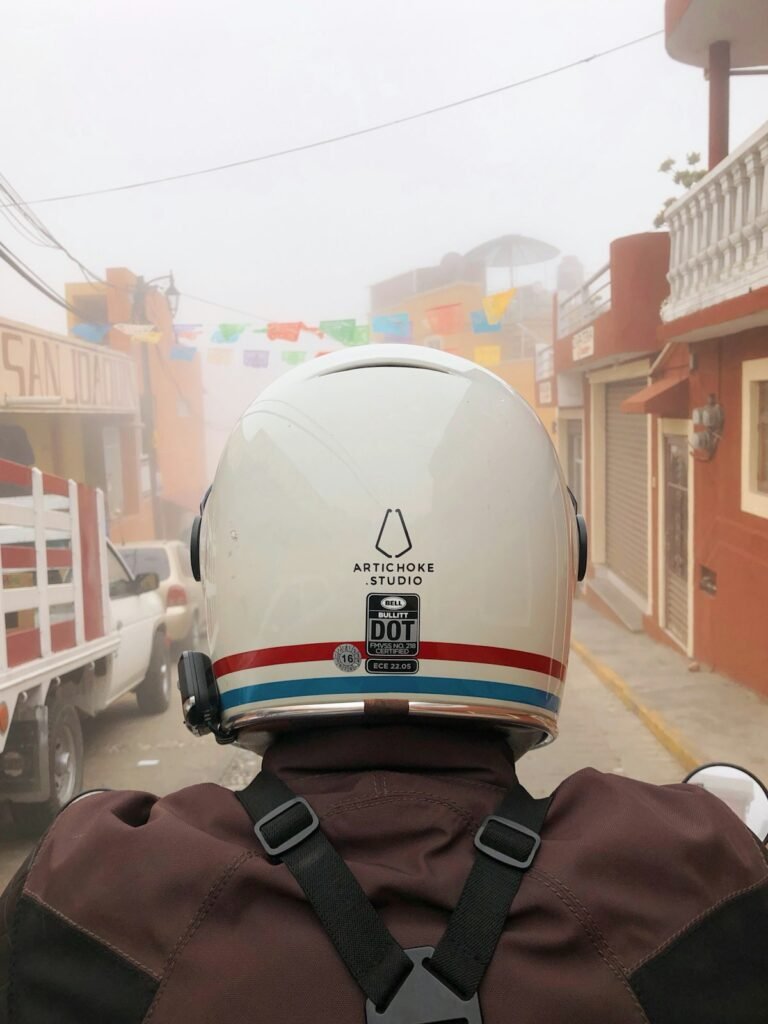
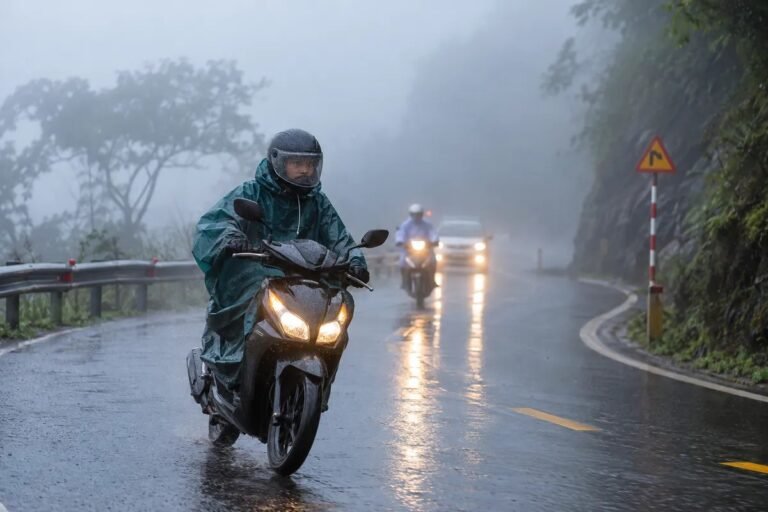
Fog consists of tiny suspended water droplets that reduce horizontal visibility. For a rider, the practical concern is that other traffic, junctions, animals or surface hazards may become visible only at short range. A road that is familiar in clear weather can feel substantially different when the next bend or lane marking is hard to see.
Do not translate a forecast such as “morning mist in places” into a guarantee that your whole route is fog-free by a certain minute. Local terrain and changing air conditions matter. On hilly roads or near water, visibility may vary abruptly along a single journey.
A decision table for a winter departure
| Observed or forecast condition | What to check | Conservative response |
|---|---|---|
| Low early-morning visibility | Local forecast, road conditions and reports near the route | Delay until conditions are suitable; change the itinerary if needed |
| Cold but clear weather | Rider’s warmth, hand mobility, fatigue and bike condition | Use suitable protective layers and reassess comfort |
| Rain, wet patches or poor road grip | Weather warnings, route surface and braking concerns | Postpone an unfamiliar or demanding section |
| Mountain fog or a slope with poor sight lines | Current route alerts and safe legal alternatives | Prefer delaying or avoiding the section |
| Weather improving but daylight limited | Sunset, travel time, stops and return conditions | Shorten or cancel instead of finishing unfamiliar roads in darkness |
No row represents an automatic “safe to ride” certification. Traffic, road restrictions, legal eligibility and the rider’s own physical condition still need consideration before starting.
What should you wear to cope with cold wind?
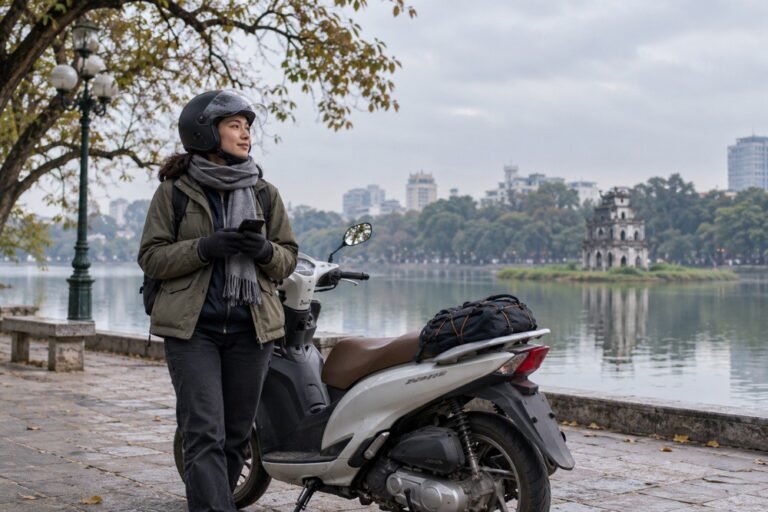
Choose protective clothing suitable for motorcycle riding and the expected weather, with layers that allow you to stay comfortable without overheating or restricting movement. Your hands need enough mobility to operate the throttle, brakes and switches accurately. Footwear must stay secure and should not snag on the bike’s controls or footrests.
Be cautious about loose scarves, oversized rain coverings or improvised blankets that could blow into moving parts, obstruct visibility or affect balance. A thick garment is not automatically protective in a crash, so do not substitute casual winter clothing for appropriate riding protection.
Helmet visor visibility deserves a separate check
Fog outside is not the only problem: the inside of a helmet visor may mist up when warm breath meets a cool surface. Keep the visor clear using the helmet manufacturer’s instructions and suitable products, and do not deliberately ride with an unsafe obstruction to your view. Never attempt to wipe the visor while moving if that would require taking your attention or hands away from safe control.
If you cannot maintain a clear view through the helmet, stop safely and resolve it before continuing. The English guide to helmet visor fogging in damp Hanoi weather covers the specific issue without assuming that riding with inadequate face protection is a safe solution.
Daylight is part of the route budget
Winter daylight in Hanoi is shorter than midsummer daylight. That matters when the return involves an unfamiliar road with limited lighting. Astronomy tables provide sunrise and sunset times for a date and place, but they do not reveal the weather, the time at which fog clears or the amount of light available behind a mountain or in a valley.
A calendar for Hanoi might show sunset around 17:14 on some November 2026 dates, for example. That is not a “latest safe riding time” and must not be used as a deadline for every route. Estimate travel time and stops, then choose an earlier completion target with enough contingency to change plans.
Should you wait until later in the morning?
Waiting may help if your route is temporarily affected by poor early visibility, but it cannot solve every problem. Fog may persist, rain may begin later or the delay may mean you cannot complete the return before dark. You need to compare current forecast, daylight, route length and the actual time you can safely start.
If delaying leaves too little time for the planned destination, change the destination or postpone. There is no need to “recover lost hours” by riding faster. Some roads are not suitable in the prevailing conditions even if a rider has suitable gloves and a functioning headlamp.
Prepare the bike before winter riding
- Confirm the actual motorbike is available and permitted on the intended route.
- Check tyres, brakes, lights, indicators, mirrors and warning symbols as appropriate to the model.
- Ask the shop about the correct starting procedure and the fuel required.
- Make sure the helmet fits and provides a clear view.
- Test whether clothing allows full and precise control of the handlebar and brakes.
- Check for active weather alerts and road closures immediately before leaving.
- Identify safe places to stop and an alternative to self-riding if the forecast deteriorates.
- Allow enough time to return without trying to outrun sunset.
Do not regard the absence of a warning light as a substitute for checking the physical condition of a rental bike. If braking or tyre grip seems abnormal, request a proper inspection before departure.
When fog appears after the trip has begun
Respond to the actual loss of visibility rather than trying to maintain the speed planned earlier. If conditions become unsafe, look for a lawful and safe place to stop as circumstances permit, away from active traffic. Do not stop abruptly in a live lane or park in a blind bend simply to consult the phone.
Check whether the forecast and road advice suggest waiting, taking a different permitted route or ending the trip. If you have a firm rental return time, contact the provider once parked safely and discuss the delay rather than forcing an unsafe return.
What the rental shop must confirm
Nguyen Ha’s working hours are 09:00–21:00. This does not mean every bike may be handed over outside those hours or taken anywhere outside Hanoi. Ask about the actual model, allowed area, expected duration, deposit and response to a breakdown on the intended winter route.
For original Vietnamese meteorological references and rider-safety discussion, read the Vietnamese guide to winter provincial trips, fog and departure timing. Historical weather updates are background only; refresh the forecast for your intended date.
A message to send before your trip
Hello Nguyen Ha, I am considering a winter motorbike trip on [date] from Hanoi to [destination], and I am checking possible fog and cold weather. Is the specific available bike permitted for this journey? Please confirm rental price, deposit, pickup and return timing, and how to report a problem. If visibility is poor, I may need to delay or change the route and will contact you to agree on the rental arrangements.
Frequently asked questions
Does winter fog always clear by 9 a.m. in northern Vietnam?
No. Local conditions vary and a fixed hour cannot guarantee visibility on an individual road.
Does a mild winter make a long trip safe?
No. Short cold spells, fog, rain and road hazards may still occur.
Should I leave very early to get more daylight?
Not if early-morning visibility or your condition makes riding unsafe. Assess the entire route and be willing to shorten the trip.
Nguyen Ha Motorbike Rental: Ngõ 5 Nguyễn Văn Cừ, Bồ Đề, Long Biên, Hanoi, Vietnam. 09:00–21:00 daily. Phone +84 334 699 969.