Automatic Scooters
Sport Scooter vs Standard Scooter: Seating Comfort for Longer Rides
On this page
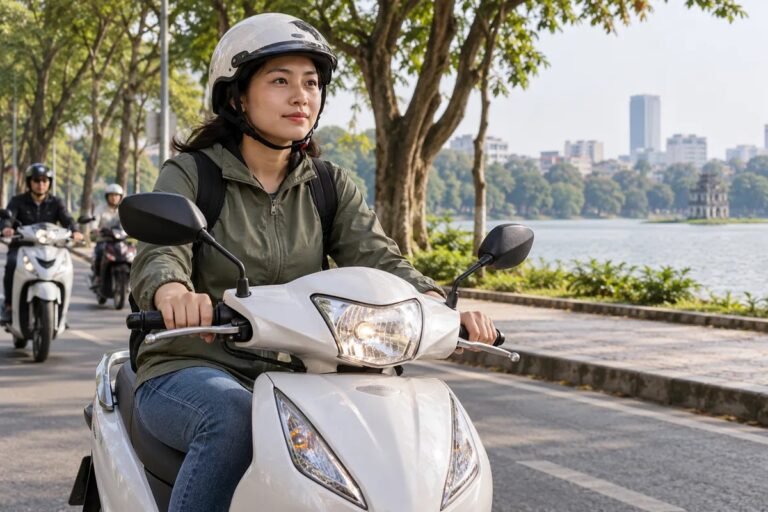
Which automatic scooter feels better after an hour in the saddle: one with sporty styling or one with an upright riding position? There is no universal winner. The answer depends on handlebar reach, seat shape, foot space, your height and the specific scooter being offered for rent. A bike that looks comfortable in a photograph may feel cramped when you sit on it.
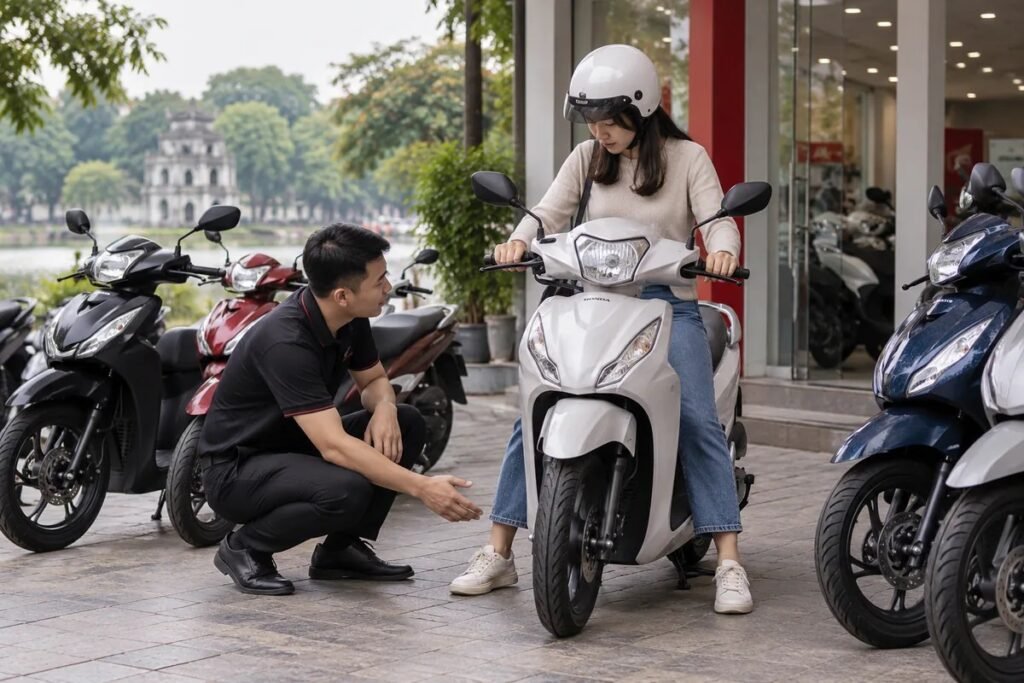
For a longer ride around Hanoi, check your wrists, lower back, neck and knees before selecting a scooter. Sit on the actual available bike with the engine off and ask the shop to explain any unfamiliar controls. A quick fit check is more useful than treating “sport” or “standard” as a promise about ergonomics.
What does sporty or upright actually mean?
These are broad descriptions of scooter layouts, not formal classifications. A sport-styled machine may have a lower or more distant handlebar, a stepped seat or a compact foot area. A standard city scooter may allow a more upright torso. Yet two bikes with the same label can fit very differently, and seat design may change across model years.
| What to test | More forward-leaning position | More upright position |
|---|---|---|
| Wrists and shoulders | May carry extra body weight if you lean heavily on the grips | Can reduce that pressure when the reach is comfortable |
| Back and neck | May require more bending at the hips and looking upwards | Can keep the torso straighter, although poor seat support still causes fatigue |
| Knees and hips | Legroom depends on floorboard and body panels | May offer different foot positions but can still be cramped |
| Stopping | Seat height, width and scooter mass affect confidence | Exactly the same checks are needed |
Use the table as a set of questions rather than a verdict. Your own posture, footwear and riding experience matter. A compact scooter might suit a shorter rider very well but make a tall rider fold their knees. Neither style is automatically safer simply because of its name.
Start with your wrists and shoulders
Sit naturally, hold both grips and look ahead. Your elbows should have room to bend. Notice whether you are forced to lock your arms, stretch forward or bend your wrists sharply. In stop-and-go traffic, repeated braking and steering can make an uncomfortable reach increasingly obvious.
Try loosening your grip slightly while the scooter is stationary. You should not have to press your entire upper-body weight into the handlebars to remain seated. If you do, ask whether another model has a closer reach. Do not alter the handlebar or brake controls yourself on a rental bike.
What if your hands become numb?
Stop in a safe location and rest. Tight gloves, vibration and riding posture can contribute to discomfort, but numbness has several possible causes and cannot be diagnosed from a guide. Do not continue simply to finish a planned route if you have persistent tingling, weakness or pain.
How the seat changes lower-back comfort
A soft seat is not necessarily a supportive one. Some seats let the rider slide toward the front; others hold the rider in one position. Ask yourself whether you can sit evenly, with the pelvis supported, without hunching your shoulders or constantly shifting to reach the controls.
Look forward while seated. If your neck must tilt awkwardly to maintain a clear view, the position may become tiring. Try a relaxed upright posture rather than sitting stiffly straight. Small differences can matter on a longer journey, but there is no fixed number of minutes after which discomfort will appear.
On longer days, plan breaks to stand, stretch gently and drink water. Never stretch while moving. If you develop persistent back or neck pain, the appropriate response is to stop and reassess, not to keep riding until it becomes severe.
Knee room, footboard shape and stopping confidence
Put your feet on the actual footboard or footrests. Can your knees move comfortably without touching the inner body panels? Can you turn the bars without your knees interfering? Tall riders may find a small scooter cramped, while shorter riders may struggle with a wide or high seat.
Before collection, check whether you can support the stopped bike with a stable foot on the ground. Being able to put both feet flat is not a universal requirement, but you must be able to control the bike confidently at a stop. If you cannot, choose a different model rather than relying on luck in traffic.
Check with your normal shoes and luggage
Thick-soled shoes, a backpack and items on the floorboard can change your space and balance. Never place luggage where it blocks steering, foot movement, the brake levers or a safe exit from the scooter. Ask the shop about safe loading positions and manufacturer limits.
Six checks to perform before a rental handover
- Ask to see the exact available scooter, not only a listing photo or a different model year.
- With the motor off and the scooter secured, sit in your natural riding position for several minutes.
- Check wrist alignment, relaxed elbows, shoulder position and forward visibility.
- Check whether the seat supports your lower back and whether your knees clear the bodywork.
- Confirm you can reach all controls, see through the mirrors and support the bike at a stop.
- Ask who may adjust mirrors or controls and what to do if a lever feels abnormal.
This stationary check does not replace a legal, supervised handover or a licence check. Ask for a different bike if the fit is wrong. A helpful shop should be able to explain the controls of the actual scooter without promising that every model is available.
Short errands versus several hours of riding
For a short city journey with frequent stops, easy mounting, secure footing and low-speed control may outweigh the benefits of a soft seat. In a narrow parking area you also need room to manoeuvre the scooter without straining. A sporty look should not decide the rental on its own.
For several hours on the road, notice how the seat supports you, whether you can relax your grip and how readily you can take breaks. Route conditions, traffic, weather and personal fitness all influence fatigue. Even a well-fitting scooter needs rest stops when the rider becomes tired.
What changes when a passenger rides with you?
A passenger changes how the scooter feels under acceleration, braking and at a stop. Check the rear seat, footrests and grab rail. Some stepped seats bring the passenger close to the rider’s back, while a longer seat may offer more room. The available scooter and the actual passenger matter more than a general style label.
For more passenger checks, see the seat, grab rail and footrest guide. Respect the manufacturer’s passenger and load limits; do not assume every scooter can carry the same weight.
Compare actual models rather than labels
Model comparisons are useful starting points, not a substitute for trying the specific rental. Our Honda Vision versus Air Blade guide explains useful questions about seat height, mass and storage, but a particular used scooter may have a different seat or setup.
Questions worth asking the shop
- Can I sit on the available scooter before agreeing to rent it?
- Which model gives me better knee room and a more relaxed handlebar reach?
- Will I be carrying a passenger or luggage, and what are the relevant limits?
- Who can adjust the mirrors, and how do I report an uncomfortable or faulty control?
- Can I confirm the exact price and availability for my rental dates?
Explore Nguyen Ha’s automatic scooter rental information before you contact the shop, but do not assume a model is available just because it appears in an article. For a fit or availability question, call 0334 699 969.