Fuel & Running Costs
Switching Off a Rental Bike at Red Lights: When Does It Save Fuel?
On this page
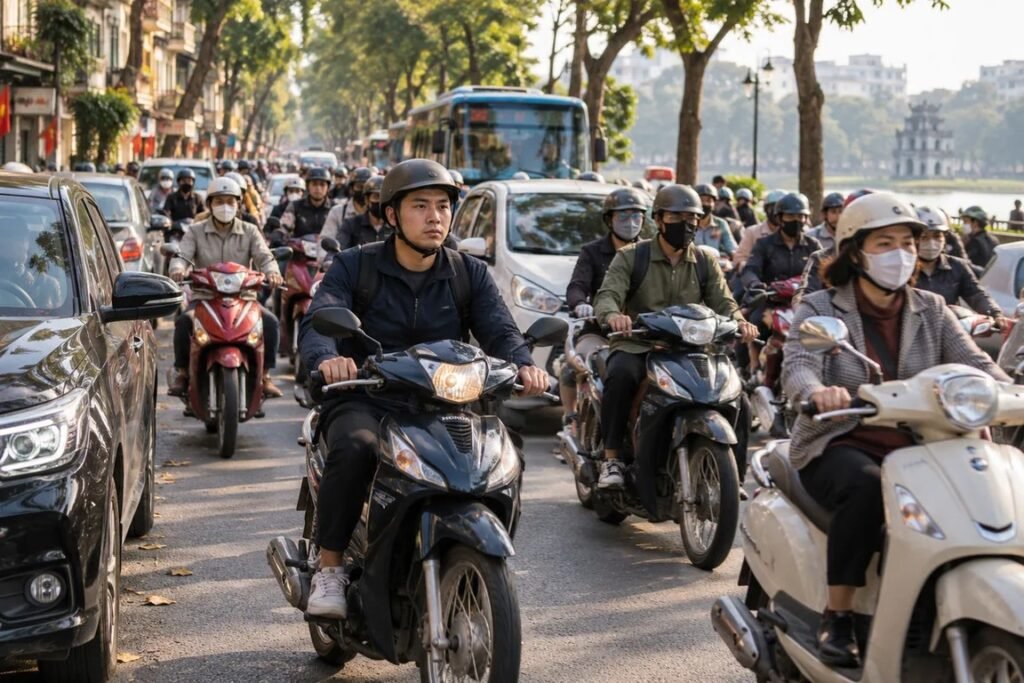
A traffic signal in Hanoi shows a long countdown, and your rented motorbike is sitting stationary with the engine running. It seems logical to switch the ignition off to save petrol, reduce heat and cut noise. But the real question is not simply whether an idling engine burns fuel—it does. You also need to know whether this particular motorcycle starts reliably, has an automatic idling-stop function, and can restart safely before traffic begins moving. An unfamiliar rental is not a good place to experiment with ignition controls at a busy junction.
Short answer: follow the motorcycle manufacturer’s instructions and the rental company’s explanation for the exact model. A factory-designed idling-stop system is different from manually turning off the ignition. The potential saving during one stop is not a reason to risk an unexpected non-start, distraction or unsafe movement through traffic.
Why an idling motorcycle still uses petrol
A petrol engine needs fuel to keep running even when its wheels are stationary. When you wait at a junction, that energy produces no distance travelled, so in principle shutting the engine off may avoid some idling consumption. The amount depends on engine design, temperature, stop duration and how restarting is managed. It is not responsible to promise a fixed percentage saving for every rented scooter.
Rather than calculate from an unrelated car’s idling figure, keep actual refill and odometer records if you want to understand your rental’s overall consumption. Those records show the effect of ordinary traffic, route and load together, not the precise fuel consumed during one light.
A countdown does not establish the right shutoff time
A display showing 60 or 90 seconds remaining can feel like a clear instruction, but traffic might move earlier or stop again. The rider may be near the front of a queue, on a slope or surrounded by vehicles. The bike might have a weak starter battery. All of these considerations matter more than a numerical countdown alone.
| What you encounter | Important question | Practical decision |
|---|---|---|
| Factory idling-stop engages by design | Has the shop explained this feature? | Use it only according to the model’s manual |
| Manual ignition shutdown contemplated | Does the manufacturer recommend it here? | Do not improvise a routine without guidance |
| Starter turns slowly | Could there be a battery or starting fault? | Report the symptom instead of repeating starts |
| Bike on an incline or in crowded traffic | Will the bike be easy to secure and restart? | Prioritise control and surrounding traffic |
| Very short or unpredictable stop | Will the queue move immediately? | Remain ready and avoid distracting actions |
Factory idling-stop versus turning the key
Some automatic scooters include an idling-stop mechanism designed to shut the engine off under specific conditions and restart it through the appropriate controls. Its indicators, operating temperature, battery checks and safety interlocks depend on the bike. When it works normally, a deliberate pause at a stop is part of the design rather than an unexplained stall.
Manually turning the key, using an engine cut-off switch and letting an idling-stop system operate can have different effects on electrical circuits and restart behaviour. Do not treat them as interchangeable. If you are uncertain whether the engine has stopped normally, keep the bike secure and ask the shop about the exact dashboard indicators.
For other starting controls, see our scooter stand-switch and start-interlock explanation. A new rider should understand which controls apply to the vehicle received rather than copying a routine from a different model.
Can restarting use up the fuel saved?
Restarting takes energy and activates starting components, so it belongs in a complete assessment. However, the effect differs by engine and starter technology. An online calculation based on a particular car cannot establish the break-even time for a rented Honda or Yamaha motorbike. No universal “switch off after exactly X seconds” rule is offered here.
Even a theoretically positive petrol saving is of little value if a vulnerable battery leaves the rider stationary after the light turns green. Reliability and a safe departure matter first.
Why the battery condition matters
A manual restart may use the battery and starter. If you notice dim lights, a sluggish starter or an unfamiliar warning indication, record the symptoms rather than trying the ignition repeatedly. Some systems can disable their automatic stop feature when conditions are unsuitable; the exact behaviour comes from the model’s manual.
What if your scooter shuts off without you asking it to?
First distinguish a manufacturer-designed automatic stop from an unexpected stall. If the bike has a built-in feature, the dashboard and controls should behave as the manufacturer explains. If the engine cuts out erratically, stalls while moving or fails to restart as expected, treat that as a possible fault requiring an assessment.
Do not keep forcing the starter, open the throttle unpredictably or attempt repeated tests among traffic. Secure the motorcycle, move to a safe place when possible and contact the rental owner.
Do not switch off the engine while rolling
The discussion above applies only to a motorcycle that is fully stopped in a safe and appropriate situation. Do not turn off the ignition, coast with the engine stopped or use neutral while moving to save fuel. The effect on engine braking, lighting and control systems can differ by model, and restarting on a moving bike creates additional hazards.
At a sloping stop, use the normal brakes and safe positioning rather than assuming a shut-off function can hold the vehicle stationary. A scooter’s automatic transmission is not the same thing as a parking brake.
Five habits likely to be more useful on busy streets
- Look ahead so you do not accelerate into a queue that is already stopping.
- Keep an adequate following gap and avoid unnecessary rapid braking.
- Accelerate progressively when the road is clear and it is safe to do so.
- Follow correct fuel-grade and tyre-pressure guidance for the exact model.
- Plan enough travel time so that every junction does not become a race.
For a fuller comparison of energy use in stop-start traffic, read our guide to throttle and braking habits in Hanoi. The advice does not depend on switching off the engine at every red light.
Should you turn off the scooter when parked for several minutes?
Parking at a shop or waiting for a friend is different from a short traffic-light stop. Follow the owner’s safe parking and shutdown procedure, particularly around an enclosed space, narrow pavement or busy entrance. If the vehicle is unattended, secure it as described during handover.
Never leave a petrol engine running in an enclosed or poorly ventilated space. Exhaust gases pose serious risks, independent of any fuel-saving consideration. The relevant issue is safe parking and ventilation, not just the cost of the petrol consumed.
What to ask at the rental handover
- Does this precise model have a factory idling-stop system?
- Which dashboard indicator tells me that the engine has stopped normally?
- What conditions prevent the automatic system from operating?
- How do the brakes, side stand and ignition controls affect restarting?
- What should I do if the starter becomes slow or the bike fails to restart?
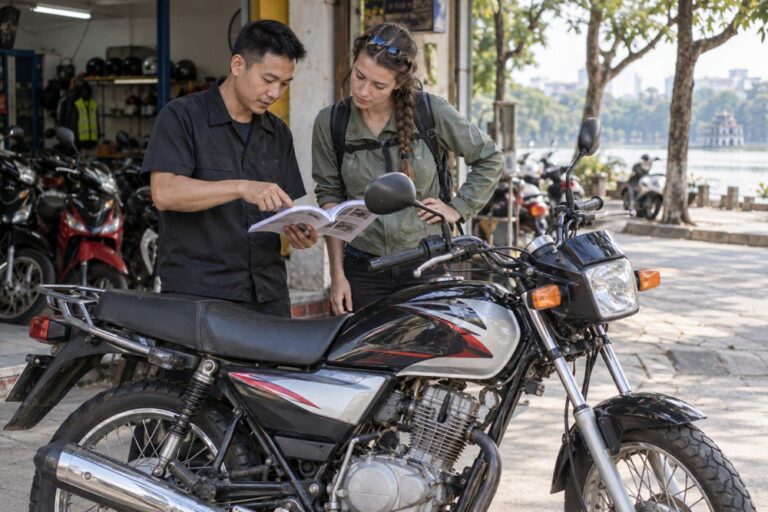
Ask staff to demonstrate while the motorcycle is securely parked, not while you are blocking other traffic. Remember that a general guide does not prove a feature exists on a particular unit.
A practical message if the bike fails to restart
“My rental scooter stopped at a red light near [location]. I am unsure whether this is the normal idling-stop feature. The dashboard displayed [indicator], and the starter [response]. I have secured the bike and am not repeating the start attempts. Could you advise the next safe step?”
This is more helpful than claiming the battery is certainly dead or that a specific device has failed. If people are in danger, prioritise safety and appropriate assistance before photographing the dashboard.
Is it worth buying petrol-saving accessories?
No accessory can replace proper maintenance, manufacturer-compatible operation and a realistic riding plan. Do not add unapproved electrical devices or modify a rental’s idling-stop or ignition controls. Discuss any proposed equipment with the owner before installing it.
Bottom line
Switching the engine off can avoid fuel consumed during idle, but the benefit of an individual stop is uncertain and should never outweigh the risk of a failed restart. Use a built-in system only as instructed, learn the bike’s controls and focus on smooth, safe travel.
For Nguyen Ha’s current rental information and model-specific questions, call 0334 699 969. This guide does not claim any particular bike is currently in stock or that the shop authorises manual shutdown at red lights.