Weather & Seasonal Riding
Wet Leaves, Mud and Oil on Hanoi Roads: Riding Risk Checklist
On this page
How do you ride a motorbike safely on wet Hanoi roads just after rain, when leaves, mud and oily patches are still on the surface? Look well ahead for slippery patches, slow down before you reach them, cross them upright with a steady throttle and gentle braking, and leave more space to the vehicle in front. The worst spots are under trees, near construction sites, at bus stops and junctions where vehicles leak oil, and in shaded stretches that stay wet longer. The first minutes of rain are especially slippery.
When the rain stops, the road does not become safe at once. This checklist helps you recognise the hazards that remain and ride across them without drama.
Slippery spots to watch for after rain
- Road markings: painted lines, arrows and pedestrian crossings are smoother than asphalt and grip less when wet. The guide to wet road markings and metal covers covers these in detail.
- Metal covers and joints: manhole covers, steel plates, rails and bridge expansion joints become slick.
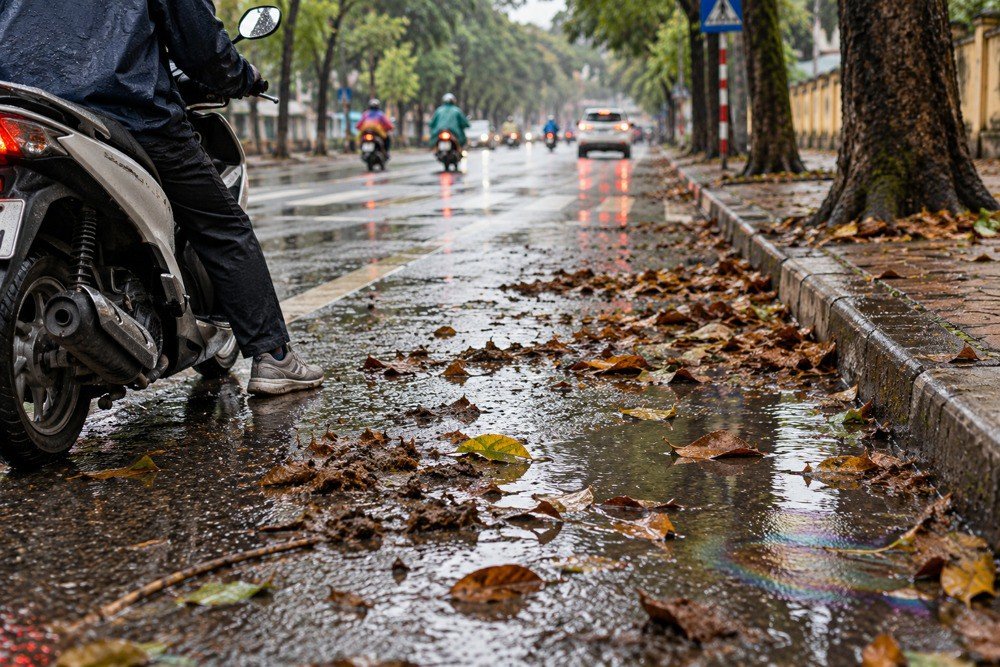
- Wet leaves: fallen leaves form a slippery layer, especially under rows of trees and in autumn.
- Mud: tracked onto the road from construction sites, building-material yards and site entrances.
- Oil slicks: engine oil or diesel dripped onto the road and lifted by water, common at bus stops, junctions, car parks and petrol station exits.
- Shaded stretches: roads under trees or beside tall buildings stay wet long after sunny sections dry.
- The first minutes of rain: dust and oil on the surface mix with water into a greasy film before heavier rain washes it away.
Visual clues
- A shiny, mirror-like surface reflecting lights and signs.
- Rainbow-coloured sheens on puddles, a likely sign of oil.
- Brown streaks of mud or a layer of leaves lying on the asphalt.
- The vehicle ahead suddenly slowing or its rear wheel twitching over a section.
How to cross a slippery patch
- Slow down before the patch, not on it. Brake gently on the clean surface beforehand.
- Keep the bike upright. The more it leans, the easier it is for the tyres to lose grip.
- Hold the throttle steady. Do not accelerate or shut off suddenly while the rear wheel is on the slick area.
- Use both brakes gently and progressively if you must slow down. A hard grab on either brake can lock a wheel.
- Look where you want to go, choosing your line early rather than staring at the hazard.
- Leave a bigger gap to the vehicle ahead, because stopping distances are longer on wet roads.
If a stretch is flooded or has large puddles, remember that water can hide potholes and open drains. Slow right down or choose another route.
The first minutes of rain
When rain starts after a dry spell, ride as if the road is at its most slippery, because it often is. Reduce speed, increase your following distance and avoid sudden manoeuvres until the rain has been falling for a while. Switch on your headlight: Article 20 of the consolidated road traffic law requires it whenever rain or bad weather limits visibility.
If the rear wheel starts to slide
- Stay calm and keep looking where you want to go.
- Ease off the brake that caused the slide, smoothly rather than suddenly.
- Keep the throttle steady; do not snap it shut or open it hard.
- Once grip returns, slow down gently and stop in a safe place to collect yourself.
Practising smooth braking in a quiet place helps your reactions become automatic. If your brakes feel weaker after riding through water, the guide on wet brakes after riding through water explains how to restore them.
With a passenger or heavy load
- Ask your passenger to stay still and not lean against you in corners.
- Make sure luggage is tied firmly, as a shifting load makes the bike harder to control.
- Slow down more than you would alone, especially before bends.
Rain gear and visibility on wet roads
A poncho that flaps or hangs low can catch on the wheel or block your view of the road surface. Wear rain gear that stays clear of moving parts, keep your visor clean and wipe your mirrors before setting off. Seeing a patch of oil or leaves early is half the solution.
Before riding a rental bike after rain
- Check the tyres for wear; worn tread grips poorly on wet roads. See tyre tread depth and wet-road grip.
- Squeeze both brakes while stationary to check they feel normal.
- Wipe the headlight, tail light and mirrors.
- Plan a route that avoids roadworks and known muddy stretches where possible.
Where these hazards cluster in Hanoi
Some places deserve extra care after every shower. Tree-lined streets around the lakes and older districts collect leaves; roads next to new buildings and road works collect mud; bus stops, taxi ranks, car park exits and busy junctions collect oil where vehicles stand with engines running. Bridges add metal expansion joints, and covered markets and alley mouths stay damp long after main roads dry. If your usual route passes several of these, allow extra time on wet days so you never feel pressed to hurry.
What not to do
- Do not brake hard or turn sharply on painted lines, metal covers, leaves or oil.
- Do not ride at dry-road speed just because the rain has stopped.
- Do not follow closely behind buses and trucks, which often drop oil and block your view of the surface.
Questions to ask the rental shop
- How much tread is left on these tyres, and when were they last replaced?
- Does this bike have ABS or combined braking, and how should I brake on a wet surface with it?
- What should I do if the bike slides or falls on a slippery road?
Message to send the shop
Hello Nguyen Ha, I will ride the [model, plate number] after heavy rain tomorrow. Could you confirm the tyres have enough tread for wet roads, and let me know what to do if the brakes feel different after riding through water?
Related guide: Slippery Apartment Garage Floors During Humid Hanoi Weather.
Frequently asked questions
When are roads most slippery after rain?
Often in the first minutes of rain after a dry spell, and in shaded areas that stay wet long after the rain stops.
How can I spot oil on a wet road?
Look for rainbow-coloured sheens on puddles and shiny patches near bus stops, junctions and car park exits.
Should I use the front or rear brake on a slippery road?
Use both gently and progressively, ideally before reaching the slippery patch, and avoid braking hard on it.
Nguyen Ha Motorbike Rental: Ngõ 5 Nguyễn Văn Cừ, Bồ Đề, Long Biên, Hanoi, Vietnam, open 09:00–21:00 daily. Call +84 334 699 969 to check your rental bike’s tyres before a wet-weather ride.