Riding Skills & Safety Planning
First Time Riding in Hanoi After Moving From Another Province
On this page
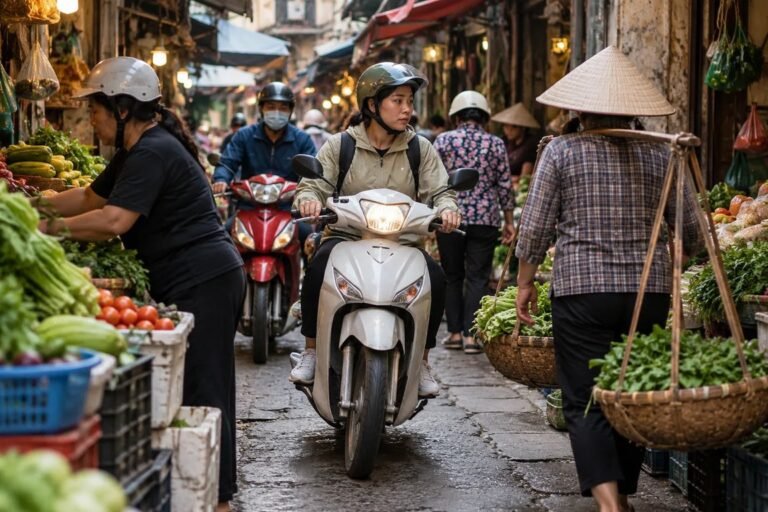
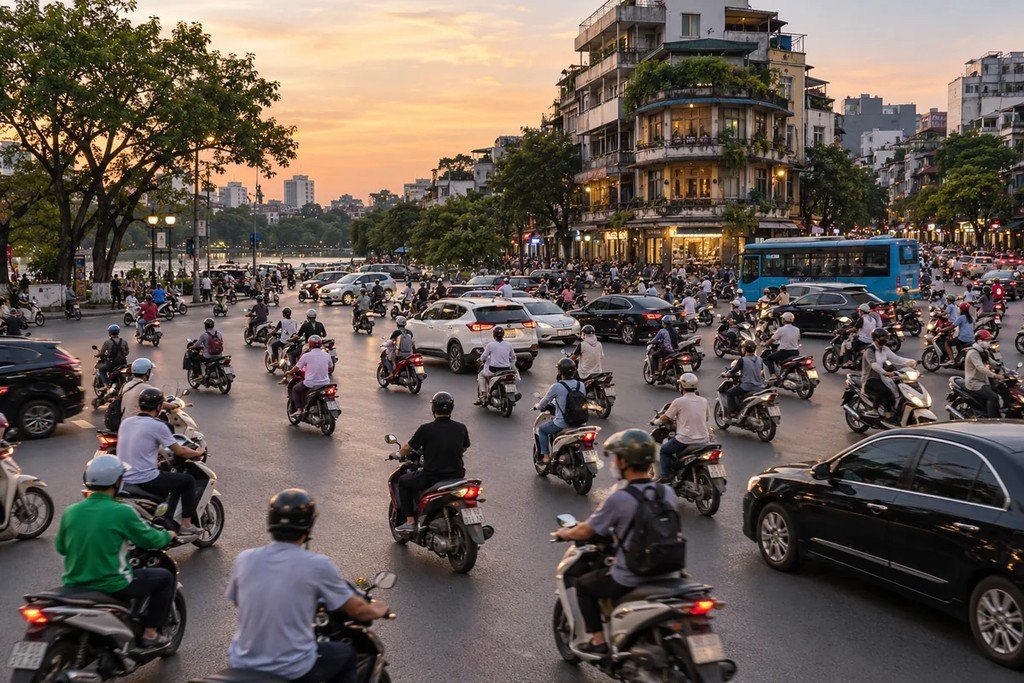
What changes when you ride a motorbike in Hanoi for the first time after years on quieter provincial roads? Traffic is denser, vehicles move closer together, you will hear more horns, and merging or crossing junctions leaves less room. As a newcomer to the capital, start with quiet hours and simple routes, ride at a speed you control, signal early and keep a steady, predictable line. Most horns are a warning of someone’s position, not a complaint, so stay calm and build up gradually before tackling rush hour, rain or night riding.
This guide assumes you already hold the right licence for your bike and can control it confidently. If you are new to riding or unsure of your skills, get hands-on training in a controlled place first: a wide road early in the morning is still a public road. A friend who knows Hanoi can help with routes, but cannot replace proper training.
How Hanoi differs from quieter roads
| Difference | In the capital | What to get used to |
|---|---|---|
| Traffic density | Many vehicles at once, often close together | Keep a sensible gap and look in several directions |
| Horns | You may hear more horns than at home; not every horn is a complaint | Stay calm, avoid reacting suddenly and hold your line |
| Merging and junctions | Traffic weaves together with little free space | Observe, signal and merge only when there is a gap |
| Pedestrians and cyclists | They appear unexpectedly in many places | Slow down and be ready to stop |
| Signs and signals | Often more of them than you are used to | Look ahead and read them early |
How strong each difference feels depends on the time of day and the street.
Build up gradually over your first rides
- Get used to the bike first in a quiet, controlled space before joining traffic.
- Ride at quiet times at first and avoid rush hour.
- Choose simple routes with fewer complicated junctions, even if they are a little longer.
- Ride at a speed you can control rather than trying to keep up with everyone else.
- Stop somewhere safe and take a break when you feel tense, instead of pushing on.
- If possible, ride with someone who knows the roads on your first trips.
A structured plan for your first hour on an unfamiliar bike is set out in a low-traffic practice sequence.
Reading the traffic and the horns
- Look far ahead and to both sides, watching how vehicles move rather than only the one in front.
- A short horn often just tells you where someone is. It does not necessarily mean you have done something wrong.
- Keep your speed steady and your movements predictable so others can anticipate you.
- Signal early before changing lanes or turning.
Use your own horn only as the law allows. Article 21 of the consolidated Law on Road Traffic Order and Safety permits the horn to warn when a situation may become unsafe or to signal that you are about to overtake. It prohibits sounding it continuously, and between 22:00 and 05:00 it must not be used in densely populated residential areas or near medical facilities, except by priority vehicles.
For more on how riders communicate with horns, lights and lane position, see horns, lanes and flashing lights in Hanoi.
Merging and crossing junctions
- Check behind and to the side before merging; turn your head to cover the blind spot your mirrors miss.
- Signal early and merge when there is a gap, without forcing your way in.
- Slow down well before junctions and look in all directions, even on a green light.
- Do not stop in the middle of a junction; enter only when you are sure you can get out.
- Keep a straight, steady line rather than changing direction repeatedly.
- If you miss a turn, carry on to a safe place to pull over, stop and check the map.
Article 15 of the same law sets out the steps before turning: observe, keep a safe distance from the vehicle behind, slow down, signal continuously and move gradually into the lane nearest the direction you are turning.
What to avoid on your first rides
- Speeding to keep up with the flow.
- Looking at a map on your phone while moving.
- Changing lanes repeatedly to get ahead.
- Following the vehicle in front too closely.
- Riding in rush hour, rain or at night before you know the roads.
- Carrying a passenger or luggage before you feel confident.
If you feel overwhelmed mid-ride
- Slow down gradually and pull over at the nearest safe place.
- Stop, breathe and rest for a while.
- Check the route on the map once you have stopped.
- Choose a quieter road, or switch to another way of travelling if you need to.
- Do not hesitate to call someone you know or ask a local for directions.
Parking works differently
On busy Hanoi streets, you usually cannot leave the bike right outside a shop as you might at home. Many places have attended parking lots or attendants on the pavement who give you a ticket or chalk a number on the seat; keep the ticket safe until you collect the bike. Ask the price first if no price list is posted.
Do not park where signs prohibit it, at the edge of the carriageway or across someone’s entrance, as the bike may be moved. The parking tickets, payment and collection checklist explains the routine.
Practice and further reading
If it has been a long time since you last rode, be honest with yourself about whether you are ready for Hanoi traffic. The guide for riders returning after years away helps you decide and suggests what to practise first.
Questions to ask the rental shop
- Is this bike easy to get used to for someone new to busy city traffic?
- How do the mirrors and horn work on this model, and how should I adjust the mirrors?
- Which quieter routes would you suggest for my first trips?
Message to send the shop
Hello Nguyen Ha, I have just moved to Hanoi and this will be my first time riding in the city. Could you suggest a bike that is easy to get used to, and show me the controls and mirror settings when I pick it up?
Frequently asked questions
Why do Hanoi riders use the horn so much?
Many short horns simply signal a rider’s position. The law allows the horn only to warn of a possibly unsafe situation or before overtaking, and prohibits continuous use.
When is the best time for a first ride in Hanoi?
Quiet hours, away from the morning and evening rush, in dry weather and daylight, on a simple route you have checked beforehand.
What should I do if I miss a turn?
Keep going until you reach a safe place to pull over, stop and check the map. Do not turn or stop suddenly in traffic.
Nguyen Ha Motorbike Rental: Ngõ 5 Nguyễn Văn Cừ, Bồ Đề, Long Biên, Hanoi, Vietnam, open 09:00–21:00 daily. Call +84 334 699 969 to choose an easy bike for your first rides in Hanoi.