Riding Skills & Safety Planning
Sharp Bends on Dyke Roads and Country Lanes: Slow Before the Bend, Look Ahead, No Hard Braking Mid-Corner
On this page
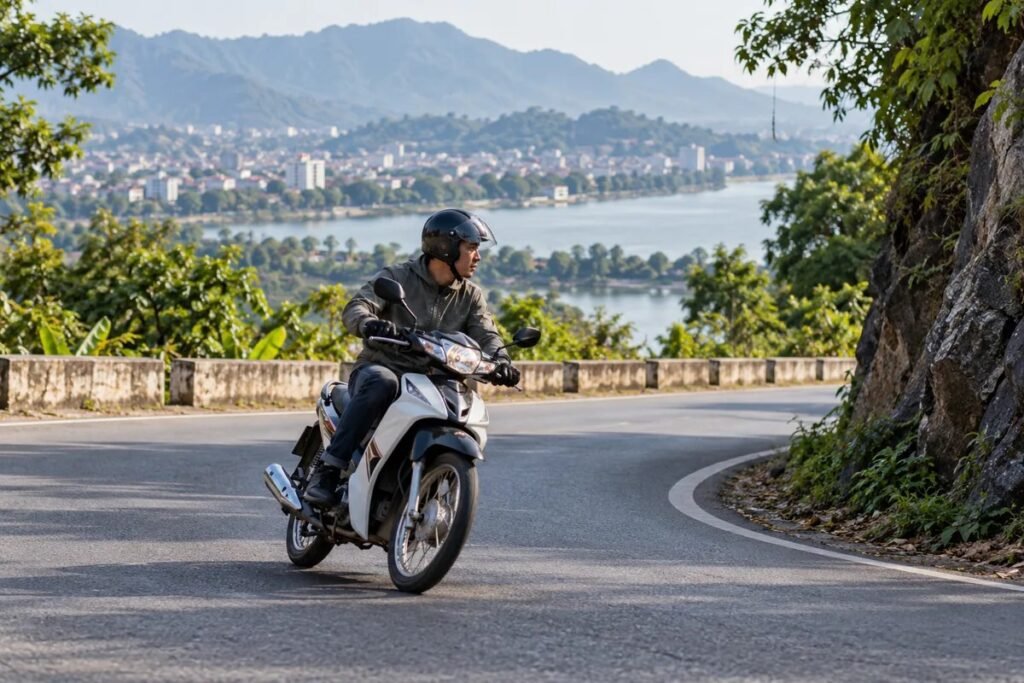
In the city you mostly ride straight and stop. Out on the Red River dykes or country lanes, you suddenly meet bend after bend, narrow roads, trucks in the middle of the lane and surfaces that keep changing. How do you take a sharp bend safely on a rental scooter? Do your slowing down before the bend while the bike is upright, look through the corner to where you want to go, keep the throttle steady through it, and avoid braking hard while leaning. If the speed is right before you turn in, the rest of the bend mostly takes care of itself.
This is general riding guidance for unfamiliar roads, not a substitute for training. If you are new to riding, practise in a quiet, permitted place first.
The three stages of a bend
Every bend has three stages, and most mistakes come from carrying a job from one stage into the next.
| Stage | What to do | Common mistake |
|---|---|---|
| Before the bend, bike still upright | Look far ahead to judge how tight it is, ease off or brake gently, select a suitable gear on a geared bike, hold your position in the lane | Looking too close, so you only realise how tight the bend is when you are already turning in |
| In the bend | Look at the exit, keep a light, steady throttle, lean with the bike, do not change gear | Braking hard or shutting the throttle completely while leaning |
| Leaving the bend | Open the throttle gradually as the bike stands up, and look at the road beyond | Opening the throttle hard while still leaning |
Choosing your speed without looking at the speedometer
No single speed suits every bend, because tightness, grip and visibility all differ. Ask yourself a few questions instead. Can I see the exit of the bend? If trees, houses or the dyke bank hide it, go slower. Is the surface clean and dry, or is there sand, gravel or water? Could I stop within the part of the road I can see? If a bend turns out tighter than it looked, slow down earlier at the next one.
Where to look
A bike tends to go where you look. Look at the point you want to reach, the exit of the bend, not at what you want to avoid, such as a pothole, an oncoming vehicle or the edge of the road. New riders often stare at the obstacle and ride straight into it. As you turn in, move your eyes ahead through the curve, turning your head, not just your eyes.
Why not to brake hard in the middle of a bend
When the bike is upright, the tyres can put all their grip into braking. When it leans, part of that grip is already busy holding the turn. Brake hard then and there may not be enough left for both, so a tyre, especially the front, can lose grip. The safe way is to finish slowing before you lean. If you must slow in the bend, use both brakes gently and progressively, and lift the bike a little more upright if you can.
Because a bike can always drift a little wide, enter slowly enough that even if you drift you stay in your own lane. On a right-hand bend the outside is the oncoming lane; on a left-hand bend the outside is the road edge, where sand collects. If you meet oncoming traffic on a narrow bend, slow earlier than you think you need to. Our guide to practising emergency braking helps you learn your brakes before you need them.
Hazards particular to dyke roads and country lanes
- Sand, gravel, dried mud and leaves: riverside and village roads often have sand or soil dropped by trucks, and tyres slide on them far more easily than on clean tarmac. Watch the colour of the surface: paler or speckled patches usually mean dust and sand. See our checklist for wet leaves, mud and oil.
- Trucks in the middle of the road: on a narrow bend, a truck may cross into your lane. Keep your speed low enough to stop completely if needed, and ride on the right of your lane without hugging the edge, where sand gathers.
- Blind bends: trees, houses and the dyke bank hide the road; pedestrians, bicycles and carts can appear just beyond. Ride as if someone is just round the corner.
- Patched or broken surfaces: a pothole in the middle of a bend is not unusual. Slow down and try to cross it with the bike upright rather than leaning.
- Low sun and dappled shade: early and late in the day, low sun can dazzle you and shadows hide potholes.
Before riding the dykes, our guide to Red River dike roads by motorbike covers access ramps and surface checks.
When bends come one after another
Dyke roads and village lanes often string bends together, especially in S-shapes. Do not open the throttle as soon as you leave the first bend, because the next one is already close. Pick one rhythm for the whole series: a speed low enough that you never need to brake between bends, with the throttle steady and your eyes always on the next exit.
Signs you are entering bends too fast
- You find yourself braking while leaning.
- The bike drifts towards the outside of the bend without you wanting it to.
- Your eyes drop to the front wheel or the road just ahead instead of looking through the bend.
- Your shoulders and arms stiffen and you feel you are fighting the bike.
If you notice any of these, slow down earlier for the next bends rather than trying to correct in the middle of one.
Rain, darkness or a passenger
In the wet, grip falls, so slow down more and earlier, and avoid painted lines and metal covers in a bend. After dark you see less of each bend, so lower your speed to what your headlight shows. With a passenger or luggage, the bike is heavier and slower to change direction; brake earlier and ask your passenger to lean with you rather than against you. Our guide to bumps and potholes with a passenger or luggage covers the extra weight.
Practise on one wide bend
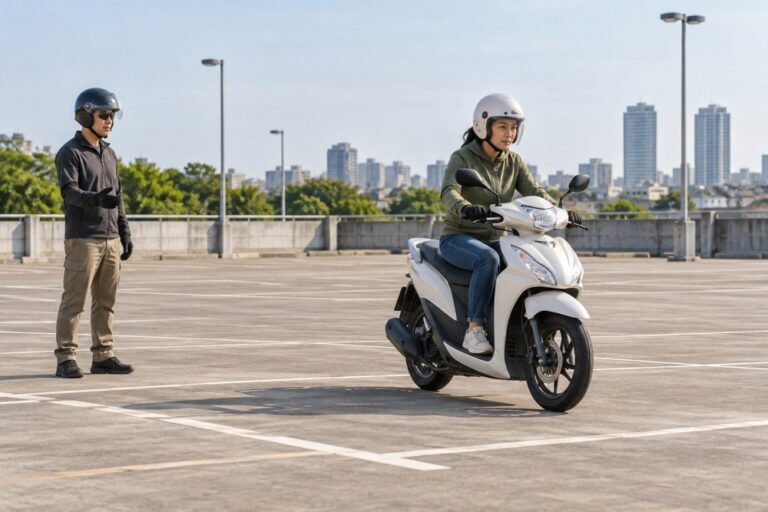
Before a long day of bends, practise two things on a single wide, quiet bend: finishing your braking before you turn in, and looking at the exit. Repeat it a few times at an easy speed until it feels natural, then carry the same habits onto narrower roads.
Message to send the shop
Hello Nguyen Ha, I plan to ride along the dykes towards [destination] on [date]. Could you check the tyres and brakes before I go, and is there any stretch you would advise me to avoid on a scooter?
Frequently asked questions
Should I brake in the middle of a bend?
Avoid hard braking while leaning, because the tyres have less grip to spare. Slow down before the bend; if you must slow inside it, brake gently with both brakes.
Where should I look when cornering?
At the exit of the bend, where you want to go, not at the obstacle you want to avoid. The bike tends to follow your eyes.
What is special about dyke roads?
Sand and soil from trucks, blind bends hidden by trees and banks, patched surfaces and trucks crossing the centre line on narrow bends.
Nguyen Ha Motorbike Rental: Ngõ 5 Nguyễn Văn Cừ, Bồ Đề, Long Biên, Hanoi, Vietnam, open 09:00–21:00 daily. Call +84 334 699 969 to have the tyres and brakes checked before a ride out of the city.