Luggage, Equipment & Navigation
Putting a Cover or Tarp Over a Rental Bike Parked Outside Overnight: Is It a Good Idea, and What to Ask the Shop
On this page
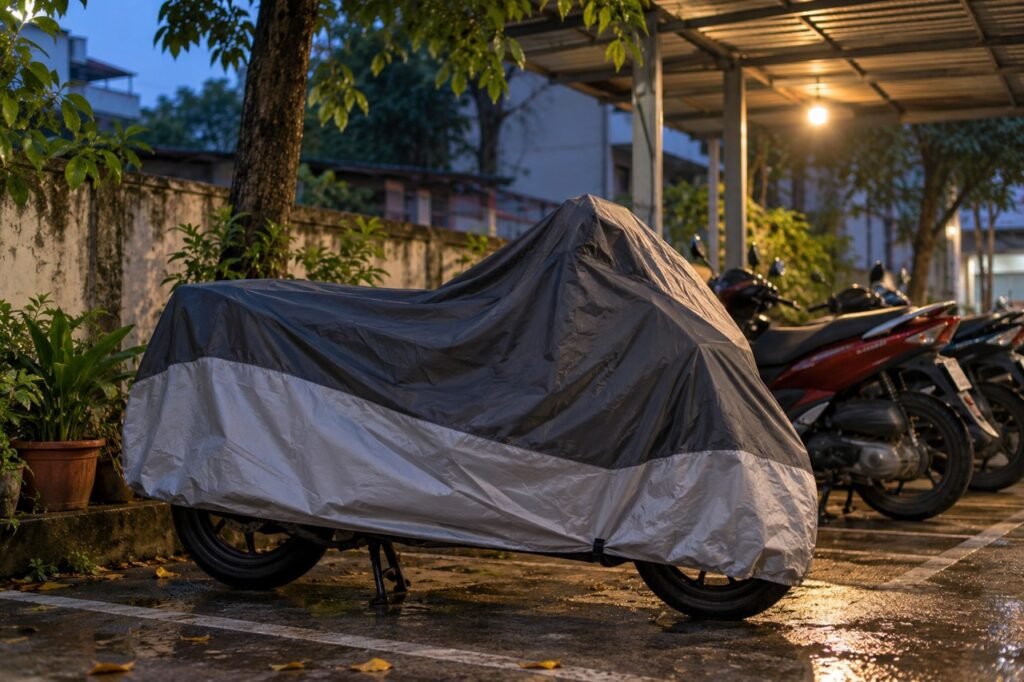
On a weekly or monthly rental, the bike may spend many nights in the yard of your guesthouse: some nights are damp and humid, some mornings bring harsh sun from early on. A cover or tarp sounds like a cheap, easy way to protect it. But what does it actually help with, can it cause harm, and since the bike belongs to the shop, should you ask first? A cover helps keep rain, sun and dust off the seat, panels and dashboard, but it is not a lock and can trap moisture or catch the wind; ask the shop before using one. Whether the shop allows your own cover has not been confirmed, so this guide goes from what a cover does, to fitting it properly, to the questions to ask.
What a cover can and cannot do
| It can help | It cannot |
|---|---|
| Keep rain, sun and dust off the seat, plastic panels and dashboard | Act as a lock: a cover does not stop anyone taking the bike |
| Reduce leaves, dust and bird droppings on the bike | Replace a roofed space in heavy rain or strong wind |
| Keep the seat cooler when parked in the sun | Stop moisture being trapped if you cover the bike while it is still wet |
Ask the shop before covering the bike
- Whether you may use your own cover on the bike, and whether there is any type they would rather you did not use.
- Whether the shop can lend or recommend one in the right size.
- How they want to be told if the bike gets wet inside, water collects or a mark appears.
- Whether there is a covered space they suggest instead, if your accommodation has none.
Choosing a type: three options to consider
| Type | Suits | Watch for |
|---|---|---|
| A fitted motorbike cover with ties or a fastener | Parking in a yard for many nights in a row | Choose the right size for the bike; check whether the material is waterproof; make sure the ties are strong enough in wind |
| A tarp or plastic sheet | Temporary use for one rainy night | Blows away easily so must be tied firmly; a rough surface can rub the paint; sealed plastic can trap moisture |
| A seat cover only | Keeping just the seat dry or cooler | Does not cover the rest of the bike; must be tied so it does not blow off |
Damp nights: be careful with moisture
- Dry the surfaces and seat before covering. Covering a bike that is still wet can trap water and moisture underneath.
- Leave a gap at the bottom for air if the cover allows, rather than sealing it completely.
- Take the cover off early in the morning so the bike can dry, rather than leaving it damp all day.
- Check the bike after a damp night: is the seat wet, has water collected under the seat or on the footboard, is there condensation inside the lights or mirrors? If you find water where it should not be, photograph it and tell the shop.
For what to look for after a humid night, see our guide to a rental bike parked overnight in humid weather.
Hot days: cover at the right time
- Choose a light-coloured cover if you can, so it absorbs less heat.
- Wait until the engine and exhaust have cooled completely before covering. A cover touching a hot exhaust can be damaged and is a hazard.
- Check the seat before sitting down: a seat left in the sun can be very hot.
For checks after a day in the sun, see our guide to leaving a motorbike in the sun.
Putting the cover on and taking it off properly
- Brush off dust and wipe the bike before covering. Grit dragged across the paint by the cover can leave fine scratches.
- If you use an extra lock, lock the bike first and then cover it, leaving room to open the lock without removing the whole cover.
- Lower the cover from above and pull it straight; do not drag it across the bodywork.
- Tie it firmly with the cover’s own ties or fastener, but do not tie it to the mirrors, brake levers or other parts that bend easily.
- Remove the cover completely before starting the engine, so it cannot catch in the chain or wheels.
In strong wind or a storm
A tarp or cover can act like a sail in a gust. A strong pull on the cover can knock the bike over, which matters more than anything a cover protects against. When strong wind is forecast, remove the cover or tarp and move the bike somewhere sheltered from the wind, under a roof or indoors; do not leave a cover tied on a bike outdoors in gusty wind. Avoid parking right under large branches or loose advertising boards. If the bike has fallen or been scratched, photograph it and tell the shop straight away.
If the shop does not want you to use your own cover
- Ask your landlord whether there is a roofed area or porch, or a corner out of the wind, for the bike.
- Park in the spot that gets the least afternoon sun, or in the shade of a wall or overhang.
- Cover only the seat with a small waterproof cloth, if the shop agrees.
- Wipe the bike when needed rather than letting damp build up for days.
For renting long-term without parking at your accommodation, see our guide to monthly rental without parking.
A cover is not a lock
A fully covered bike may look safer, but a cover only keeps off rain, sun and dust; it does not stop anyone wheeling the bike away. When you leave the bike outdoors overnight, lock it just as fully as you would without a cover.
- Lock the steering and any extra lock from the shop first, then put the cover on.
- Fasten the cover’s ties or lock so the wind cannot blow it off and passers-by cannot easily take it.
- At an attended car park, ask whether covers are allowed, since some car parks need to see the plate number to match it to the ticket.
- Do not leave valuables under the cover or under the seat overnight.
- If the cover is missing or has moved in the morning, look the bike over carefully before starting it and photograph anything unusual, then tell the shop.
If the cover is your own, wash and dry it before putting it away, since a damp cover left folded can smell and go mouldy. When you return the bike, remember to take the cover with you rather than leaving it under the seat or on the bike.
Record the bike before and after
Photograph the bike before covering it and again after removing the cover. If you find a new mark in the morning, photograph it straight away with the time and message the shop rather than waiting until you return the bike. Reporting early makes it easier to work out what caused a new mark.
What this guide does not cover
- It does not recommend any brand or model of cover.
- It does not confirm whether the shop allows your own cover; ask before buying one.
- It does not cover storm preparations beyond moving the bike; follow official weather warnings.
Message to send the shop
Hello Nguyen Ha, I am renting the bike by the [week/month] and it has to stay in the guesthouse yard every night. I would like to use a motorbike cover. May I use one, is there any type you would rather I did not use, and how should I tell you if the bike gets wet or water collects? I will buy a cover once you agree.
Frequently asked questions
Should I cover a rental motorbike parked outside overnight?
A cover can keep rain, sun and dust off, but it can trap moisture and catch the wind. Ask the shop first, dry the bike before covering and remove the cover in strong wind.
Can a motorbike cover cause damage?
It can if it drags grit across the paint, touches a hot exhaust, traps moisture on a wet bike, or acts as a sail in wind and knocks the bike over.
Does a cover stop the bike being stolen?
No. Lock the steering and any extra lock first, then cover the bike, and do not leave valuables underneath.
Nguyen Ha Motorbike Rental: Ngõ 5 Nguyễn Văn Cừ, Bồ Đề, Long Biên, Hanoi, Vietnam, open 09:00–21:00 daily. Call +84 334 699 969 to ask about covering the bike before you buy a cover.