Rental Bike Maintenance
Rental Motorbike Parked Overnight in Humid Weather: Checks to Report
On this page
A rental motorbike parked overnight in Hanoi’s humid weather may be damp when you return in the morning. Moisture on the seat or mirrors is easy to see; a misted lamp, unusual brake feel, warning light or weak starting needs more care. Humidity alone does not prove a particular component has failed. Begin by looking over the parked bike, checking for visible concerns and contacting the rental shop if anything feels unsafe. Do not remove electrical covers, repeatedly crank the starter or ride out into traffic just to see whether a problem goes away.
Why humid mornings can be confusing
In northern Vietnam, a period of warm, moist air can leave cooler floors and surfaces wet with condensation, often described in Vietnamese as nồm. A motorbike kept near a cold wall, a wet courtyard or a partly enclosed parking space may have moisture on the seat, mirrors and exposed surfaces the next morning. This is a weather observation, not proof that rain entered the engine or that an electrical system has been damaged.
Different models react differently to storage conditions, maintenance history and their design. If an indicator behaves strangely, you need the owner’s manual or a technician’s assessment rather than a diagnosis based only on the weather outside.
Six observations worth checking while the bike is still parked
| What you notice | What to record | When to seek help |
|---|---|---|
| Wet seat, mirrors or grips | Photograph the moisture and the parking conditions | If controls cannot be held or used safely |
| Mist inside a light housing | Which lamp, how extensive, and whether lighting appears normal | Persistent fogging, water pooling or failed light |
| Unusual brake feel or noise | Which brake, when it was noticed and any warning | Weak, sticking or unpredictable braking |
| Slow or failed starting | Display lights, warning symbols and what occurred | Repeated failure or other electrical symptoms |
| Warning light staying illuminated | Which symbol and the position of the bike | Whenever the manual indicates a fault or you are unsure |
| Petrol smell, smoke or visible leak | Only what can be observed from a safe distance | Stop, move away from immediate danger and seek appropriate help |
Do not confuse a temporary film of water on the outside of a lens with moisture accumulating inside it. Neither observation can be diagnosed reliably from a single photograph; report the symptoms and ask the shop to decide what inspection is necessary.
The first look should be done with the engine off
Approach the parked motorbike and check the ground and immediate surroundings. Is there a pool of water under the stand or a slippery ramp where the bike must be moved? Is the bike resting securely? Are the tyre surfaces and wheels unobstructed? You do not need to dismantle anything to see these basic conditions.
If you find unusual fluid beneath the bike, do not assume it is clean rainwater or harmless condensation. Keep a safe distance when there is a fuel smell, visible fuel or another danger, and request help instead of starting the engine.
Wet grips, seat and mirrors
A slippery seat or throttle grip can make a familiar bike harder to control. When the engine is off and the vehicle is secure, wipe reachable wet surfaces gently with a clean, suitable cloth without dislodging controls or connectors. Check that the mirrors provide a clear view and that the rider can hold the controls with dry hands.
If the throttle does not return as expected or the controls stick, stop and notify the shop. Never apply oil, solvents or improvised sprays to the controls to “fix” a damp morning. A slippery surface and a mechanical fault are different problems, and only a suitable inspection can tell the difference.
Condensation on or inside the lamps
Light lenses can develop a surface film when temperatures change. Condensation inside a light housing may have different causes, including environmental conditions and possible sealing issues; the manufacturer’s manual determines what is considered normal for a specific model. Photograph the lamp from a safe position and describe whether the light works.
Do not open the housing or direct hot air into it. If light output is poor, a warning appears or there is clearly visible water inside, contact the shop before riding. Visibility to other road users is an important part of a safe trip, especially on a wet or misty morning.
What if the brakes sound different?
Brake noise or a changed sensation can follow several conditions, including moisture, surface contamination and component wear. The presence of humidity is not enough to know which applies. In particular, don’t assume that a squeal proves the brakes are harmless, or that noisy brakes can be restored with a fast ride.
Honda’s general Vietnamese manufacturer FAQs discuss vehicle care and wet conditions. Use the correct owner’s manual for the rented model and ask the rental provider to inspect any abnormal or weak braking. Do not improvise a road test at speed or brake suddenly to “dry” components.
Slow starting, weak lights or a dead display
A reluctant starter may involve a weak battery, a switch or other factors unrelated to humidity. The correct start procedure also differs between models, including keyless systems and scooters with a side-stand safety switch. Ask the shop what is normal for the exact bike; report how the lights and dashboard behaved before and during the attempt.
Repeatedly pressing the starter can create further problems without identifying the cause. Do not jump-start, open battery compartments or bridge electrical connections on a rental bike unless a qualified person authorised by the provider handles it.
How to photograph a problem without creating new risk
- Photograph the whole bike from a permitted, safe position to identify the vehicle.
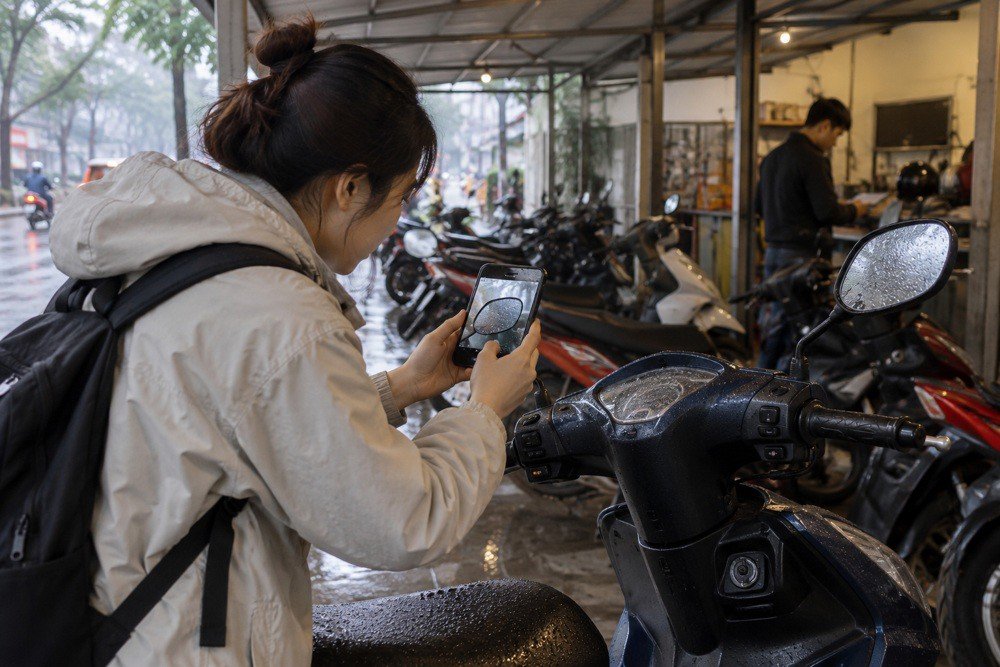
- Take a closer image of the affected part if it is safe to approach.
- Record the time you found the issue and where the bike was parked overnight.
- Photograph the instrument display only if it is safe and appropriate to power it on.
- Keep the original files and send a short description along with the relevant pictures.
- Do not keep trying a hazardous control action just to obtain a more dramatic video.
If you notice petrol, smoke or a serious electrical hazard, move away and obtain appropriate emergency support before trying to capture more images. The priority is people and safety, not photographic evidence.
Where should a rented motorbike be kept overnight?
Prefer a permitted parking area with appropriate shelter, drainage and ventilation where the vehicle can be secured without blocking walkways. Ask the property manager about parking fees, opening times and the ticket or key system. A covered space may reduce direct rain exposure but is not a guarantee of perfectly dry conditions during a humid spell.
Do not wrap a wet vehicle tightly in a non-breathable cover and assume it has solved moisture problems. Follow any cover, storage and keyless-lock guidance from the manufacturer, and seek permission before using a cover or accessory supplied by someone else.
Before leaving the parking area
Make sure you are legally entitled to ride, adequately alert, and able to see and control the bike safely. Check the relevant lights, tyres, mirrors and control operation according to the bike’s instructions. If you notice an unusual warning or any concern about brakes or steering, leave the bike parked and contact the shop.
There is no fixed number of minutes that makes a damp vehicle safe to use. Drying the seat does not establish that the brakes or electrical system are sound. The right decision depends on the actual condition and advice for the specific model.
Communicating with the rental shop
Keep your message factual. Say when the motorbike was parked, what the weather and storage conditions were like, which symptom you noticed and whether you have used the bike since. Include the location and plate if available. Ask whether you should leave it parked, arrange an inspection or follow a model-specific instruction given by an authorised technician.
Nguyen Ha’s Vietnamese article on rented bikes stored overnight in humid Hanoi weather discusses comparable observations and source references, but neither article diagnoses an individual vehicle.
If the issue happens after riding has begun
Prioritise getting out of traffic safely as conditions permit. Do not continue toward an appointment because you hope the warning or braking problem will disappear. When safely stopped, report the symptoms. If there is a dangerous leak, fire or smoke, move away and obtain the appropriate emergency assistance.
Don’t promise yourself that a repair shop found online can work on the rented bike without the owner’s knowledge. Ask the provider about authorised inspection and any responsibility for transport or repairs before arranging ordinary servicing.
A ready-to-send report
Hello Nguyen Ha, I left the rental bike [model/plate] parked overnight at [location] during very humid weather. At [time] I noticed [describe moisture, warning, unusual starting or brake symptom]. I have not tried to repair it. Please advise whether it should remain parked and how an inspection can be arranged. I can send photos and my current location. My contact number is [number].
Related guide: Putting a Cover or Tarp Over a Rental Bike Parked Outside Overnight: Is It a Good Idea, and What to Ask the Shop.
Frequently asked questions
Does condensation on the bike mean its battery is damaged?
No such conclusion follows. A weak battery or other fault requires appropriate assessment; report the actual symptoms.
Can I ride if the seat has dried but a brake still feels wrong?
Do not rely on the dry seat. An abnormal brake sensation needs inspection before using the bike.
Will the shop always send someone to collect the bike anywhere?
Do not assume this. Confirm the geographic scope, hours and available assistance for your actual rental agreement.
Thuê xe máy Nguyễn Hà: Ngõ 5 Nguyễn Văn Cừ, Bồ Đề, Long Biên, Hanoi, Vietnam. Hours 09:00–21:00 daily. Phone +84 334 699 969.