Luggage, Equipment & Navigation
Half, Three-Quarter or Full-Face Helmet for a Longer Motorbike Trip?
On this page
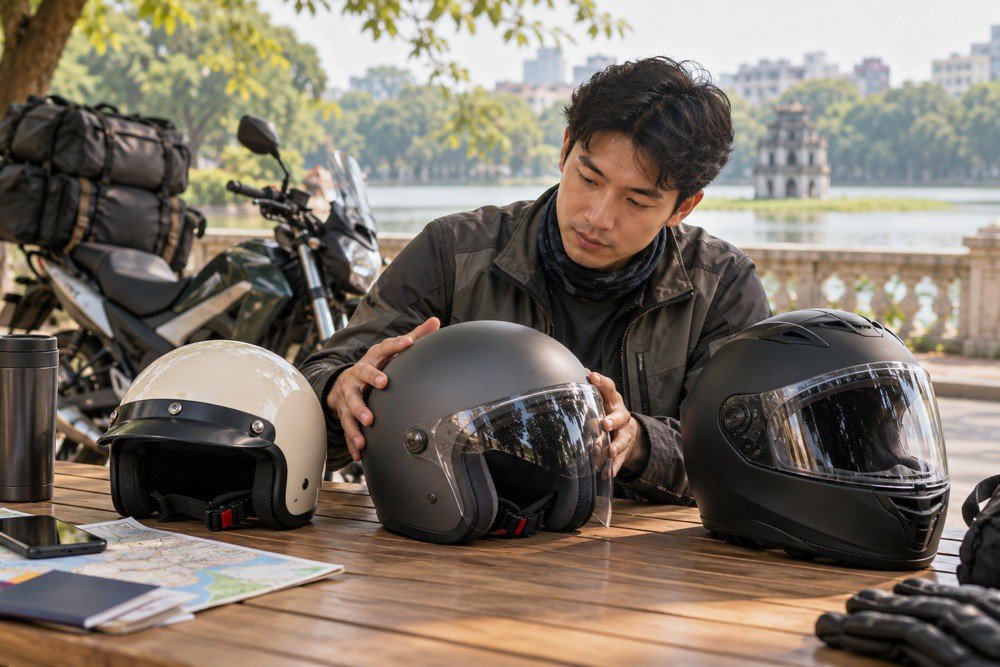
For a longer motorbike trip in Vietnam, should you buy a half, three-quarter or full-face helmet? A full-face helmet gives the most coverage, including the chin and face, and usually the least wind noise at road speeds; a three-quarter (open-face) helmet protects the head, ears and neck but leaves the face open; a half helmet covers only the top of the head. Whatever you choose, it must meet Vietnam’s national helmet standard, fit your head snugly and be worn with the strap fastened. Comfort over many hours, glasses, heat and visibility decide the rest.
If you are planning a long trip or staying for several months, buying your own helmet can make sense. This guide compares the three common types for longer rides and explains what to check before you pay.
What the law requires of any helmet
Article 33(2) of Vietnam’s Law on Road Traffic Order and Safety requires riders and passengers on motorbikes and mopeds to wear a helmet that meets the national technical regulation and to fasten the strap correctly, according to the consolidated law on the Government Portal. The law does not tell you which style to choose; all three types can be legal if they meet the standard and are worn properly. The guide to helmet rules for riders and passengers explains where the rules come from.
The three types compared for a longer ride
| Type | Coverage | On a longer trip |
|---|---|---|
| Half helmet | Top of the head only, above the ears | Light and airy for short city hops, but leaves ears, neck, face and jaw exposed, and lets in the most wind noise at speed |
| Three-quarter (open-face) | Head, ears and the back of the neck | A common compromise: more protection than a half helmet, easy to put on and take off, but no chin protection; a visor helps against wind, rain and insects |
| Full-face | Whole head, including chin and face, with a visor | The most coverage and usually the quietest at road speeds; heavier and warmer, and you must keep the visor clean and clear |
Helmet sellers often recommend full-face helmets for long touring at higher speeds, and open-face helmets for shorter, slower riding. Treat that as a starting point, not a rule: the best helmet is one that meets the standard, fits you properly and that you will keep wearing correctly for hours.
Wind noise, heat and visibility
Noise: at road speeds, wind noise around the ears is tiring and can mask important sounds such as horns. More coverage generally means less noise, but no helmet makes a long ride silent.
Heat: a full-face helmet is warmer, especially in a Hanoi summer. Look for working vents, take regular breaks and drink water. In cool, damp weather, the extra warmth becomes an advantage, though the visor can mist; the guide on visor fogging in cold, damp weather has practical fixes.
Visibility: make sure the helmet does not restrict your view to the sides when you turn your head at junctions. A scratched or tinted visor can be dangerous after dark; a clear visor is the safer default for evening riding.
If you wear glasses
Try the helmet on with your glasses before you buy. The arms should slide in without pressing painfully on your temples, and the glasses should not be pushed out of place when you close the visor. Fit with glasses is a common problem with snug full-face helmets; see open-face and full-face helmets with glasses for a step-by-step check.
Getting the size right
- Measure your head circumference with a soft tape, just above the eyebrows and ears, and compare it with the size chart on the helmet.
- Try the helmet on for several minutes. It should feel snug all round without painful pressure points.
- Fasten the strap so you can fit only about one or two fingers between the strap and your chin.
- Gently push the helmet up, down and side to side. If it moves noticeably, try a smaller size; if it hurts, try another size or model.
A helmet that is too big can shift or come off in a fall, which defeats the point of buying a better one. The helmet fit and strap checklist uses the same tests at pickup.
Labels and marks to check before you pay
- Look for the conformity mark and the label showing the manufacturer, size and production details on the helmet and its packaging.
- Check the strap and buckle: they should be sturdy, adjust smoothly and lock firmly.
- Avoid helmets with cracks, loose padding or a visor that does not close properly.
- Keep the receipt and photograph the label.
The guide to checking helmet certification marks shows what the marks look like.
Renting a helmet or bringing your own
For a short rental, the helmets offered with the bike may be enough, provided they fit and are in good condition. For a longer trip, your own well-fitting helmet can make the days more comfortable. If you bring your own, let the shop know so they do not prepare an extra helmet, and plan where you will keep it when you stop; see leaving a helmet on the bike.
What the sources do not settle
Official sources describe the legal standard but do not tell riders which style to choose for long-distance touring, how to choose between two sizes or what a fair price is. Seller recommendations differ, especially on whether an open-face helmet is enough for long trips. When in doubt, choose more coverage and the better fit.
Questions to ask the rental shop
- If I bring my own helmet, is there anything you need to know or advise about it?
- Does this bike have somewhere to secure or store a helmet during rest stops on my planned route?
- Can you provide a second helmet in the right size for my passenger?
Message to send the shop
Hello Nguyen Ha, I am renting a [model] from [date] for a longer trip and will bring my own [full-face / open-face] helmet. Could you confirm whether the bike has a helmet hook or storage, and whether you can provide a helmet that fits my passenger, head size about [measurement] cm?
Frequently asked questions
Is a half helmet legal in Vietnam?
Yes, if it meets the national technical regulation and is worn with the strap fastened correctly. It offers the least coverage, which matters more on long rides.
Is a full-face helmet too hot for Vietnam?
It is warmer than an open-face helmet, especially in summer, but good ventilation, breaks and water help. Many riders accept the heat for the extra protection on long trips.
How should a helmet fit?
Snug all round without painful pressure, not moving noticeably when pushed, and with the strap fastened so only one or two fingers fit underneath.
Nguyen Ha Motorbike Rental: Ngõ 5 Nguyễn Văn Cừ, Bồ Đề, Long Biên, Hanoi, Vietnam, open 09:00–21:00 daily. Call +84 334 699 969 to arrange helmets for a longer trip.